
Solar Surface Pumps vs Submersible Pumps: When to Use Each Type for Optimal Performance
Introduction
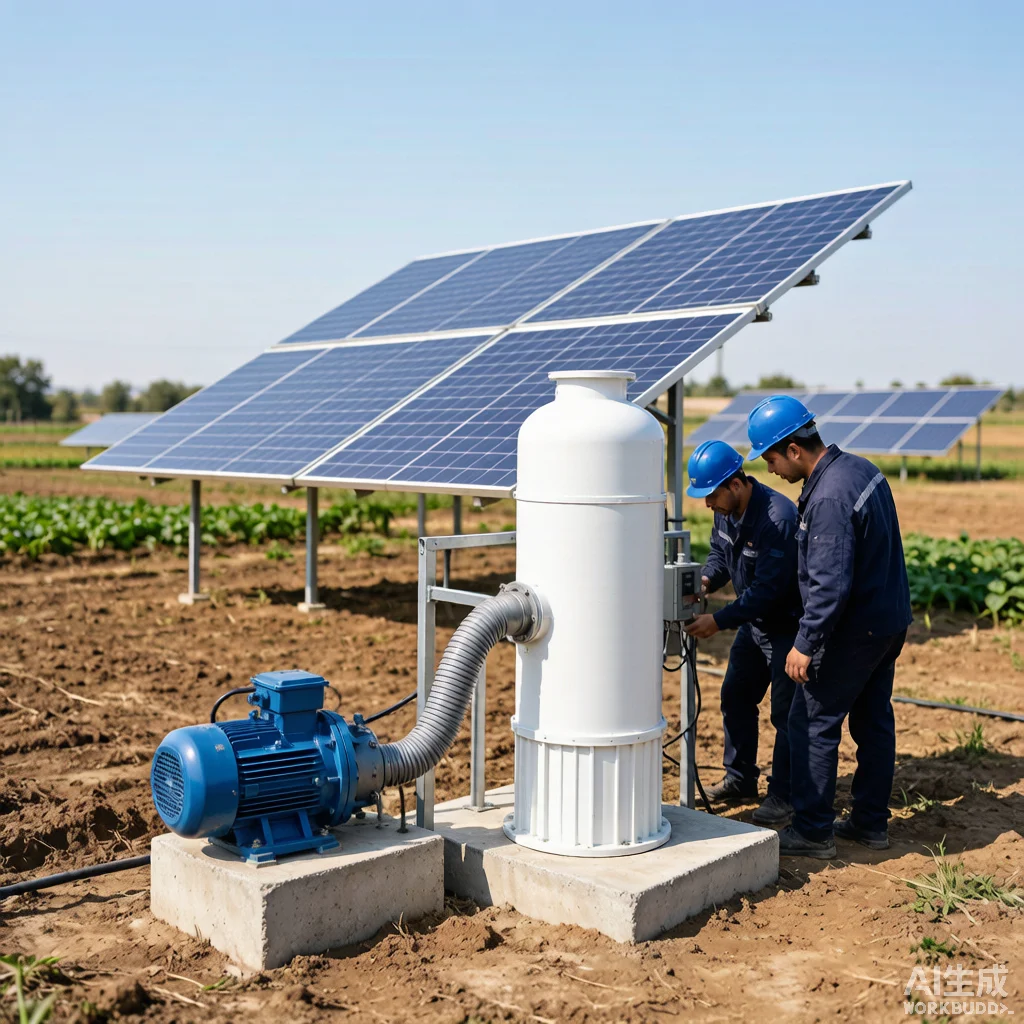
Surface pumps and submersible pumps serve fundamentally different hydraulic configurations—choosing the wrong type can reduce system efficiency by 40% or render a pump completely inoperable. Surface pumps pull water up from the source through suction, while submersible pumps push water from below. The distinction matters enormously for solar applications where every watt of input power must be used efficiently. KINBO offers both surface and submersible solar pump lines, enabling engineers to match pump type precisely to site hydrology.
Table of Contents
The Physics of Pumping
A surface pump relies on atmospheric pressure to push water up the suction pipe—this limits theoretical maximum suction lift to approximately 10.3 meters at sea level, with practical limits of 6-7 meters accounting for friction and NPSH (Net Positive Suction Head) requirements. A submersible pump, by contrast, pushes water from its submerged position and is limited only by motor power and casing pressure rating—enabling pumping from wells hundreds of meters deep. This single physical constraint dominates the application decision: if your water source is more than 7 meters below the pump location, a surface pump is physically impossible and a submersible pump is mandatory.
Head-to-Head Comparison
| Parameter | Solar Surface Pump | Solar Submersible Pump |
|---|---|---|
| Max Suction/Operating Depth | 6-7m (suction limit) | 250m+ |
| Installation Location | Above ground, accessible | Submerged in well |
| Maintenance Access | Easy, no pulling required | Requires pulling from well |
| Typical Efficiency | 50-65% | 55-78% |
| Cost (3 kW system) | $1,800-2,800 | $2,500-3,800 |
Application Matching Guide
Surface pumps excel where the water source is shallow and accessible: lifting from rivers, canals, ponds, or shallow wells less than 6 meters deep. They are the preferred choice for surface water irrigation, aquaculture water exchange, and tank-to-tank transfer where maintenance accessibility is valued. Submersible pumps are mandatory for boreholes and deep wells, and are preferred wherever pump theft is a concern (the pump is hidden underground), where noise must be minimized, or where freezing conditions would damage an exposed surface pump. KINBO surface pump models serve canal-fed irrigation schemes across South Asia, while submersible models dominate deep-well applications in Africa and the Middle East. For system sizing, see our pump selection guide.
Decision Framework
- Water source depth < 7m: Surface pump is preferred for lower cost and easier maintenance
- Water source depth 7-15m: Submersible or deep-well jet pump required
- Water source depth > 15m: Submersible pump mandatory
- Variable water level (seasonal river): Floating intake + surface pump, or submersible in stilling well
- High-theft-risk area: Submersible preferred (hidden installation)
Frequently Asked Questions
Q: Can a surface pump be converted to submersible?
A: No—they have fundamentally different motor sealing, bearing arrangements, and pressure ratings. Attempting to submerge a surface pump will result in immediate motor failure from water ingress.
Q: Does altitude affect surface pump suction limit?
A: Yes. At 2,000m elevation, atmospheric pressure is approximately 20% lower, reducing maximum suction lift by about 1.5 meters. High-altitude installations above 2,500m should add this derating to the design calculation.
Q: Which type has lower total cost of ownership?
A: For applications where either type is technically viable (shallow water sources), surface pumps have lower TCO due to easier maintenance and lower replacement cost. The submersible’s higher efficiency partially offsets its higher purchase price over a 10-year lifecycle.
For B2B buyers evaluating surface vs submersible solar pump options, contact KINBO for application-specific recommendations and competitive FOB pricing on both pump types.
Related Articles
- KINBO Solar Surface Pumps
- How to Choose Solar Water Pump Model
- Explore KINBO Solar Submersible Pumps