The Business Case for Solar Irrigation in Sub-Saharan Africa: Market Analysis for Distributors
Introduction
Sub-Saharan Africa presents the most compelling growth story in the global solar water pump industry. With 60% of the world’s uncultivated arable land, less than 5% of cultivated area under irrigation, and diesel prices among the highest globally due to inland transport costs, the economic case for solar irrigation is overwhelming. A farmer in Kenya paying $1.15/L for truck-delivered diesel can recover the full cost of a solar pump system in under 2 years—after which the pump delivers free water for another decade. For B2B distributors, agricultural input suppliers, and development finance institutions, solar irrigation in Africa is not just an environmental initiative; it is the highest-ROI investment available in the agricultural sector. Manufacturers such as KINBO are ramping up African market presence with localized support networks.
Table of Contents
The Economics of Solar Irrigation in Africa
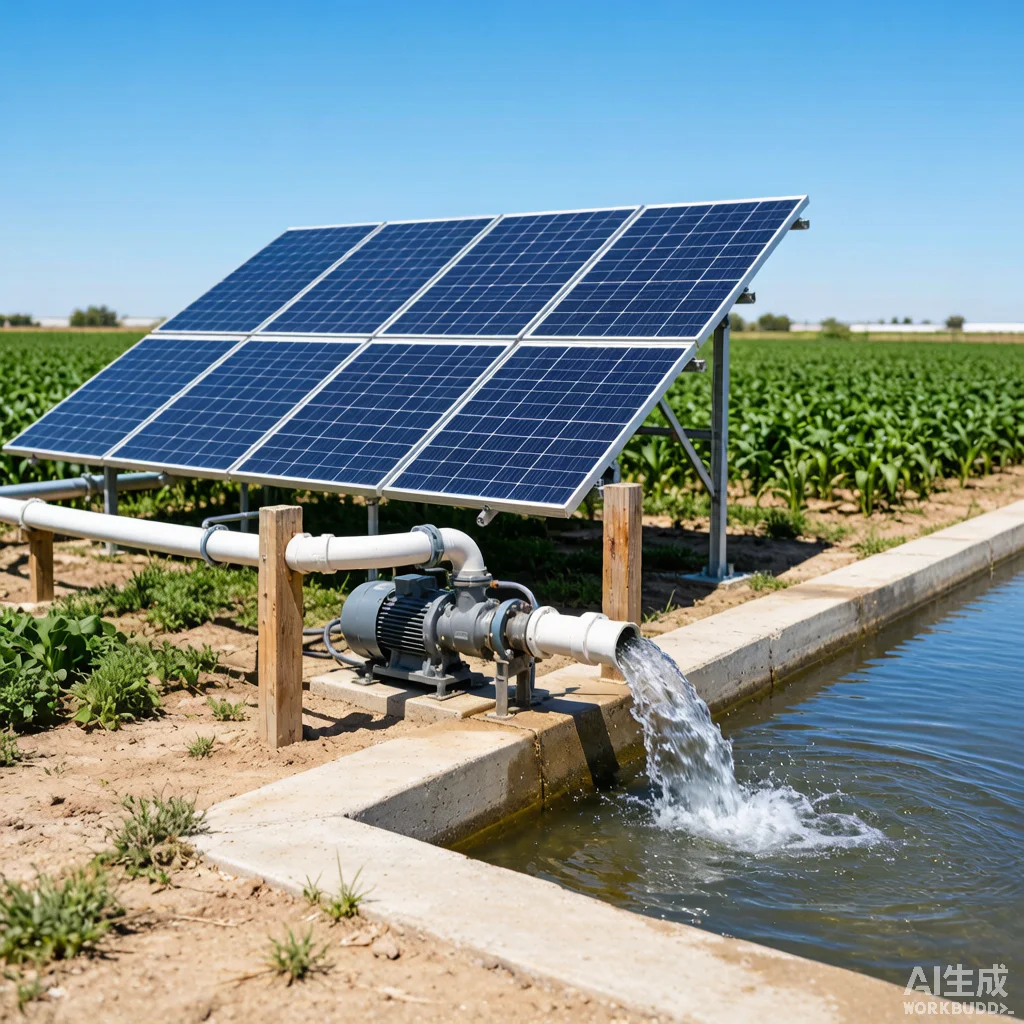
The math is straightforward and compelling. A 3 kW solar pump system costs approximately $4,800 FOB, with landing costs of $5,500-6,500 after shipping and duties. A comparable diesel pump consumes 1,500-2,200 liters of fuel annually, costing $1,700-2,500 at inland diesel prices that typically carry a $0.20-0.40/L premium over coastal prices due to transport. Adding $400-600 in annual maintenance, the diesel system costs $2,100-3,100 per year to operate. Payback on the solar system is therefore 2.0-2.8 years—and from year 3 onward, the farmer saves $2,500-3,000 annually. Over a 10-year period, the solar pump delivers $22,000-27,000 in cumulative savings. For context, this equals the annual income of 10-15 rural households in most sub-Saharan African countries.
Key Country Markets
| Country | Market Stage | Key Driver | Annual Installations |
|---|---|---|---|
| Kenya | Mature | Pay-as-you-go financing; strong mobile money | 15,000-20,000 |
| Nigeria | High-growth | Diesel subsidy removal (2023); large farming sector | 8,000-12,000 |
| Ethiopia | Emerging | Government irrigation expansion program | 3,000-5,000 |
| Tanzania | Growth | NGO and donor-funded programs | 5,000-8,000 |
Financing Models That Work
Pay-as-you-go (PAYG) financing has emerged as the dominant model for smallholder solar pump adoption in East Africa. Farmers make a 10-20% down payment ($300-800), then pay $40-80 monthly via mobile money (M-Pesa, Airtel Money) over 18-36 months. The monthly payment is deliberately set below the farmer’s previous diesel expenditure, making the switch cash-flow positive from month one. At the end of the payment period, the farmer owns the system outright. For larger commercial farms, agricultural equipment leasing through banks like Equity Bank Kenya and the African Development Bank’s AFAWA program provides asset finance at 8-12% APR. For more financial analysis, see our solar pump ROI guide.
Overcoming Distribution Barriers
The primary challenge in African markets is not demand or economics—it is last-mile distribution and after-sales service. Successful distributors establish regional service hubs within 200 km of customer clusters, train local technicians, and maintain spare parts inventory. Spare parts availability is the single largest factor determining long-term customer satisfaction. KINBO supports African distribution partners with technical training programs and consignment spare parts stock at distributor locations.
Frequently Asked Questions
Q: What pump sizes are most in demand in African markets?
A: The 1.5-3 kW range dominates, serving farms of 1-10 hectares. Sub-1 kW systems serve kitchen gardens and smallholder plots under 1 hectare. Units above 7.5 kW serve commercial farms, cooperatives, and community water schemes. The average system size in Kenya’s PAYG market is 1.8 kW.
Q: How do I handle the lack of well-drilling data in remote areas?
A: Partner with local drilling companies who maintain informal databases of water table depths. For feasibility assessments, use satellite-derived groundwater maps (GRACE, African Groundwater Atlas). Always budget for a test borehole before committing to system sizing.
Q: Are there import duty advantages for solar equipment in Africa?
A: Most East African Community (EAC) countries exempt solar equipment from import duties under the EAC Common External Tariff’s renewable energy provisions. ECOWAS member states apply 0-5% duties. Always verify with a local clearing agent; classification codes vary by customs office.
For B2B distributors and agricultural finance institutions entering African solar irrigation markets, contact KINBO for partnership programs, technical training, and competitive African market pricing.
Related Articles