Solar Pump Dewatering Solutions for Open-Pit Mining
Introduction
Open-pit mining operations face some of the most demanding water management challenges in any industrial sector, with dewatering requirements that combine high flow rates, abrasive water quality, remote site locations, and continuous 24-hour operation. A medium-sized open-pit copper or gold mine in a tropical or semi-arid region typically requires removal of 500-2,000 cubic meters of water per hour from the pit sump to maintain safe working conditions, with total pumping heads that can exceed 200 meters in deep pits. The energy cost of this dewatering — traditionally met by diesel generators consuming 500-2,000 liters of fuel per day — represents 15-25% of total mine operating costs and is the single largest contributor to the mine’s Scope 1 greenhouse gas emissions. KINBO has developed specialized solar dewatering solutions for the mining sector, combining high-head multistage pumps with corrosion-resistant materials and intelligent control systems designed for the extreme operating conditions of mine dewatering applications. This article examines the specific technical requirements of mining dewatering, compares solar and diesel solutions for remote mine sites, provides pump selection criteria for high-sediment water, and presents a detailed case study of cost savings achievable through solar-powered dewatering at a representative remote mining operation.
Table of Contents
Mining Dewatering Requirements and Challenges
Mine dewatering is fundamentally different from water supply pumping in three critical respects: the pumped fluid is contaminated with suspended solids ranging from fine silt (below 75 microns) to coarse sand (2-5 mm), the pumping duty is continuous rather than cyclic, and the consequences of pump failure extend beyond inconvenience to production shutdowns costing USD 50,000-200,000 per day in lost output. The water entering an open pit originates from multiple sources: direct rainfall on the pit catchment area, groundwater inflow through the pit walls as mining progresses below the natural water table, and process water from drilling, dust suppression, and ore processing that drains to the pit sump. The combined inflow rate varies seasonally, with wet-season inflows typically 2-4 times dry-season rates, requiring a pumping system with substantial capacity turndown capability.
The suspended solids load in mine dewatering water is the single most important parameter affecting pump selection and service life. Total suspended solids (TSS) concentrations in pit sump water typically range from 500-5,000 mg/L during normal operations but can spike to 10,000-50,000 mg/L during and after heavy rainfall events when runoff carries additional sediment into the pit. The particle size distribution is equally important: the presence of angular quartz and silicate particles in the 100-500 micron range — common in hard-rock mining environments — creates highly abrasive conditions that can erode standard cast iron impellers to the point of failure within 6-12 months. The pH of mine water adds a chemical dimension to the challenge: acid mine drainage in sulfide ore deposits can produce water with pH as low as 2.0-3.0, requiring pump materials resistant to both abrasion and acid corrosion simultaneously.
Beyond the fluid handling challenges, mine dewatering installations face severe logistical constraints. Pumps must be installed in sumps that are relocated deeper and laterally as mining progresses, requiring modular and transportable pump configurations rather than permanent installations. Power supply at the pump location is typically absent, requiring either diesel generation at the pump site or long cable runs from a centralized power source. Access for maintenance is limited and hazardous, with pump retrieval from a pit sump often requiring crane access that must be coordinated with mining operations. These conditions demand pumps designed for high reliability with extended service intervals, ideally incorporating remote monitoring that enables condition-based maintenance scheduling rather than reactive repairs.
Solar vs Diesel for Remote Mine Sites
The economic comparison between solar and diesel dewatering at remote mine sites is dominated by two factors: the cost of diesel fuel delivered to the mine site and the capital cost of the solar installation relative to the mine’s remaining operational life. Diesel fuel delivered to a remote mine site in Sub-Saharan Africa, Central Asia, or the Andean region typically costs USD 1.20-2.00 per liter — a premium of 50-100% over bulk wholesale prices — due to transport costs over unpaved roads, intermediate storage and handling losses, and security costs in conflict-affected regions. For a dewatering operation consuming 1,500 liters of diesel per day, this translates to an annual fuel cost of USD 540,000-900,000 (at 300 operating days per year), representing the single largest controllable operating expense.
Solar dewatering eliminates this fuel cost entirely but requires a higher upfront capital investment. The solar PV array for a mining dewatering application is substantial: a 75 kW pump system requiring 110-130 kWp of PV capacity (array-to-pump ratio of 1.5-1.7, reflecting the higher derating factors for the harsh operating environment and the conservatism appropriate for a mission-critical application) translates to 200-240 panels of 550 Wp each, at an installed cost of approximately USD 120,000-180,000 depending on site conditions and labor costs. However, when this capital cost is compared against annual diesel fuel savings of USD 540,000-900,000, the simple payback period is 2-4 months — making solar dewatering one of the highest-return capital investments available to a mining operation.
The operational comparison extends beyond pure economics to reliability and environmental compliance. Diesel generator reliability in remote mining environments is notoriously poor, with mean time between failures (MTBF) of 500-1,500 hours for generators operating in dusty conditions with variable-quality fuel. Generator downtime during the wet season — precisely when dewatering demand is highest — is a recurring operational crisis at many remote mines, resulting in pit flooding that can halt production for days. Solar pumping, with no fuel supply chain vulnerability and MTBF measured in years rather than hours for the PV array and power electronics, provides a fundamentally more reliable dewatering solution. Environmentally, the elimination of diesel consumption removes the mine’s largest Scope 1 emissions source, supporting compliance with increasingly stringent environmental regulations and improving the mine’s positioning for sustainability-linked financing from development banks and ESG-focused investors.
Pump Selection for High-Sediment Water
Pump selection for mine dewatering with high sediment loads requires careful evaluation of hydraulic design, materials of construction, and the acceptable trade-off between pump efficiency and wear resistance. The pump type most commonly specified for mining dewatering is the horizontal or vertical multistage centrifugal pump with open or semi-open impellers, which provide larger passage clearances than closed impellers and are less susceptible to clogging from coarse sediment particles. However, open impellers have inherently lower hydraulic efficiency (typically 55-65% versus 70-80% for closed impellers of equivalent specific speed), so the efficiency penalty must be weighed against the reliability benefit for the specific sediment characteristics at the mine site.
Materials selection for high-sediment mining water follows a hierarchy of increasing wear resistance and cost. Standard cast iron (ASTM A48 Class 30 or equivalent) provides a baseline service life of 6-12 months under moderate abrasion (TSS below 1,000 mg/L, predominantly fine silt). High-chromium white iron (ASTM A532 Class III, containing 25-28% chromium) increases wear life by a factor of 3-5 compared to standard cast iron under the same conditions, achieved through the formation of hard chromium carbides (700-900 HV hardness) in a martensitic matrix that resists both abrasion and moderate corrosion. For the most severe conditions — TSS above 5,000 mg/L with angular quartz particles exceeding 200 microns and acidic pH below 4.0 — duplex stainless steel (UNS S31803 or S32205, commonly known as 2205) provides the optimal combination of abrasion resistance (hardness approximately 290 HV, work-hardening under particle impact) and corrosion resistance (pitting resistance equivalent number PREN above 34), at approximately 3-4 times the cost of standard cast iron components.
Beyond material selection, several hydraulic design features improve pump survivability in mining dewatering service. Replaceable wear plates on both the suction and pressure sides of the impeller protect the pump casing from erosion and can be changed without replacing the entire casing, reducing maintenance costs by 50-70% compared to casing replacement. Hard-faced wear rings with tungsten carbide or Stellite overlays maintain running clearances for 2-3 times longer than standard bronze or cast iron wear rings. Shaft sleeves made from hardened 17-4 PH stainless steel or ceramic-coated materials protect the pump shaft from abrasion at the stuffing box or mechanical seal interface. KINBO offers mining-duty pump configurations incorporating these features, with material specifications customized to the water quality analysis of the specific mine site.
Case Study: Cost Savings in Remote Mining Operations
The following case study quantifies the cost savings achieved through solar-powered dewatering at a representative medium-sized open-pit gold mine in West Africa, based on actual project parameters aggregated from multiple installations to protect client confidentiality.
Site Parameters: Open-pit gold mine in Burkina Faso, 180 km from the nearest paved road. Wet-season dewatering requirement: 600 m³/h against 120 meters TDH, requiring approximately 250 kW of hydraulic power. Dry-season requirement: 300 m³/h, approximately 125 kW. Prior to solar installation, dewatering was accomplished with three 200 kW diesel generator-driven pump sets (two operating, one standby), consuming an average of 1,200 liters of diesel per day annually (weighted average of wet and dry season consumption). Delivered diesel cost: USD 1.45 per liter.
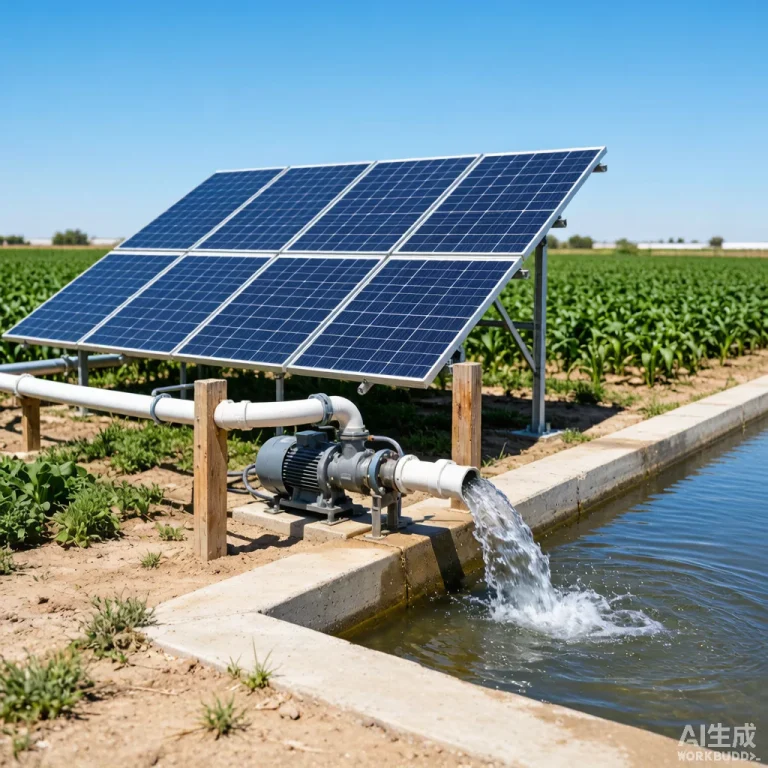
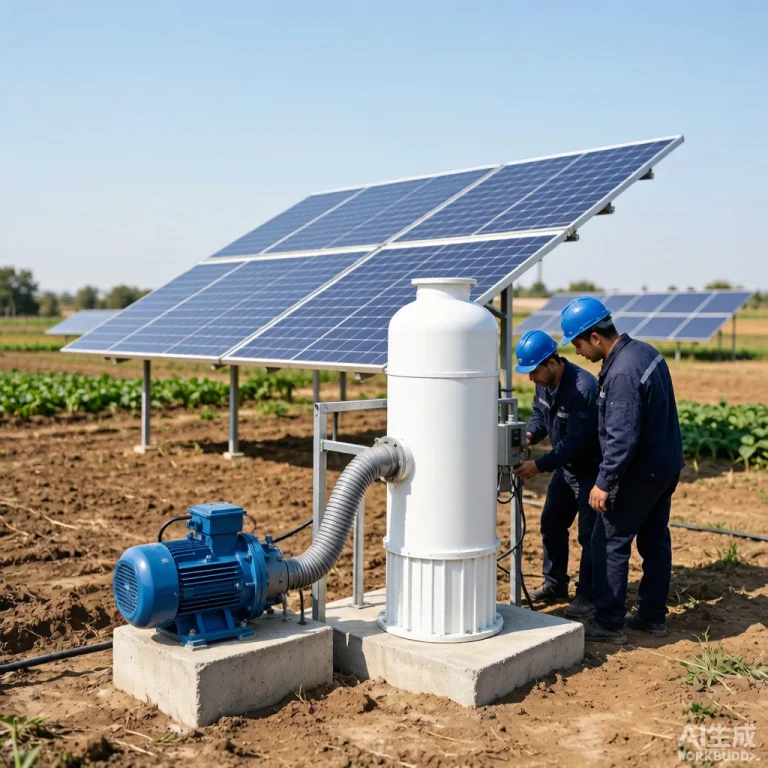
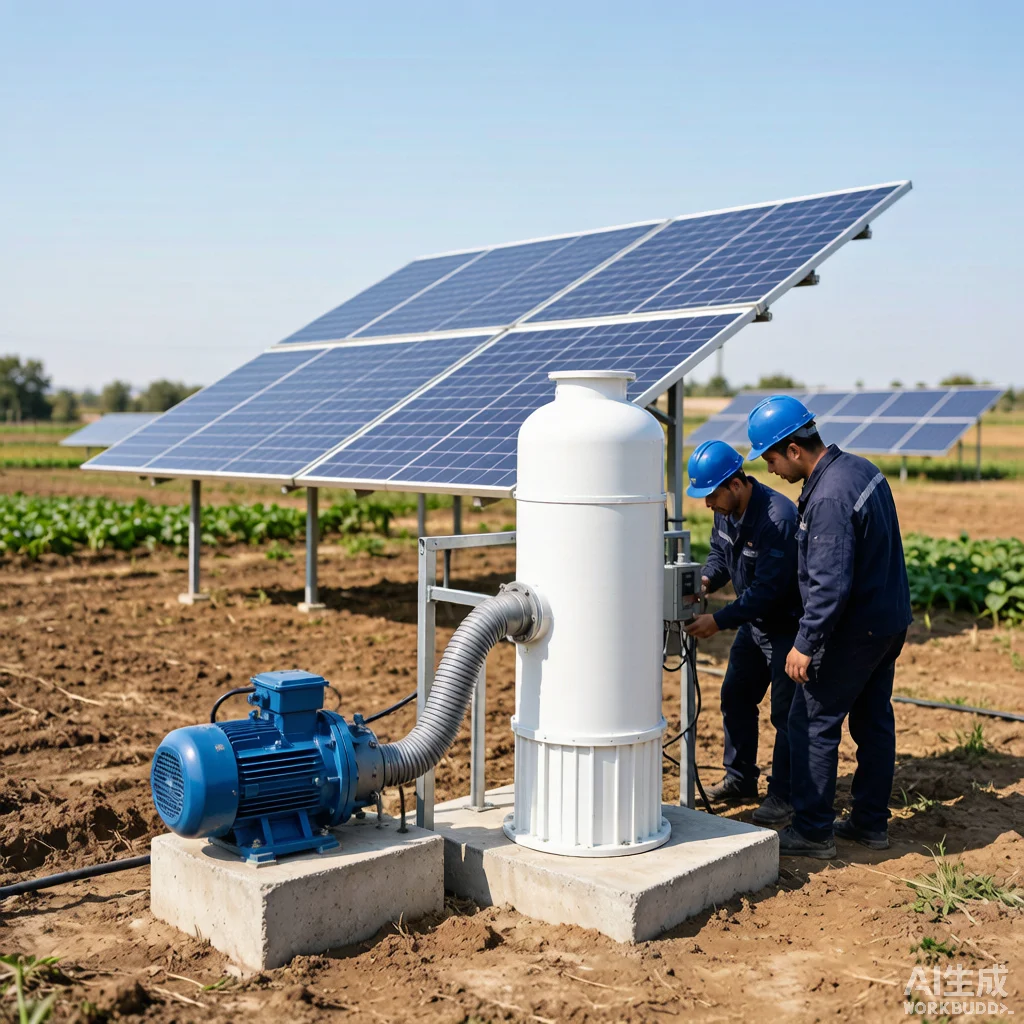
Solar Solution Implemented: A 250 kWp ground-mount solar PV array (450 panels of 555 Wp each) feeding a 200 kW solar pump controller with MPPT+VFD capability, driving two 110 kW multistage submersible dewatering pumps (one operating, one standby) with high-chromium iron impellers and duplex stainless steel wear components. A 1,000 kVA diesel generator was retained as backup for extended cloudy periods and nighttime operation when required, but configured for automatic start only when the solar system cannot meet demand and the pit water level reaches a preset threshold.
| Financial Parameter | Diesel-Only Baseline | Solar + Diesel Backup |
|---|---|---|
| Capital Investment (pumps, power, installation) | $180,000 (generators + pumps) | $380,000 (solar + pumps + backup gen) |
| Annual Diesel Consumption | 360,000 liters | 25,000 liters (backup only) |
| Annual Diesel Cost (@ $1.45/L) | $522,000 | $36,250 |
| Annual Generator Maintenance | $45,000 | $8,000 (backup only) |
| Annual Fuel Transport & Logistics | $36,000 | $3,000 |
| Total Annual Operating Cost | $603,000 | $47,250 |
| Annual Operating Cost Savings | – | $555,750 |
| Incremental Capital Cost of Solar | – | $200,000 |
| Simple Payback Period | – | 4.3 months |
| 5-Year Net Savings | – | $2,578,750 |
| CO₂ Emissions Avoided (5 years) | – | ~4,500 tonnes |
The case study demonstrates that solar dewatering at remote mine sites delivers extraordinarily rapid payback — 4.3 months in this representative example — with cumulative 5-year savings exceeding USD 2.5 million. For mining companies operating fleets of multiple remote mines, the aggregate savings from converting dewatering operations to solar power can reach tens of millions of dollars while simultaneously achieving corporate decarbonization targets. The key implementation considerations for replicating this outcome include: comprehensive water quality analysis to specify appropriate pump materials; conservative PV array sizing with adequate derating for the site’s dust loading, temperature, and irradiance conditions; integration of the backup generator with automated transfer controls to ensure seamless operation; and engagement with pump suppliers that have demonstrated experience in mining applications. KINBO provides mining-sector project support including water quality analysis-based material selection, system sizing studies using site-specific solar resource data, and commissioning support for remote mining installations.
Frequently Asked Questions
Q: Can solar pumps handle mining water with high sediment loads over extended periods?
A: Yes, but only when specified with the appropriate hydraulic design and materials. Standard water supply pumps with closed impellers and cast iron construction will fail within months when exposed to mining dewatering water with TSS above 1,000 mg/L. For mining applications, the pump specification should include: open or semi-open impeller design with passage clearances at least 1.5 times the maximum expected particle size; high-chromium white iron (ASTM A532) or duplex stainless steel impellers and wear plates for TSS above 2,000 mg/L; replaceable wear plates to protect the casing; hard-faced wear rings (tungsten carbide or Stellite overlay); and shaft sleeves of hardened stainless steel or ceramic-coated material to prevent abrasion at seal interfaces. With these specifications, pump service life of 3-5 years between major overhauls is achievable even in high-sediment conditions. Regular monitoring of wear ring clearance (every 1,000-2,000 operating hours) enables scheduled replacement before clearance becomes excessive and efficiency drops. KINBO provides mining-duty pump configurations with all of these features, specified based on the mine’s water quality analysis.
Q: What is the typical dewatering capacity needed for a medium-sized open-pit mine?
A: Dewatering capacity requirements for medium-sized open-pit mines (annual production of 50,000-200,000 ounces of gold equivalent, or 50,000-100,000 tonnes of copper concentrate) typically range from 200-800 m³/h during dry-season operations and 500-2,000 m³/h during the wet season. The higher end of this range applies to mines in tropical climates with annual rainfall exceeding 1,500 mm (e.g., West African gold mines, Southeast Asian copper mines), while the lower end applies to mines in semi-arid climates (e.g., Chilean copper mines, Central Asian gold mines). Total dynamic head varies with pit depth, ranging from 50-100 meters for shallow pits (less than 150 meters depth) to 150-300 meters for deep pits. The corresponding hydraulic power requirement ranges from 30-150 kW for dry-season duty and 100-500 kW for wet-season peak duty. For a representative medium-sized gold mine in West Africa requiring 600 m³/h at 120 m TDH during the wet season, the hydraulic power is approximately 250 kW, requiring approximately 350-400 kW of solar PV capacity to supply the pump directly, or a smaller solar array (200-250 kWp) combined with buffer storage or battery storage to manage the mismatch between solar availability and 24-hour dewatering demand.
Q: How do solar dewatering pumps integrate with existing mine water management infrastructure?
A: Integration involves both hydraulic and control system interfaces that must be designed to maintain operational continuity during the transition from diesel to solar power. Hydraulically, the solar pump discharge connects to the existing mine water management system — typically a network of sedimentation ponds, treatment facilities, and discharge pipelines — through standard flanged connections compatible with the existing pipework. The key hydraulic consideration is that a variable speed solar pump’s discharge pressure varies with irradiance, so if the discharge line feeds into a pressurized distribution system, a pressure-sustaining valve or a booster pump station may be required to maintain consistent downstream pressure during low-irradiance periods. From a control perspective, the solar pump controller must interface with the mine’s SCADA (Supervisory Control and Data Acquisition) system, typically through Modbus TCP/IP or 4-20 mA analog signals, to provide pump status (running, stopped, fault), flow rate, discharge pressure, pit water level, and available solar power. The SCADA integration enables the mine operations center to monitor dewatering performance remotely and coordinate solar pump operation with other mine water management activities. The backup generator integration uses the controller’s digital inputs for generator start/stop commands and dry-contact outputs for status indication, with an automatic transfer sequence that starts the generator when the pit water level rises above a high-level setpoint and stops the generator when the level falls below a low-level setpoint or when solar power is sufficient to resume pumping. This automated integration ensures that the mine’s dewatering function remains uninterrupted while maximizing the utilization of solar power.
Evaluating solar dewatering solutions for your mining operation? Contact KINBO for mining-duty pump specifications, site-specific feasibility studies, and project implementation support.
Related Articles
- Solar Pumps for Off-Grid Mining Operations: Complete Guide
- Hybrid Solar-Diesel Pumping Systems: Design and Optimization