Groundwater Sustainability and Solar Pumps: Balancing Access with Aquifer Protection
Introduction
KINBO advocates for responsible solar pump deployment that includes groundwater monitoring and sustainable extraction practices.
Table of Contents
The Sustainability Challenge
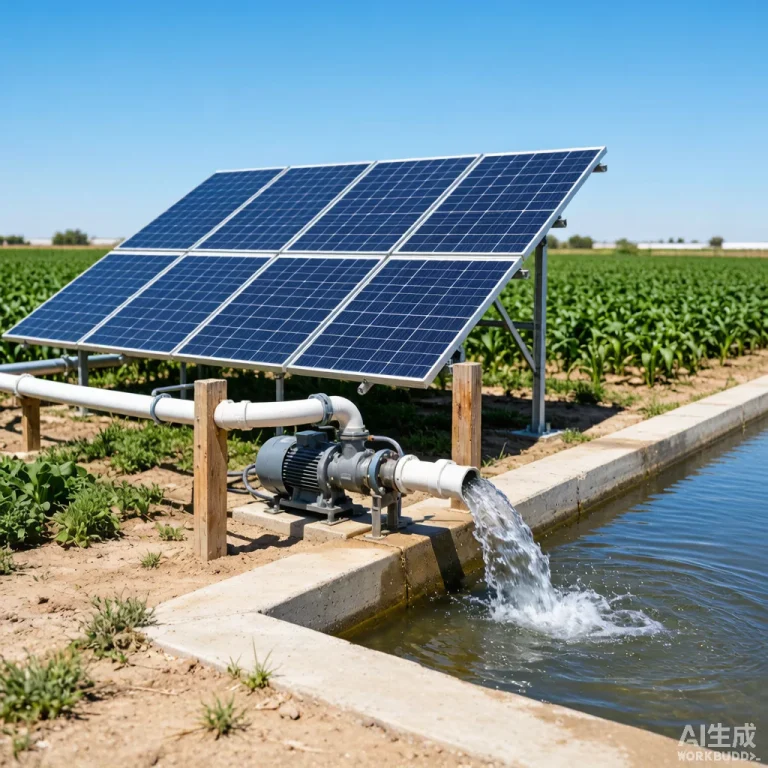
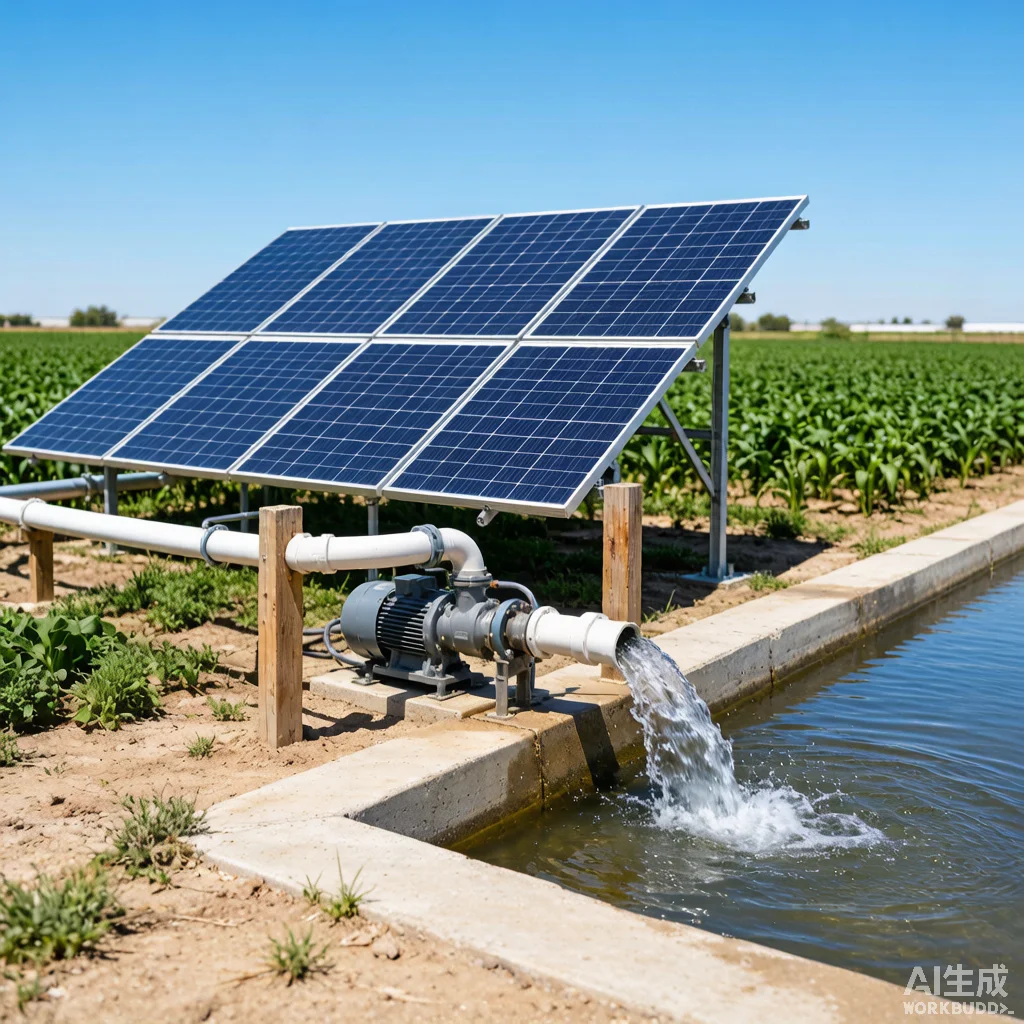
Solar pumps reduce the marginal cost of pumping to near zero, which paradoxically creates a sustainability risk. When pumping costs nothing, there is no economic signal to conserve water. Farmers may irrigate more land than planned or pump longer hours, potentially exceeding the aquifer’s sustainable yield. This ‘rebound effect’ has been observed in India’s solar pump program, where some regions saw groundwater extraction increase 15-25% after solar pump adoption.
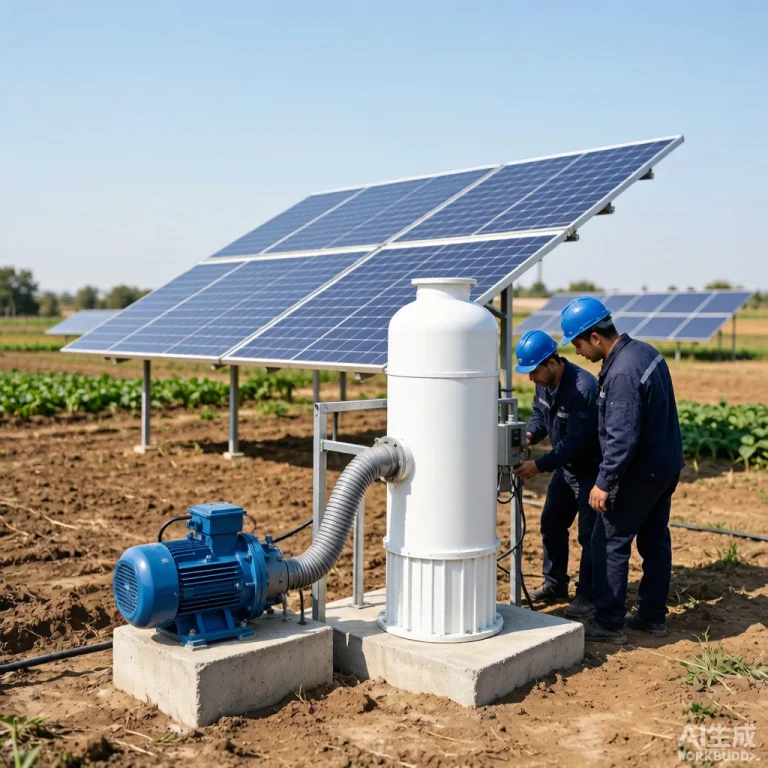
The solution is not to limit solar pump deployment but to couple it with groundwater governance. Successful approaches include: community-managed groundwater quotas with real-time monitoring, time-of-day pumping restrictions enforced by the pump controller, and aquifer recharge programs funded by a small per-cubic-meter water fee. Solar pump controllers can be programmed to enforce extraction limits, making the technology part of the solution rather than the problem.
Managed Aquifer Recharge Integration
Solar pumps can actively contribute to groundwater sustainability when paired with managed aquifer recharge (MAR). Excess solar energy during rainy seasons, when irrigation demand is low, can power recharge pumps that direct surface water into infiltration basins or injection wells. This turns the solar pump system from a net extractor into a net contributor to groundwater resources over the annual cycle.
| t | a | b | l | e | ||||||||||||||||
|---|---|---|---|---|---|---|---|---|---|---|---|---|---|---|---|---|---|---|---|---|
| R | e | g | i | o | n | |||||||||||||||
| G | r | o | u | n | d | w | a | t | e | r | C | h | a | l | l | e | n | g | e | |
| M | i | t | i | g | a | t | i | o | n | S | t | r | a | t | e | g | y | |||
| R | e | s | u | l | t | s |
[[‘Gujarat, India’, ‘Over-extraction (15% above sustainable yield)’, ‘Solar pump metering + daytime-only operation’, ‘12% extraction reduction’], [‘Rajshahi, Bangladesh’, ‘Declining water tables (1-2m/year)’, ‘MAR + solar pump quotas’, ‘Water table stabilized (0.1m decline)’]]
Frequently Asked Questions
Q: Do solar pumps cause groundwater depletion?
A: They can, if deployed without governance. The technology itself is neutral—it is the management framework that determines sustainability. Solar pumps with metering and extraction limits are more sustainable than unmetered diesel or electric pumps.
Q: What is managed aquifer recharge (MAR)?
A: MAR intentionally directs surface water into underground aquifers during wet periods for later extraction during dry periods. Solar pumps can power both the extraction and recharge cycles, creating a closed-loop sustainable system.
Q: How can pump controllers enforce extraction limits?
A: The controller can be programmed with daily or monthly volume limits based on flow meter input. When the limit is reached, the pump stops and requires an authorization code to restart. This provides enforceable extraction governance without requiring human enforcement.
For B2B organizations implementing sustainable groundwater programs, contact KINBO for metering and control solutions.
Related Articles
- Water Quality and Pump Lifespan
- Environmental Impact of Solar Pumps
- Explore KINBO Solar Submersible Pumps