Understanding Solar Pump Motor Types: BLDC, PMSM, and AC Induction Technology Comparison
Introduction
Solar pump motor technology has evolved significantly over the past decade, and for B2B procurement professionals, understanding the differences between BLDC, PMSM, and AC induction motors directly impacts system efficiency, reliability, and total cost of ownership. The motor type determines how the pump starts, how efficiently it converts electrical energy to hydraulic power, and how it behaves under the variable power conditions that characterize solar pumping. Manufacturers such as KINBO employ both BLDC and PMSM technologies across their product lines, matching motor type to application requirements.
Table of Contents
Brushless DC Motors (BLDC)
BLDC motors dominate the small to medium solar pump segment (0.15-7.5 kW) for good reason. They use permanent magnets in the rotor and electronically commutated stator windings, eliminating the mechanical brushes that wear out in conventional DC motors. This design achieves 85-92% efficiency in direct PV-to-motor applications because there is no DC-to-AC conversion stage. BLDC motors deliver excellent low-speed torque, enabling them to start pumping at as little as 10-15% of rated solar irradiance—a critical advantage for maximizing daily water output during dawn, dusk, and partial cloud conditions.
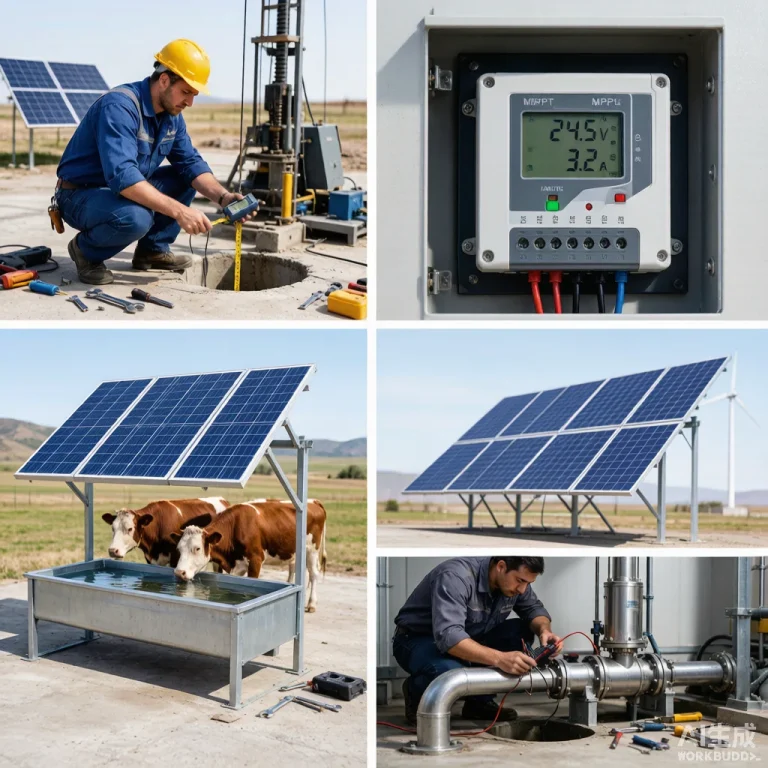
The BLDC controller uses Hall effect sensors or sensorless back-EMF detection to determine rotor position and switch stator current at precisely the right moment. This precision commutation minimizes electrical losses and allows the motor to operate efficiently across a wide speed range. For applications where simplicity, reliability, and cost-effectiveness are paramount—smallholder irrigation, remote livestock watering, domestic water supply—BLDC solar pumps represent the optimal technology choice. See our MPPT controller guide for details on the electronic systems that drive BLDC pumps.
Permanent Magnet Synchronous Motors (PMSM)
PMSM technology represents the next step up in motor sophistication, used primarily in larger solar pumps (3-37 kW) and AC/DC hybrid configurations. Like BLDC motors, PMSMs use permanent magnet rotors, but they are driven by variable frequency drives (VFDs) that generate a precisely controlled three-phase sine wave output. This sinusoidal drive—as opposed to the trapezoidal commutation of BLDC controllers—produces smoother torque with less vibration and audible noise. The VFD also enables sensorless vector control, which estimates rotor position from current and voltage measurements without requiring physical position sensors.
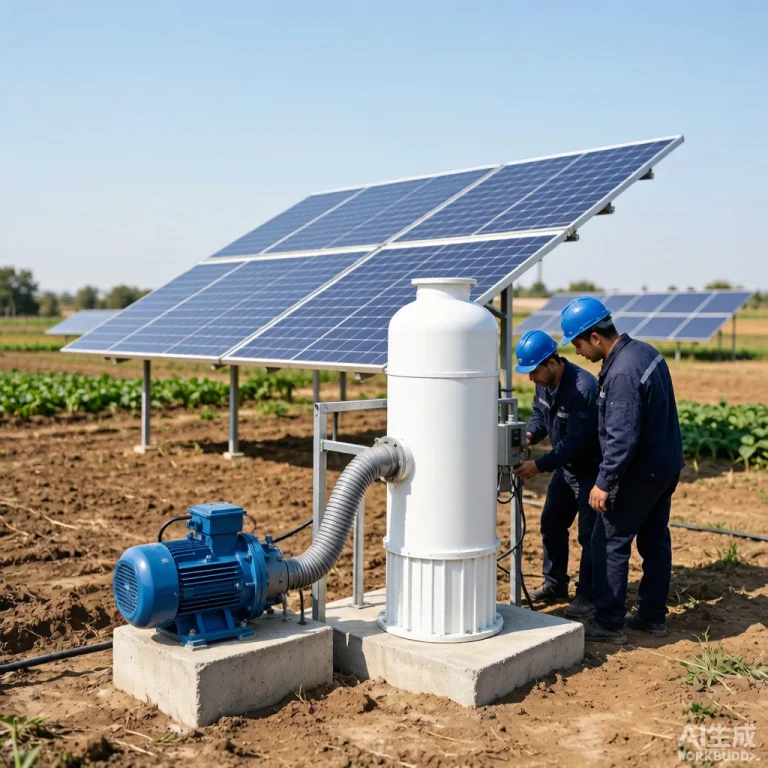
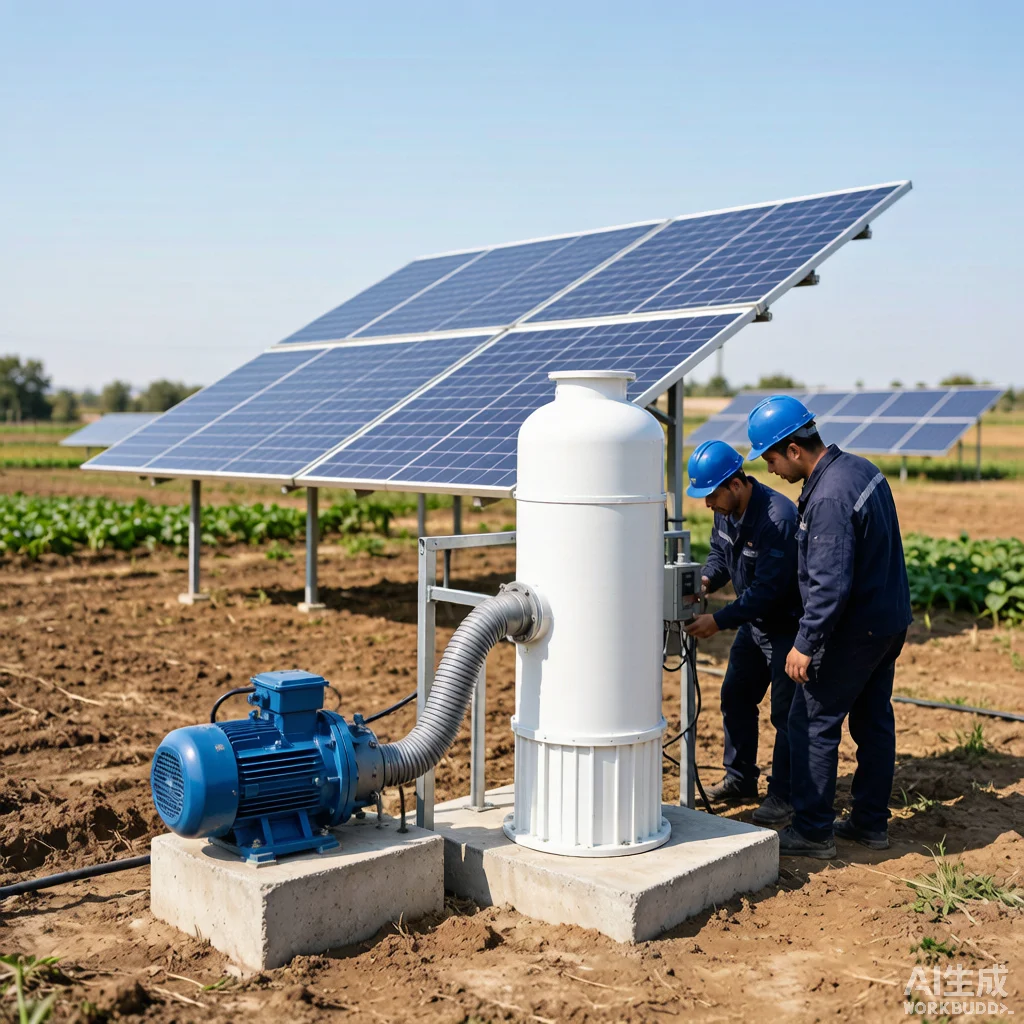
The key advantage for solar applications is the VFD’s ability to accept both DC solar input and AC grid/generator input through a common DC bus, making PMSM the natural choice for AC/DC hybrid pump systems. The soft-start capability of VFD-driven PMSMs reduces mechanical stress on pump bearings and shaft couplings during startup, contributing to longer service life. For community water supply, large-scale irrigation, and industrial applications where reliability and power flexibility are critical, PMSM-based pumps deliver the best balance of performance and durability.
AC Induction Motors
AC induction motors have been the workhorse of industrial pumping for a century, but they face inherent disadvantages in solar applications. An induction motor requires reactive power to establish its magnetic field, consuming 5-10% of rated power even at no load. When coupled to a solar array through an inverter, the additional DC-to-AC conversion stage introduces 5-8% efficiency loss on top of the motor’s own losses. The combined effect is a system efficiency of 65-75%—15-20 percentage points below an equivalent BLDC or PMSM system. In a solar application where every watt of panel capacity represents capital cost, this efficiency gap is significant.
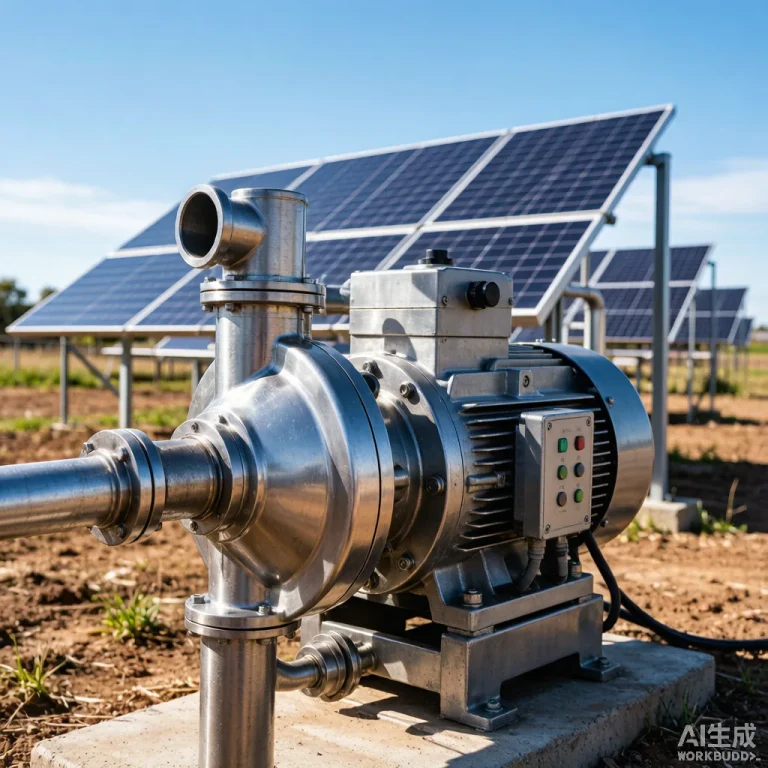
Induction motors remain relevant for very large pumping applications above 37 kW where PMSM costs become prohibitive, and for retrofitting existing AC pump installations with solar power through AC-coupled inverter systems. However, for new solar pump installations below 37 kW, BLDC and PMSM technologies are almost always the superior choice on both technical and economic grounds.
Technology Comparison Table
| Parameter | BLDC | PMSM | AC Induction |
|---|---|---|---|
| Efficiency (wire-to-water) | 85-92% | 78-90% | 65-75% |
| Power Range | 0.15-7.5 kW | 0.75-37 kW | 5-500+ kW |
| Startup Current | Low (soft start) | Low (VFD soft start) | High (6-8x rated) |
| DC Solar Compatibility | Native (no inverter needed) | Via VFD DC bus | Requires inverter |
| Low-Light Performance | Excellent (starts at 10-15% irradiance) | Good (starts at 20-25%) | Poor (requires 40%+ irradiance) |
Frequently Asked Questions
Q: Which motor type is best for a 3 kW agricultural irrigation pump?
A: BLDC is the optimal choice. At 3 kW, BLDC delivers the highest efficiency and lowest system cost. The direct DC drive eliminates inverter losses, and the excellent low-light starting extends daily pumping hours by 1-2 hours compared to AC induction alternatives.
Q: Can I replace a failed AC induction motor with a PMSM motor?
A: Not as a direct drop-in replacement. PMSM motors require matching VFD controllers, while induction motors use different drive electronics. However, replacing the complete pump end and controller with a PMSM system is feasible and typically improves system efficiency by 10-15%.
Q: How does motor type affect maintenance requirements?
A: BLDC and PMSM motors have no brushes to replace, reducing maintenance to bearing inspection and replacement every 20,000-30,000 operating hours. AC induction motors require similar bearing maintenance but may also need capacitor replacement in single-phase configurations.
For B2B buyers specifying pump motor technology, contact KINBO for motor type recommendations matched to your application requirements.
Related Articles
- MPPT Controller Technology Guide
- DC vs AC/DC Solar Submersible Pumps
- Explore KINBO Solar Submersible Pumps