Solar Pump Thermal Management and Heat Dissipation: Protecting Motor and Controller in Hot Climates
Introduction
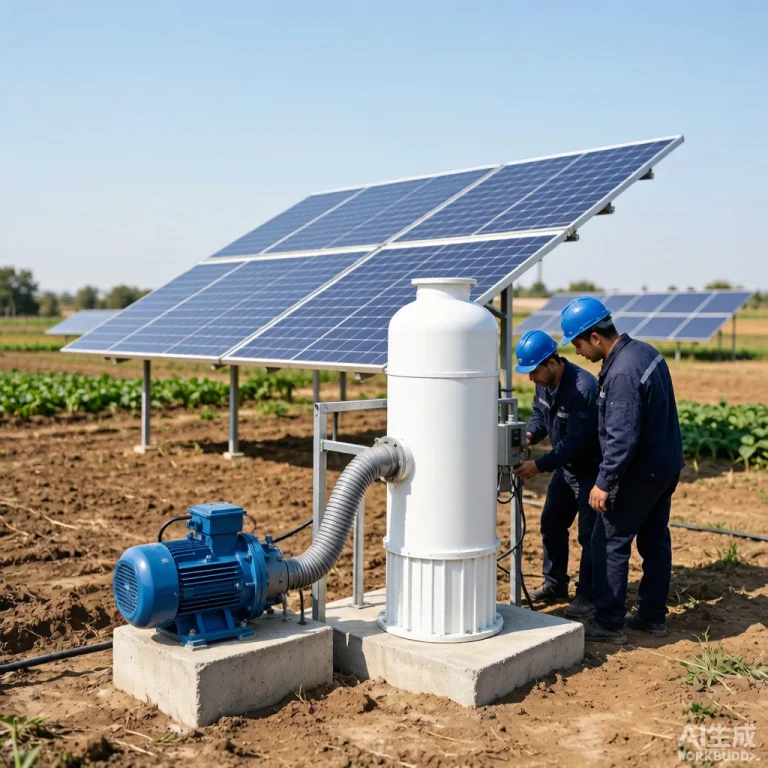
Solar water pumps operate in some of the harshest thermal environments on earth—open deserts, metal-roofed pump houses, and sun-exposed wellheads where ambient temperatures routinely exceed 45 °C. In these conditions, heat is the silent enemy of reliability. The two components most vulnerable to temperature are the brushless DC (BLDC) or permanent-magnet synchronous (PMSM) motor and the MPPT solar pump controller. Left unmanaged, heat accelerates insulation ageing, triggers controller thermal shutdown, and shortens service life. Manufacturers such as KINBO engineer solar pumping systems with deliberate thermal budgets, but correct specification and installation remain the operator’s responsibility. This guide explains how heat moves through a solar pump system, which design features dissipate it effectively, and how to size and site equipment so that performance holds up when the thermometer climbs. Whether you manage a desert irrigation project or a tropical community water supply, the principles below will help you protect your investment and avoid mid-season downtime. For deeper background on keeping equipment healthy, see our comprehensive solar pump maintenance guide.
Table of Contents
How Heat Damages Solar Pump Components
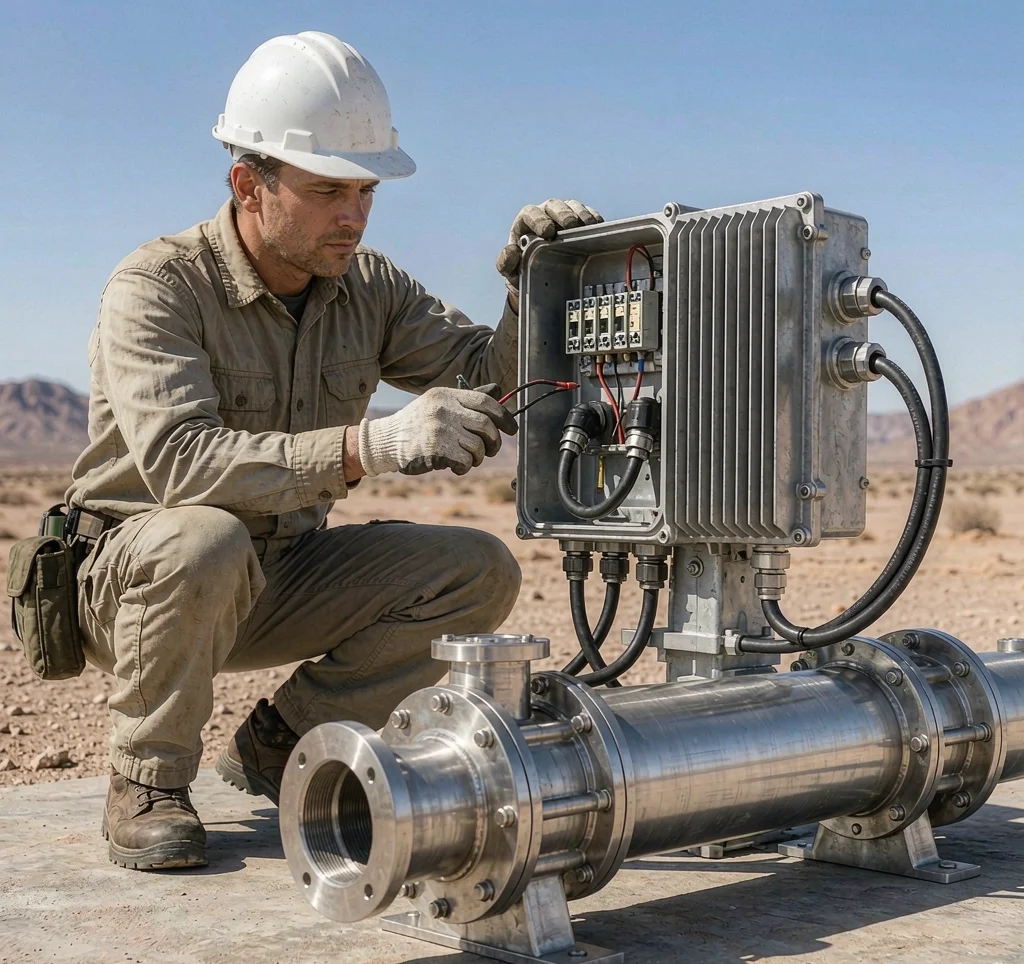
Every watt of electrical loss inside a solar pump eventually becomes heat. In the motor, copper and iron losses raise winding temperature; in the controller, switching losses in the MOSFETs and inductors do the same. The critical limit is the insulation class of the motor—most solar pump motors use Class F (155 °C) or Class H (180 °C) wire—but the practical ceiling is far lower once you add ambient heat and solar gain. A controller rated for 60 °C ambient may internally reach 85–95 °C under load, pushing it toward forced shutdown. KINBO specifies its outdoor controllers with finned aluminium heat sinks and IP54 enclosures precisely because the difference between a 10 °C and a 30 °C internal rise decides whether a pump runs all summer or trips by noon.
Two Failure Modes to Watch
- Insulation breakdown: Sustained overheating embrittles wire enamel, leading to short circuits between turns and eventual motor failure.
- Thermal shutdown cycling: Controllers that trip and restart repeatedly cause pressure surges, water hammer, and accelerated mechanical wear.
Key Thermal Design Features
Modern solar pumping equipment manages heat through a combination of materials, geometry, and electronics. The most effective features include:
- Finned aluminium heat sinks on the controller to maximize surface area for passive convection.
- Water-cooled motor jackets on larger submersible units, where the pumped fluid itself removes heat.
- Wide thermal-derating curves that gradually reduce output instead of hard-tripping.
- High-temperature cabling and seals rated for continuous 90 °C service.
- Intelligent MPPT algorithms that cap switching frequency and current when the sink runs hot.
Comparing Cooling and Derating Strategies
When specifying a system for hot climates, the choice between passive, active, and derating approaches drives both capital cost and uptime. The table below summarizes the trade-offs.
| Strategy | How it works | Best for | Trade-off |
|---|---|---|---|
| Passive finned sink | Aluminium fins shed heat by convection | Up to ~45 °C ambient | Limited ceiling, needs airflow |
| Forced-air fan | 12/24 V fan pushes air across sink | Enclosed or still-air sites | Moving part, dust ingress risk |
| Water-cooled jacket | Pumped water carries heat away | Large submersible pumps | Higher unit cost |
| Thermal derating | Output tapers above set point | All hot-climate systems | Slightly lower peak flow |
Assumption: figures reflect typical 0.75–5.5 kW solar pump classes; consult the specific model datasheet for certified limits.
Siting and Installation to Reduce Heat Load
No amount of internal engineering compensates for a controller mounted in direct sun against a south-facing wall. Field practice that consistently improves thermal performance includes:
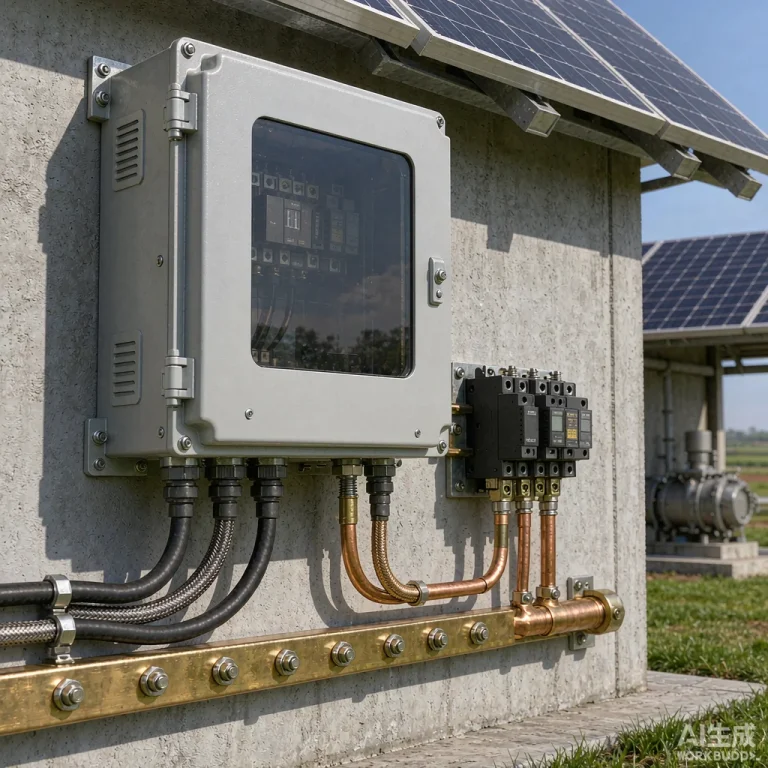
- Mount the controller in shade, ideally inside a ventilated enclosure with a minimum 5 cm air gap on all sides.
- Orient enclosures away from afternoon sun and provide a reflective (light-coloured) backing.
- Keep the motor as close to the water source as possible to reduce pressure and electrical losses that become heat.
- Use adequately sized cables to minimize I²R heating in long runs from the array.
- Where ambient exceeds 50 °C, add a thermostatically controlled fan or a small PV-powered exhaust.
Monitoring Temperature and Preventing Shutdown
Modern controllers log internal temperature and can report it through a Modbus or Bluetooth interface. Setting a warning threshold at 70 °C and a pre-shutdown notice at 80 °C gives operators time to improve ventilation before output is lost. Pairing the controller with a scheduled maintenance routine—cleaning fins of dust, checking fan bearings, and verifying cable terminations—prevents the gradual heat creep that causes sudden failures during heatwaves.
Frequently Asked Questions
At what temperature does a solar pump controller shut down?
Most MPPT controllers begin derating around 50–55 °C internal temperature and fully shut down near 70–85 °C depending on the rating. The exact set points are listed in each model’s datasheet.
Can I add an external fan to cool the controller?
Yes. Forced-air cooling helps in still-air or enclosed installations. Choose a dust- and insect-proof fan powered from a regulated 12/24 V tap, and maintain a clean air path across the heat sink.
Does higher solar irradiance always mean more heat?
Not directly. Heat comes from electrical losses (I²R) and ambient temperature, not irradiance alone. A well-matched system at high sun can run cooler than an oversized, poorly ventilated one at moderate sun.
How much does heat reduce pump flow?
Motor efficiency typically drops a few percent per 10 °C above its rated point, and controller derating can cut output by 20–40 % in extreme heat—enough to miss daily irrigation targets if the system is not oversized.
For B2B buyers specifying solar pumps for hot-climate projects, contact KINBO for competitive FOB pricing and technical specifications.