Preventive Maintenance Checklist for Solar Submersible Pumps: Extend Service Life to 12+ Years
Introduction
Solar submersible pumps are engineered for minimal maintenance, but “minimal” does not mean “none.” A well-executed preventive maintenance program extends pump service life from 8 years to 12+, reduces unscheduled downtime by 80%, and preserves the system’s energy efficiency as components age. For B2B operators managing fleets of 50+ pumps across multiple sites—agricultural cooperatives, municipal water authorities, mining operations—the difference between reactive and preventive maintenance can mean tens of thousands of dollars annually in avoided repair costs and uninterrupted water delivery. Manufacturers such as KINBO design their pumps with field-serviceable components and provide detailed maintenance schedules that align with typical agricultural operating seasons.
Table of Contents
Maintenance Schedule by Interval
| Interval | Tasks | Personnel Required |
|---|---|---|
| Weekly | Visual inspection of panels, check controller display for error codes, verify water output visually | Farm operator / site attendant |
| Monthly | Clean solar panels, inspect cable connections, check well water level, record flow rate and operating voltage | Trained operator |
| Quarterly | Check motor insulation resistance (megger test), inspect check valve, test dry-run protection, tighten all electrical terminals | Qualified technician |
| Annual | Pull pump for inspection, replace wearing parts (bearings, seals), test motor winding resistance, inspect drop cable for abrasion | Authorized service provider |
| Every 3-5 Years | Replace mechanical seal, inspect impeller wear, replace bearings, pressure-test pump housing | Authorized service provider |
Comprehensive Inspection Checklist
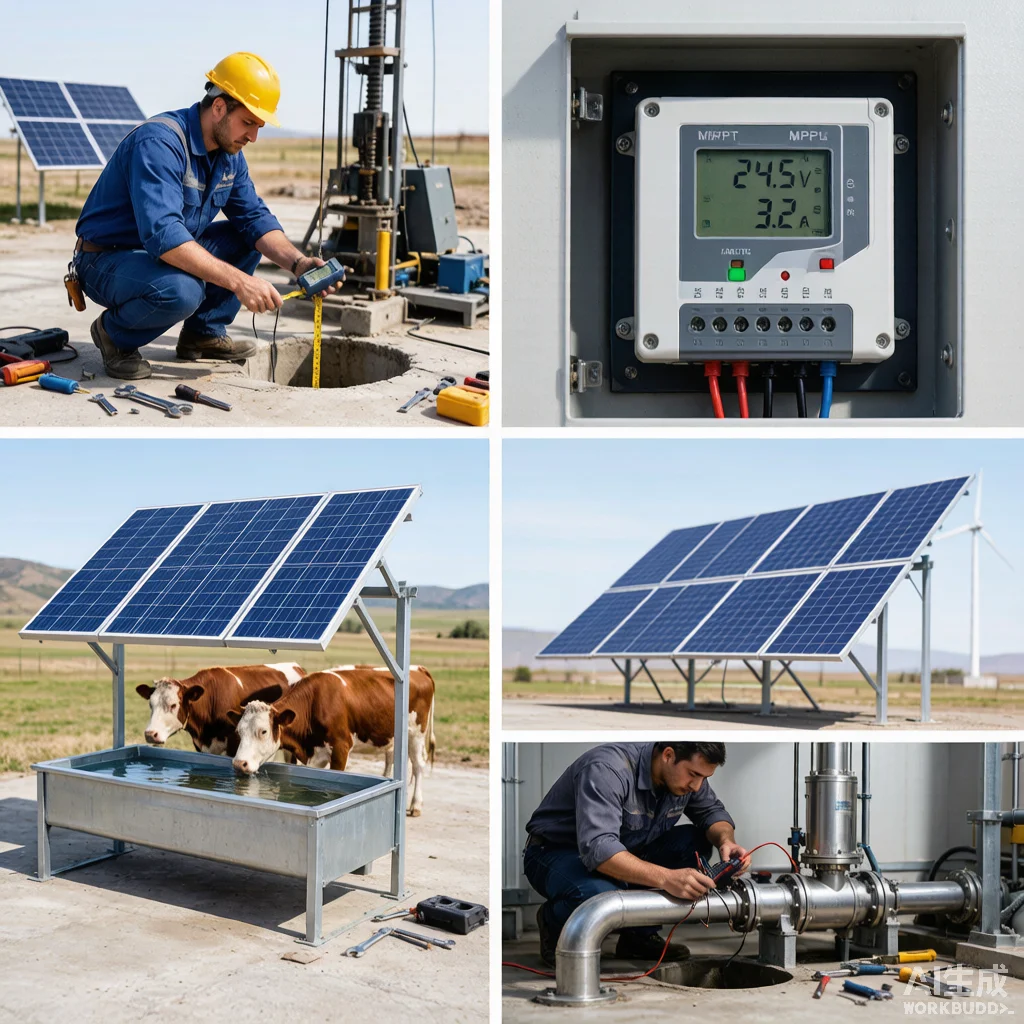
- Electrical checks — Measure insulation resistance (should exceed 20 MΩ for new pump, 5 MΩ minimum in service). Check controller input/output voltage against specifications. Inspect all cable connections for corrosion, especially at the wellhead junction box.
- Mechanical checks — Listen for unusual vibration or noise during operation. Verify that pump starts smoothly without hammer or surge. Check that the check valve holds pressure when the pump stops—water hammer on restart indicates a leaking check valve.
- Hydraulic checks — Compare actual flow rate against the pump curve at the measured TDH. A 15%+ flow reduction at the same head indicates impeller wear or partial blockage. Monitor drawdown—increasing drawdown at the same flow rate suggests well screen fouling.
- Water quality checks — Test for sand content (a clear glass of pumped water should show no visible sediment after 5 minutes). Measure pH and conductivity quarterly; trending changes can indicate aquifer changes that may affect pump corrosion rates.
Early Warning Signs of Pump Failure
Most catastrophic pump failures are preceded by detectable warning signs weeks or months in advance. Operators trained to recognize these indicators can schedule maintenance during planned downtime rather than reacting to emergencies. A 10-15% increase in operating current at the same flow rate suggests bearing wear creating additional mechanical resistance. Intermittent controller fault codes—even if they self-clear—warrant investigation: a single “over-current” event may be a transient, but three in a week points to a developing problem. Gradual flow rate decline over several months, without corresponding head changes, indicates progressive impeller wear from sand abrasion. See our complete maintenance guide for diagnostic procedures.
Solar Panel Maintenance
Panel maintenance directly impacts daily water output. A 5% soiling loss on a 5 kW array reduces annual water delivery by approximately 1,800 m³ at 50 meters head—enough to irrigate 0.5 hectares of vegetables. Clean panels with clean water only; detergents leave film residues that attract dust. Inspect mounting structure bolts for loosening due to thermal cycling; retorque annually. Check that vegetation hasn’t grown tall enough to shade the bottom edge of panels, particularly in tropical environments where grass can gain height rapidly during rainy seasons.
Frequently Asked Questions
Q: How often should I pull the pump for inspection?
A: Annually for pumps operating in sandy or high-sediment water; every 2 years for pumps in clean water with sand content below 50 ppm. The cost of an annual pull-and-inspect ($150-300 for labor and replacement seals) is far lower than the cost of a seized pump requiring complete replacement ($800-3,000).
Q: Can I perform maintenance without pulling the pump from the well?
A: Electrical and controller-side maintenance is performed at the surface. Mechanical inspection of the pump end requires pulling. However, regular monitoring of electrical parameters (current draw, insulation resistance, voltage balance) provides 80% of the diagnostic information without pulling the pump.
Q: What spare parts should I keep on site?
A: For remote sites, maintain a kit containing: check valve assembly, mechanical seal, set of cable splice kits, controller fuses, and a spare drop cable clamp. Total cost is approximately $200-400 and can reduce downtime from weeks to hours for common failures.
For B2B operators seeking maintenance training programs or spare parts kits for solar pump fleets, contact KINBO for after-sales support and competitive spare parts pricing.
Related Articles
- Solar Water Pump Maintenance Guide
- Solar Water Pump Working Principle
- Explore KINBO Solar Submersible Pumps