Solar Pump Energy Yield Estimation: Sizing PV Arrays for Low-Irradiance and Cloudy-Day Operation
Introduction
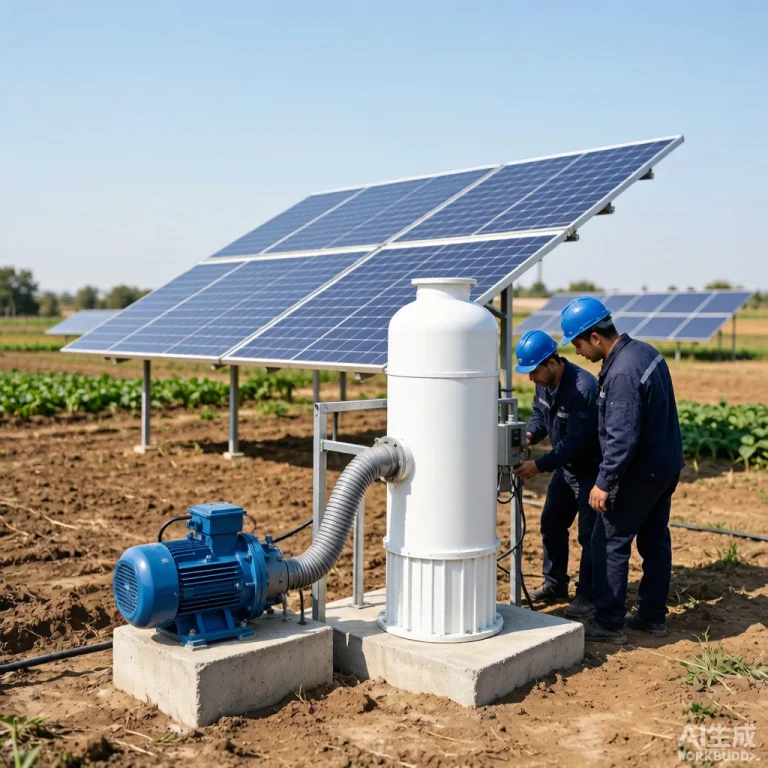
Solar water pumping has moved from a niche off-grid curiosity to a mainstream solution for agriculture, community supply, and industrial dewatering. Yet one question keeps surfacing in every engineering discussion: how much water will the system actually deliver when the sky is overcast? Solar pump energy yield estimation is the discipline that answers this, and it is where most under-performing installations go wrong. Manufacturers such as KINBO design solar pumping systems around realistic daily energy budgets rather than optimistic nameplate figures, because a pump that meets demand only on clear summer afternoons is not fit for purpose. This guide explains how to size a photovoltaic array so that water keeps flowing through low-irradiance periods and cloudy-day operation, using methods that any B2B buyer or project engineer can apply.
Table of Contents
How Solar Irradiance Drives Pump Output
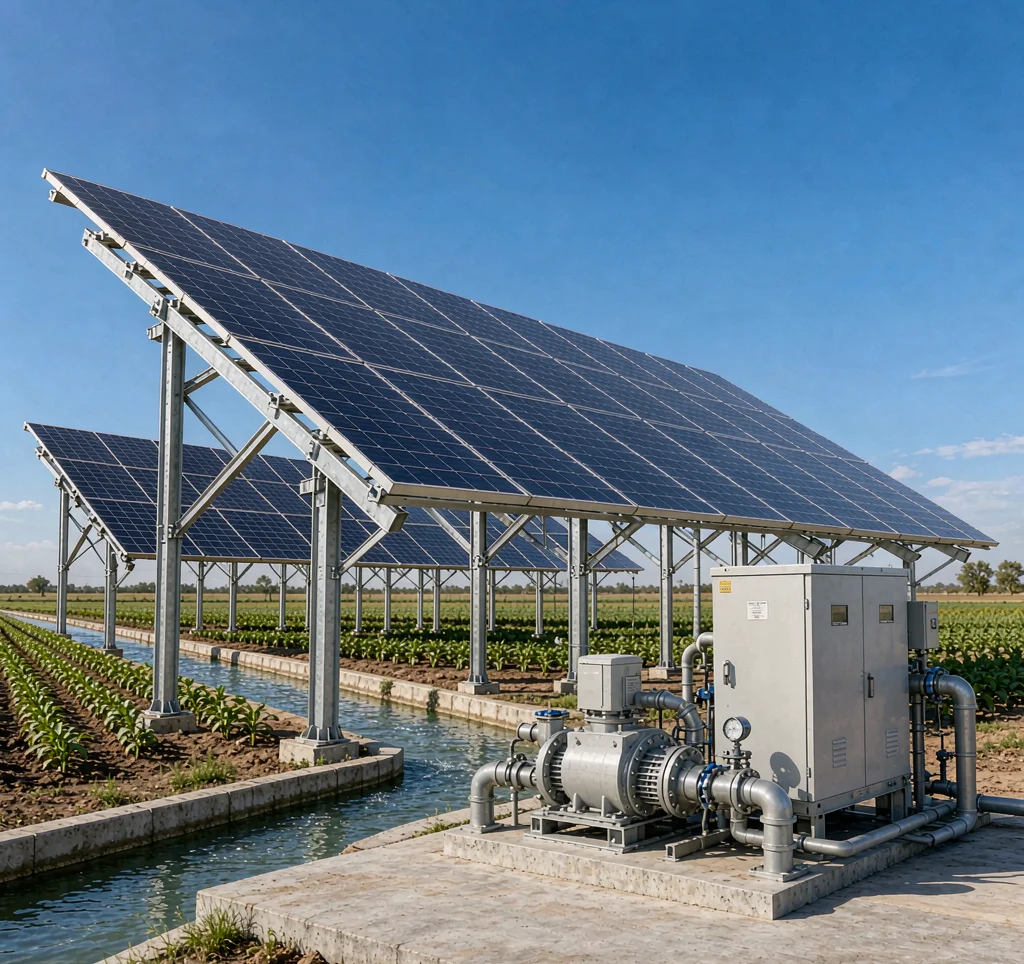
A solar pump is, at its core, an energy converter: it turns the daily watt-hours harvested by the PV array into litres of water lifted to a given head. The single largest variable is plane-of-array irradiance, measured in kWh/m²/day, often expressed as peak sun hours (PSH). On a clear tropical day a site may receive 5.5 to 6.5 PSH, while a humid monsoon region can drop below 3.0 PSH for weeks at a time.
Peak Sun Hours and Site Climate
A one-year minimum PSH figure is more useful than an annual average when sizing for resilience; a system built on the average will under-deliver roughly half the year. Our solar pump system design for irrigation resource walks through mapping climate data to daily demand.
Temperature Derating
PV modules lose roughly 0.35% to 0.45% of rated power per degree Celsius above 25°C. In hot agricultural environments panel temperatures routinely exceed 60°C, shaving 12% to 15% off theoretical output. Any credible solar pump energy yield estimation must apply this derate, or the array will be physically incapable of meeting the design point on hot afternoons.
The Performance-Ratio Method for Energy Yield
The performance ratio (PR) condenses every real-world loss — wiring, inverter, mismatch, soiling, and temperature — into a single percentage.
Defining the Performance Ratio
PR equals actual energy delivered to the pump divided by the theoretical energy from the array at standard test conditions. A well-built solar pumping station typically lands between 0.70 and 0.82. Values below 0.65 usually signal oversized cable runs, undersized controllers, or heavy panel soiling.
Typical PR Values by System Type
The table below shows representative PR bands that B2B buyers can use as a planning baseline before site-specific measurement.
| System Configuration | Typical PR | Key Loss Driver |
|---|---|---|
| DC solar submersible, short run | 0.78 – 0.82 | Minimal cabling loss |
| AC/DC hybrid with VFD | 0.72 – 0.77 | Drive conversion loss |
| Long cable, remote borehole | 0.68 – 0.73 | Voltage drop on feeder |
| Dusty, manually cleaned array | 0.70 – 0.74 | Soiling loss |
Sizing PV Array Capacity for Worst-Case Days
With PSH and PR known, the array size follows directly from water demand. The goal is not to meet the annual average but to survive the worst credible month without a storage buffer.
From Daily Water Demand to Watt-Hours
Multiply required litres per day by total dynamic head (metres) and by the pump’s specific energy consumption (typically 0.004–0.006 kWh per cubic metre-metre). The result is the watt-hours the pump must receive. Divide by PSH and PR to get the needed array watt-peak.
Over-Sizing Margin for Cloudy Operation
For sites with high irradiance variability, apply a 15% to 30% array over-size. The extra modules raise clear-day output into the tank or battery, building a buffer the system draws on during multi-day cloudy spells. The yield example below assumes a 25% margin.
| Parameter | Clear Day | Cloudy Day (3.0 PSH) |
|---|---|---|
| Array size (Wp) | 1,500 | 1,500 |
| Effective energy (PR 0.75) | 6.9 kWh | 3.4 kWh |
| Water delivered @ 40 m head | ~115 m³ | ~56 m³ |
| Demand (with 25% margin) | exceeded | met via buffer |
Figures are illustrative planning estimates assuming 1,500 Wp array, PR 0.75, and a 40 m total dynamic head; actual yield depends on local climate and equipment.
Battery and Hybrid Backup for Low-Light Continuity
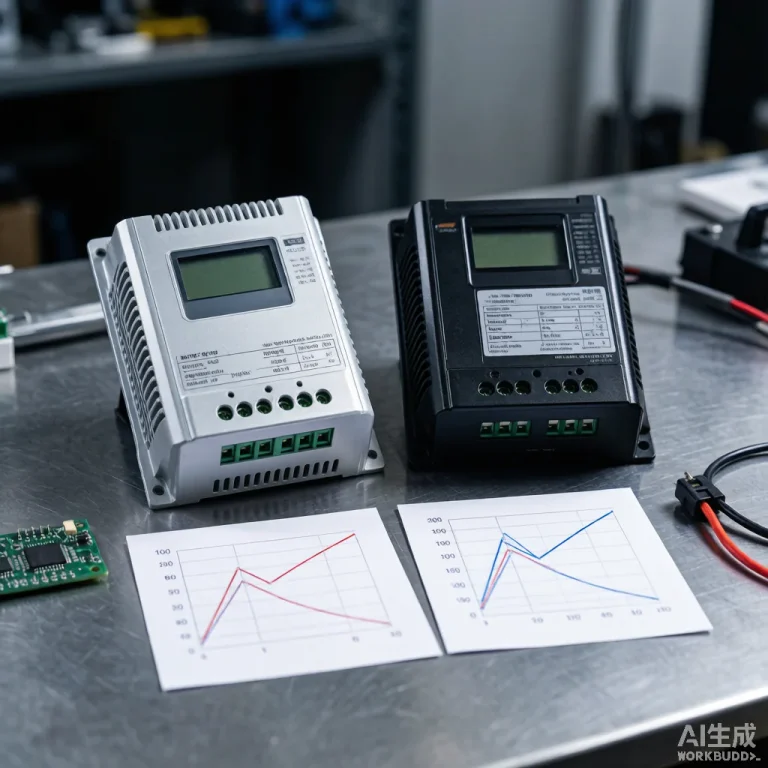
When water demand is non-negotiable — livestock, hospitals, process cooling — an array alone may not suffice on extended overcast. KINBO hybrid controllers integrate a battery or grid/diesel input that carries the load when PV falls short, then recharges the buffer when sun returns.
When Backup Pays Off
Backup is justified when a single missed day risks crop loss, animal welfare, or production stoppage; for tank-backed seasonal irrigation, the over-sized array alone is usually cheaper.
Common Sizing Mistakes to Avoid
Most under-performing solar pumping projects share the same errors:
- Sizing on annual average PSH instead of the worst credible month, guaranteeing shortfalls half the year.
- Ignoring temperature derating, so the array under-delivers exactly when demand peaks in hot weather.
- Underestimating cable loss on long borehole runs, silently shrinking the usable PR.
- No over-size margin, leaving zero buffer for consecutive cloudy days.
- Skipping verification — measuring actual yield after commissioning catches every assumption error above.
For a deeper look at panel selection and tilt, review our guide to configuring solar panels for water pumps.
Frequently Asked Questions
What is a good performance ratio for a solar pump?
A well-designed system reaches 0.70 to 0.82. Below 0.65, investigate cable sizing, controller efficiency, and panel soiling before trusting the yield estimate.
How much should I over-size the PV array for cloudy days?
For variable climates, add 15% to 30% beyond the clear-day requirement. The surplus charges a tank or battery that covers low-irradiance periods without overspending.
Can I size a solar pump using only nameplate watts?
No. Nameplate watts ignore PSH, temperature derating, and system losses. Always convert through peak sun hours and a realistic performance ratio.
Do I always need a battery for low-light operation?
Not always. If you have storage tanks or flexible demand, an over-sized array alone is often cheaper. Batteries matter when supply must be continuous regardless of weather.
Conclusion
Reliable solar pump energy yield estimation is less about complex software and more about disciplined inputs: honest peak sun hours, a realistic performance ratio, temperature derating, and a deliberate over-size margin. Buyers who size for the worst credible month — not the annual average — end up with systems that keep water moving through cloudy spells instead of stalling. Pair the array with the right controller strategy and verify the result on site, and the solar pumping investment pays back exactly as modelled.
For B2B buyers specifying resilient solar pumping systems, contact KINBO for competitive FOB pricing and technical specifications.