AC DC Hybrid Solar Pump Systems: Combining Solar, Battery and Grid for Reliable Water Supply
Introduction
A true AC DC hybrid solar pump ties together three energy sources – PV array, battery bank and the grid or generator – so water keeps flowing through nights, clouds and outages. KINBO designs hybrid controllers that orchestrate these sources automatically. This article covers the architecture, why it matters, and when a hybrid setup beats a standalone solar pump.
Table of Contents
Hybrid System Architecture
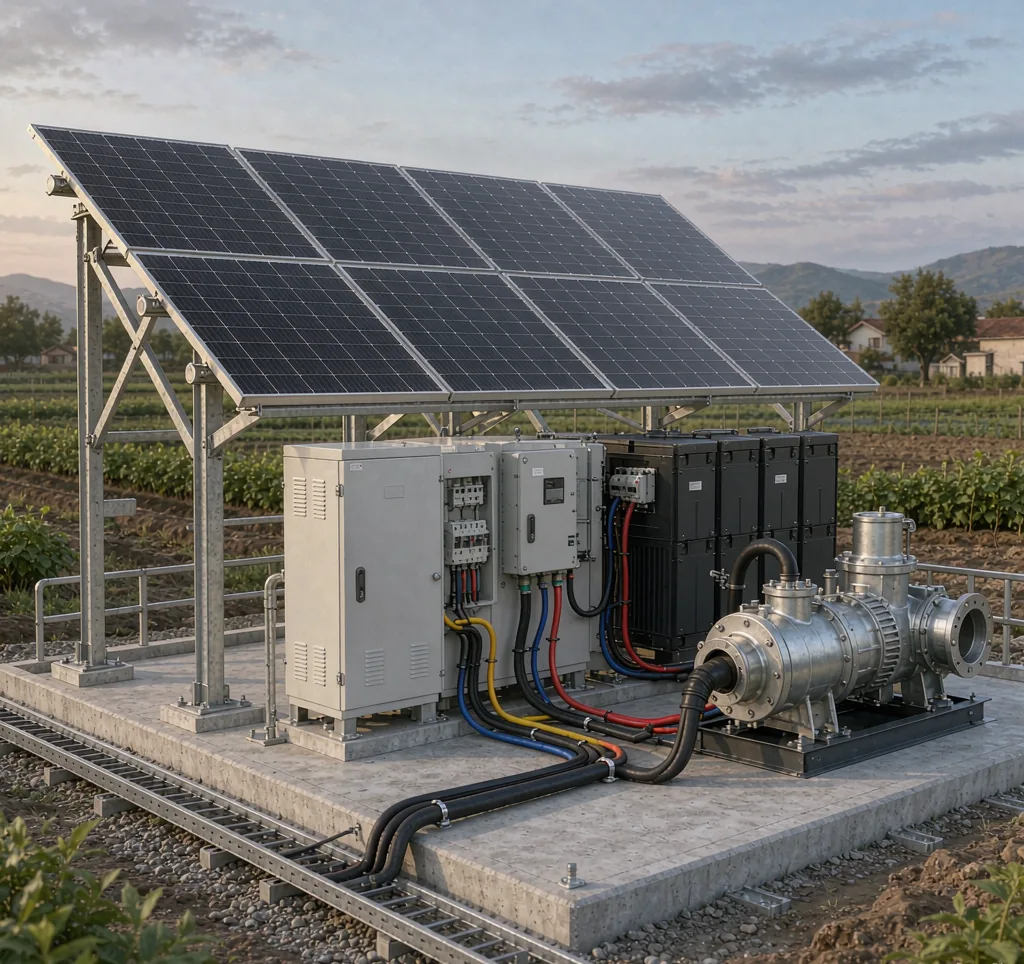
The core is a controller that accepts DC solar, stores surplus in batteries, and draws AC when needed. Water is pumped whenever any source is available, smoothing supply across the day.
The advantages of solar irrigation compound when paired with storage and grid backup, turning intermittent sun into dependable supply.
Architecturally, the battery sits between generation and load, decoupling when energy is captured from when water is needed.
Hybrid also smooths the mismatch between solar generation and water demand peaks, which rarely coincide. By storing midday surplus, the system can pump during evening peaks or overnight without drawing from the grid at the worst time.
Reliability and Cost Benefits
Hybrids maximize solar self-consumption while removing single-point failures.
| Benefit | Standalone solar | Hybrid |
|---|---|---|
| Night supply | No | Yes |
| Outage resilience | Limited | Strong |
| Cost | Lower | Higher |
For critical sites the resilience benefit usually outweighs the higher upfront cost.
How Sources Are Orchestrated
The controller prioritizes cheapest available energy: solar first, battery next, grid or generator last. Smart logic avoids deep battery discharge and limits grid draw to peak shaving.
Some designs also sell surplus or shift load to maximize self-consumption under local tariffs.
In practice the controller also supports generator input as a last resort during extended cloudy periods, ensuring a clinic or district never runs dry even when batteries are low and the grid is down.
Sizing Solar, Battery and Grid
Size solar to daytime demand, battery to night or backup hours, and grid connection to peak topping. Oversizing any one element wastes money, so balance to your duty cycle.
- Daily litres and head.
- Solar array for daytime.
- Battery for backup hours.
- Grid tie for peaks.
Simulate a typical week to avoid both shortage and overspend.
When to Choose Hybrid
Choose hybrid for clinics, district supply, tourism and estates where downtime is costly. For simple daytime off-grid irrigation, standalone solar is usually enough.
If water must flow at 3 a.m. or during a grid outage, hybrid is the pragmatic answer.
Tourism lodges and eco-resorts are another strong fit, where guests expect uninterrupted supply and the site wants to minimize generator noise and fuel. Hybrid systems let operators market a genuinely green water supply.
Frequently Asked Questions
What is an AC DC hybrid solar pump?
It is a system whose controller combines PV, battery storage and grid or generator input, pumping whenever any source is available.
When does hybrid beat standalone solar?
When downtime is costly – clinics, district supply, tourism and estates – or where night or backup supply is required.
Does a hybrid need the grid?
Not strictly; the grid or generator is optional backup. Many hybrids run mostly on solar plus battery and only draw AC occasionally.
Is hybrid more expensive?
Yes, due to batteries and a smarter controller, but the resilience and uptime often justify the cost for critical sites.
For B2B buyers hybrid solar pump design, contact KINBO for competitive FOB pricing and technical specifications.
Related Articles
- AC DC Solar Water Pump Systems: How They Work, Benefits and When to Choose One for Your Site
- AC DC Solar Pump: Types, Built-in Controllers and How to Select One for Off-Grid Water Supply
- Explore KINBO Solar Surface Pumps