Solar Pump Controller Programming and Timer Settings for Automated Irrigation
Introduction
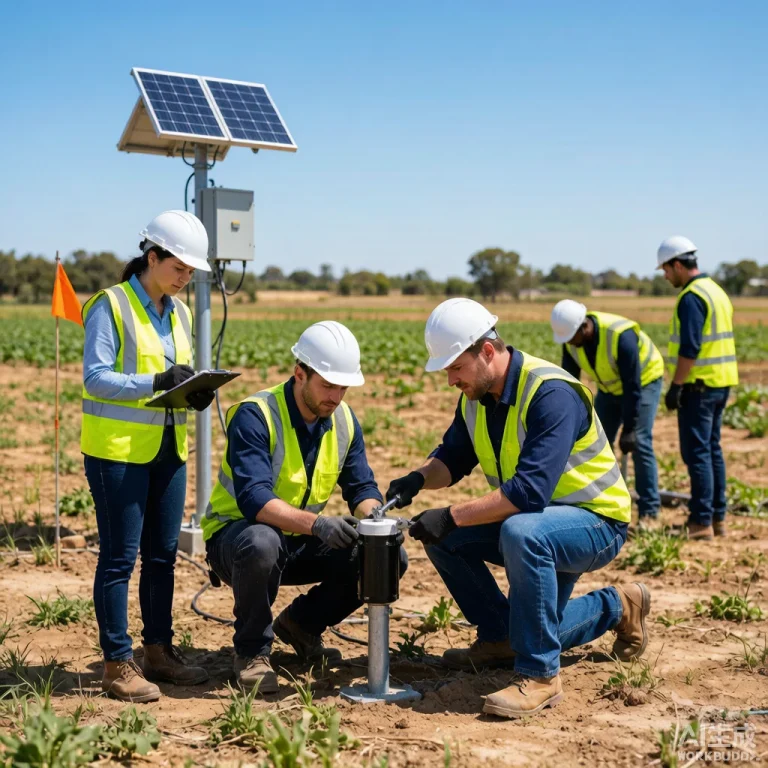
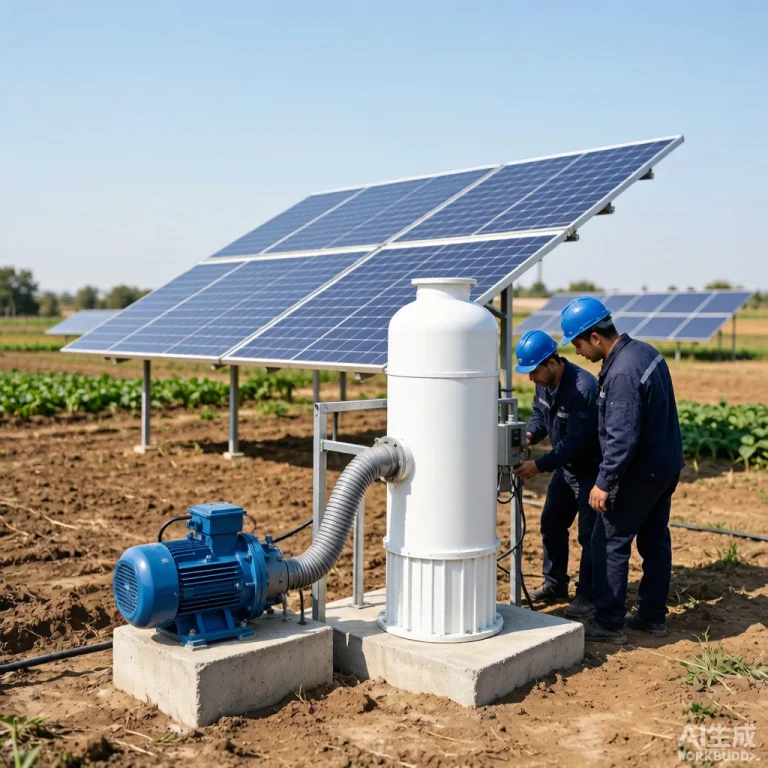
Solar-powered irrigation systems have transformed agricultural water management by eliminating grid dependency and reducing operational costs. However, the efficiency of any solar pumping setup depends heavily on the controller—the electronic brain that regulates power flow, motor speed, and watering schedules. Proper solar pump controller programming ensures that water is delivered at the right time, in the right quantity, and with minimal energy waste.
For irrigation engineers and procurement teams, understanding controller configuration is essential when specifying systems for farms, orchards, and commercial landscapes. A well-programmed controller can extend pump lifespan by 30–40% through features like soft-start, dry-run protection, and intelligent scheduling. As KINBO engineers have documented in their solar water pump working principle guide, the controller is the single most important component for optimizing energy harvest from photovoltaic arrays.
This article covers controller fundamentals, timer programming, sensor integration, and troubleshooting—providing B2B buyers and system integrators with the technical knowledge needed to design reliable automated irrigation systems.
Table of Contents
Solar Pump Controller Basics and Functions
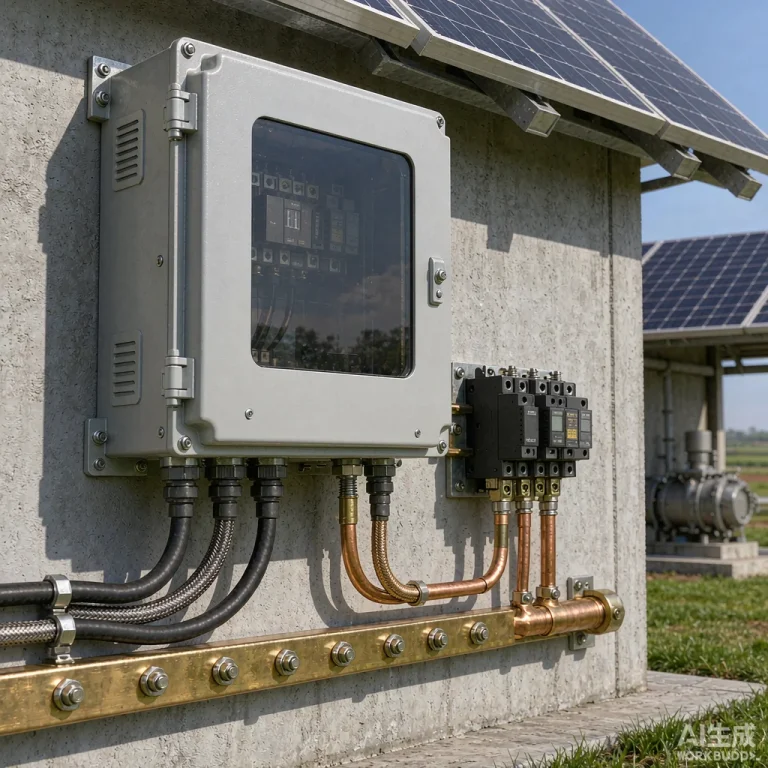
A solar pump controller serves as the interface between the PV array, the pump motor, and the irrigation infrastructure. Modern controllers from KINBO integrate multiple functions that protect hardware and maximize water output under varying solar conditions.
Core Controller Functions
- MPPT (Maximum Power Point Tracking): Continuously adjusts the operating voltage of the solar array to extract maximum available power. MPPT algorithms can improve energy harvest by 15–35% compared to direct-coupled systems, especially during low-irradiance morning and afternoon hours.
- Speed Control: Regulates motor RPM via variable frequency drive (VFD) technology. This allows the pump to start softly, operate at partial loads under reduced sunlight, and avoid hydraulic shock in distribution pipelines.
- Dry-Run Protection: Uses a water level sensor or current-sensing algorithm to detect when the pump is running without water. The controller shuts down within seconds to prevent impeller and seal damage.
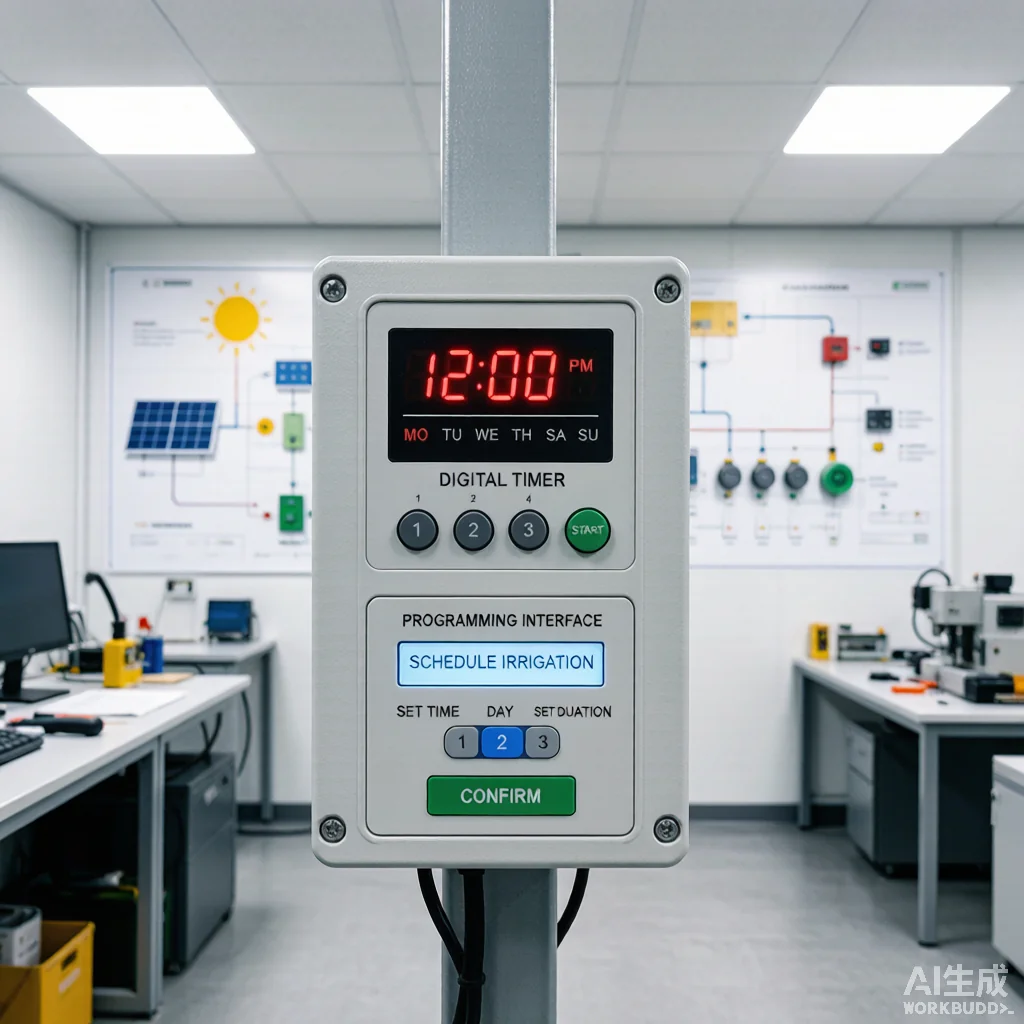
- Timer Functions: Built-in real-time clocks enable scheduled start/stop operations, allowing irrigation to occur during optimal periods—such as early morning to minimize evaporation losses.
- Overvoltage and Overload Protection: Disconnects the pump when voltage or current exceeds safe thresholds, protecting both the motor windings and the controller’s power electronics.
For a deeper understanding of how MPPT tracking boosts pump efficiency under real-world conditions, refer to the MPPT controller efficiency analysis from KINBO’s technical team.
Programming Irrigation Schedules and Timer Settings
Timer programming is where irrigation strategy meets hardware capability. Most modern solar pump controllers support multi-schedule programming that accommodates daily routines, weekly cycles, and seasonal variations in crop water demand.
Daily and Weekly Programming
Controllers typically allow 3–8 independent timer programs per day. Each program defines a start time, stop time, and target output (full speed or throttled). Weekly programming extends this by assigning specific programs to designated days—useful for crop rotation schedules where different zones require irrigation on alternating days.
Multi-Zone Control
For farms with multiple irrigation zones, controllers can sequence valve operations through relay outputs. The pump runs continuously while solenoid valves open and close in programmed order, ensuring consistent pressure and reducing pump cycling wear.
Seasonal Adjustments
Advanced controllers offer seasonal percentage modifiers—automatically scaling irrigation duration by month. For example, a program set for 30 minutes in spring can be configured to run 45 minutes in summer and 20 minutes in autumn, all without reprogramming individual schedules.
Comparison: Basic vs. Advanced Solar Pump Controllers
| Parameter | Basic Controller | Advanced Programmable Controller |
|---|---|---|
| Timer Programs | 1–2 per day | Up to 8 per day, weekly scheduling |
| MPPT Tracking | Optional / PWM only | Full MPPT with dual-point algorithm |
| Sensor Inputs | Water level only | Soil moisture, temperature, flow, pressure |
| Multi-Zone Valves | Not supported | 4–8 relay outputs for sequential zones |
| Seasonal Adjustment | Manual reprogramming | Auto percentage scaling by month |
| Data Logging | None | 30–90 day history (flow, voltage, runtime) |
| Remote Monitoring | Not available | GPRS / Wi-Fi / RS485 Modbus |
| Typical Application | Small farms, household gardens | Commercial agriculture, multi-zone irrigation |
B2B buyers should evaluate the number of zones, sensor requirements, and future expansion plans when selecting between basic and advanced controller tiers. The cost difference is typically recovered within one irrigation season through water savings and reduced labor.
Integration with Soil Moisture Sensors and Weather Data
Timer-based scheduling provides reliability, but adding sensor feedback transforms a solar pump system from a simple timer into a smart irrigation platform. Sensor integration allows the controller to make real-time decisions based on actual field conditions rather than fixed schedules.
Soil Moisture Sensor Integration
Tensiometers or capacitive soil moisture probes installed at root depth transmit readings to the controller via analog (4–20mA) or digital (RS485) signals. The controller compares readings against user-defined thresholds:
- Below threshold: Irrigation program activates, overriding the timer schedule if necessary.
- Above threshold: Scheduled irrigation is skipped, conserving water and preventing waterlogging.
- Multi-depth sensing: Probes at multiple depths enable the controller to distinguish between surface evaporation and deep moisture deficits, adjusting run time accordingly.
Weather-Based Adjustments
Advanced controllers can connect to local weather stations or cloud-based weather APIs. Rain prediction data allows the controller to proactively delay irrigation when rainfall is forecast within the next 12–24 hours. Wind speed sensors can shift irrigation to calmer periods, reducing evaporative drift in sprinkler systems.
Automatic Shut-Off Scenarios
Sensor-triggered shut-offs protect both crops and equipment:
- Tank full: Float switch signals the controller to stop pumping, preventing overflow.
- Pipeline burst: A sudden pressure drop detected by a pressure transducer triggers immediate shutdown.
- Excessive temperature: Motor winding temperature sensor shuts down the pump before thermal damage occurs.
These intelligent shut-off mechanisms are particularly valuable for unattended remote installations where manual intervention is impractical.
Troubleshooting Common Controller Issues
Even well-programmed controllers can encounter operational issues. Understanding common failure modes helps maintenance teams diagnose and resolve problems quickly, minimizing irrigation downtime.
1. Programming Errors
Symptom: Pump starts at unexpected times or fails to start on schedule.
Causes: Incorrect real-time clock settings, overlapping timer programs, or corrupted schedule memory after power loss.
Solution: Verify the controller’s date and time settings after any battery replacement. Check for conflicting program entries. For controllers with supercapacitor backup, ensure the unit has sufficient charge time (typically 30 minutes of powered operation) to retain settings during outages.
2. Sensor Faults
Symptom: Controller ignores moisture readings or triggers false alarms.
Causes: Corroded sensor contacts, cable damage from field equipment, or sensor drift due to mineral buildup on probe surfaces.
Solution: Inspect sensor wiring harnesses seasonally. Clean probe surfaces with a mild acid solution to remove calcium deposits. Calibrate sensors against reference instruments at least once per growing season. If a sensor is faulted, configure the controller to fall back to timer-only operation until the sensor is replaced.
3. Power Supply Issues
Symptom: Controller resets frequently or displays low-voltage warnings during peak irrigation hours.
Causes: Undersized PV array, degraded solar panels, loose DC terminal connections, or insufficient cable cross-section causing voltage drop.
Solution: Measure open-circuit voltage and short-circuit current of the PV array under full sun. Compare against nameplate values—more than 20% deviation indicates panel degradation or wiring issues. Tighten all DC terminals to specified torque. Ensure cable gauge meets the controller manufacturer’s recommendations for the installed run length.
Frequently Asked Questions
Can I program a solar pump controller without grid power?
Yes. Most solar pump controllers are powered directly from the PV array. Programming can be performed during daylight hours when the solar panels generate sufficient voltage. Controllers with internal battery or supercapacitor backup retain programmed settings overnight and during cloudy periods. For initial setup, some installers use a temporary DC power supply to program the controller before connecting it to the solar array.
How many irrigation zones can a single solar pump controller manage?
It depends on the controller model. Basic controllers typically support a single zone with one pump output. Advanced programmable controllers—such as those offered by KINBO—can manage 4 to 8 zones through integrated relay outputs that control solenoid valves sequentially. For larger installations requiring more zones, multiple controllers can be networked via RS485 Modbus, allowing coordinated multi-pump operation across extensive farming operations.
What happens to the timer schedule during cloudy or rainy days?
During low-solar conditions, the controller prioritizes available power. If the PV array cannot sustain the pump’s minimum operating voltage, the controller delays the start until irradiance improves. When paired with a battery storage system, the controller can draw stored energy to maintain the schedule. With weather-sensor integration, the controller can proactively skip or shorten irrigation cycles when rain is detected or forecast, resuming normal schedules when conditions improve.
For B2B buyers engineering automated solar pump irrigation systems, contact KINBO for competitive FOB pricing and technical specifications.