Solar Water Pumps for African Coffee and Tea Plantations: Irrigation and Processing Applications
Introduction
High-value beverages such as arabica coffee and tea are grown on African estates where reliable water separates premium grades from losses. Yet many processing units and nursery beds sit far from stable grid power. Solar water pumps for African coffee and tea plantations deliver pressurized irrigation to nursery beds and the large volumes needed for wet processing, all without diesel. KINBO offers robust pumps and controllers suited to humid, high-altitude estates. This article reviews where solar pumping fits across the crop cycle and how to apply it.
Table of Contents
Plantation Water Demands Across the Crop Cycle
A coffee or tea estate uses water in distinct phases. Nursery beds need frequent light misting, young plants need steady drip, and mature blocks need supplementing during dry spells and fruit set. Processing is the heaviest draw: pulping and washing stations can use thousands of litres per day at harvest.
Matching supply to each phase avoids both under-watering stress and wasteful overflow. A review of the advantages of solar irrigation helps estates see why solar suits this variable, daytime-weighted demand.
Nursery and Irrigation Applications
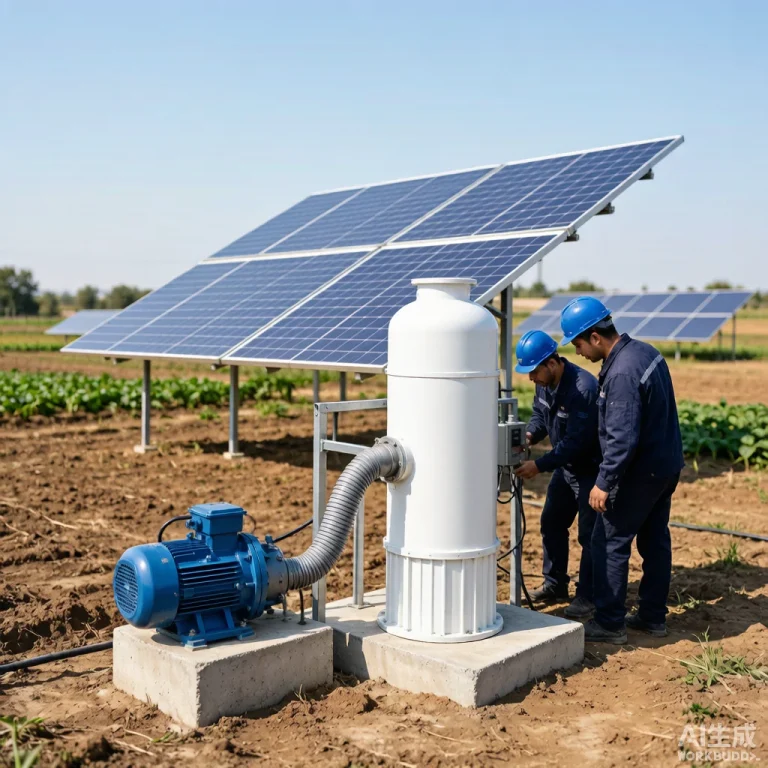
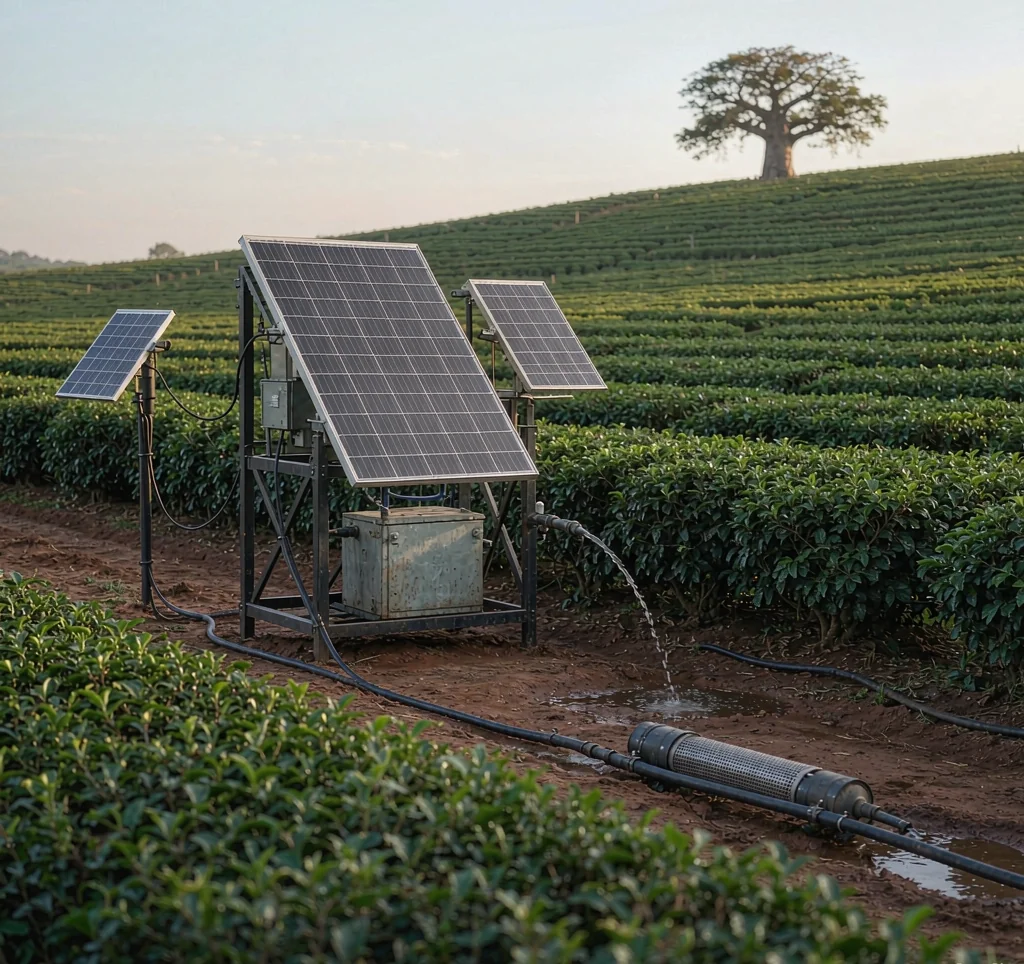
Nursery misting and block drip are ideal solar duties because demand peaks with sun and heat. A surface pump with an integrated controller pushes water through micro-sprinklers and drip lines, while a small battery can cover early-morning misting before full sun.
| Factor | Solar Estate Pump | Diesel Estate Pump |
|---|---|---|
| Daily fuel cost | Zero | High at harvest |
| Uptime | High | Fuel-dependent |
| Emissions | None | CO2 and noise |
| Servicing | Low | Frequent |
Wet Processing and Factory Supply
Wet processing needs a steady flow to washing channels and settling tanks. A solar pump fills a header tank during the day; gravity then feeds pulpers and fermenting tanks, reducing reliance on diverting streams or running a generator through the busy harvest window.
- Borehole or stream intake feeding a submersible or surface pump.
- Header tank sized for a full processing day.
- Filtration to protect pulper screens from sediment.
- Controller sized to the motor starting current.
KINBO kits document the duty cycle so estate engineers can size the array to peak wash demand.
Sizing and System Configuration
Sizing starts by separating nursery flow from processing volume, since the latter dominates. Estimate daily litres, convert to peak flow and head, then size the PV array with margin for cloud and dust.
- Total daily litres (nursery plus processing).
- Peak flow and total dynamic head.
- Pump model matched to that curve.
- PV array 25-30%% above pump watts.
- Storage tank to buffer harvest peaks.
Economics and Quality Outcomes
Removing diesel protects margins at harvest, when fuel prices spike. The table below sketches three African estate scenarios.
| Scenario | Pump type | PV (kW) | Key benefit |
|---|---|---|---|
| Nursery 0.5 ha | Surface | 1 | Uniform seedling growth |
| Small estate 5 ha | Submersible + surface | 4 | Stable wash water |
| Large estate 20 ha | Multiple pumps | 12 | Premium grade, lower cost |
Planning estimates; actual sizing depends on crop, climate and layout.
Beyond cost, steady water improves cup quality, supporting the premium certifications buyers reward.
Frequently Asked Questions
Can solar pumps handle wet coffee processing volumes?
Yes. A correctly sized solar pump fills a header tank through the day that gravity-feeds pulpers and washing channels, covering peak harvest demand without a generator.
Do coffee estates need batteries for night processing?
Usually not. Processing draws from the daytime-filled tank, so direct solar pumping plus storage covers the cycle; batteries are only added if pumping must run after dark.
Which KINBO pump suits a small tea nursery?
A small surface pump with a built-in controller is easiest for nursery misting, while a submersible model is better when water is drawn from a borehole.
How many panels for a 5 ha coffee estate?
Around 4 kW of PV typically covers nursery plus processing for a 5 ha estate, though the figure rises with washing volume and local irradiance.
For B2B buyers solar pumping for coffee and tea estates, contact KINBO for competitive FOB pricing and technical specifications.
Related Articles
- Solar Water Pumps for African Smallholder Agriculture
- Solar Water Pumps for African Aquaculture and Fish Farming
- Explore KINBO Built-in Controller Solar Pumps