Solar Water Pumps for African Smallholder Agriculture: Boosting Yields with Sun-Powered Irrigation
Introduction
Across sub-Saharan Africa, most smallholder farms still bet every season on rain. When the rains come late or stop early, a whole year of work can be lost in a few dry weeks. Solar water pumps for African smallholder agriculture change that bet: they turn the continent’s most reliable resource, sunshine, into water the crop can actually use. KINBO builds solar pumping sets sized for exactly these small, fuel-free, off-grid farm duties.
Table of Contents
Why Irrigation Changes the Game
Rain-fed farming caps both yield and confidence. A farmer who can irrigate plants earlier, fertilizes into moisture rather than dust, and survives the dry spells that would otherwise end the season. Studies across the continent consistently show irrigated plots out-yielding rain-fed neighbors by a wide margin, and the difference is largest exactly in the semi-arid areas where rain fails most often.
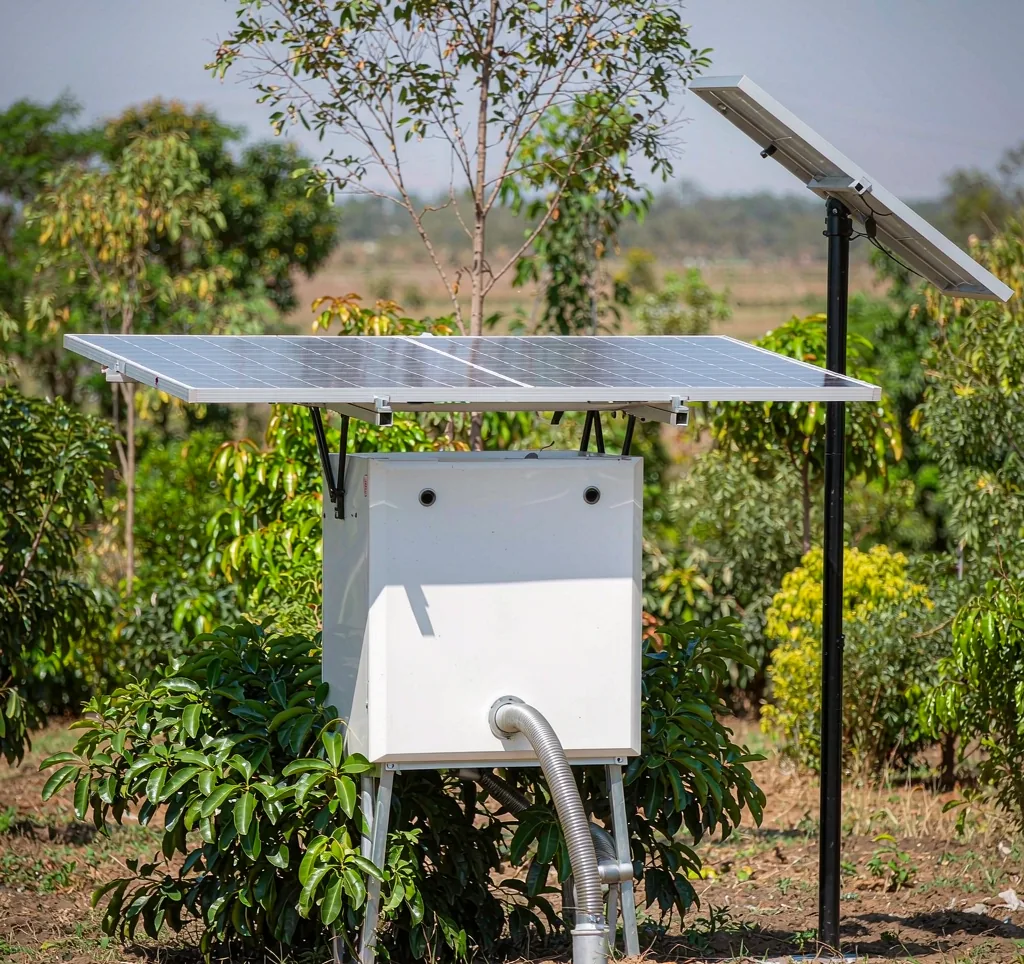
Solar pumping is the practical way for a smallholder to get that water. No fuel to buy or haul, no grid to wait for, and running costs close to zero once installed. The continental context is favorable too; our overview of solar irrigation in sub-Saharan Africa shows how quickly adoption has spread.
Matching the Pump to the Farm
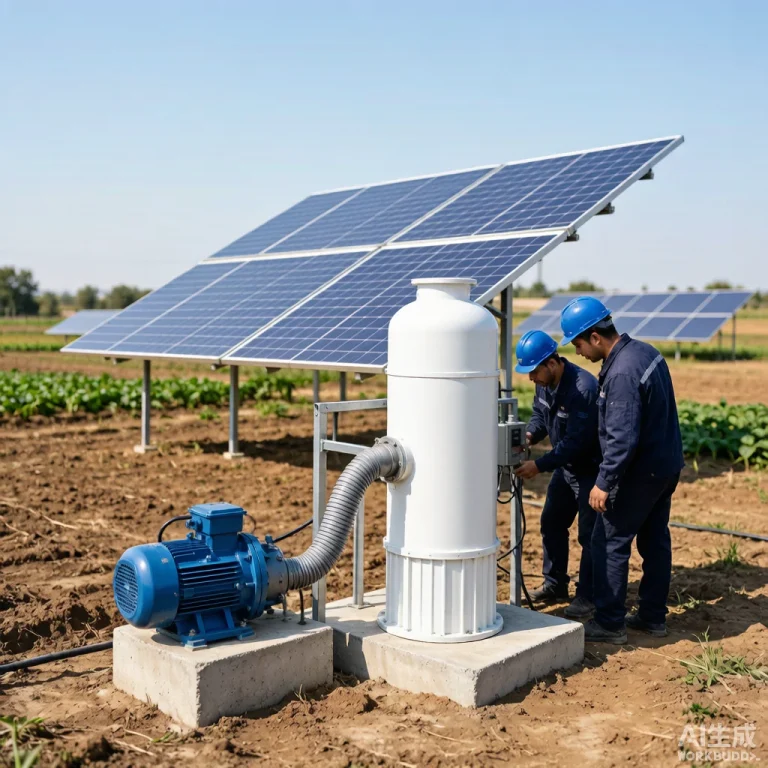
Most smallholder plots need far less water than buyers assume. A quarter-hectare vegetable plot typically needs a few cubic meters per day at modest pressure, which a small DC surface or submersible pump with a 400 to 800 W array can deliver. Oversizing is the common error: a pump that is too big wastes money up front and pushes water faster than the crop or the soil can use.
| Farm size | Typical daily need | Suggested set |
|---|---|---|
| Under 0.25 ha | 2-5 m3/day | Surface pump + 400-600 W |
| 0.25-1 ha | 5-20 m3/day | Submersible + 800-1500 W |
| Over 1 ha | 20 m3+/day | Larger submersible or staged sets |
Water Sources and Lift
The water source decides the pump more than the crop does. A shallow river or pond suits a surface pump with a foot valve; a borehole of 20 to 60 m needs a submersible rated for that head. Shallow wells sit between. Whatever the source, a simple tank turns intermittent sunshine into water available on the farmer’s schedule, which matters more on a small plot than raw pumping power.
Economics and Payback
The honest comparison is against the alternatives: hand watering (labor-heavy and slow), petrol pumps (fuel is a permanent tax), or waiting for rain (free but unreliable). A solar set costs more up front, but the fuel and labor it replaces recur every season. Most smallholder installations recover their cost within two to four seasons, after which the marginal cost of irrigation is essentially zero and every extra watering is nearly free money.
For the continental market forces behind this shift, see our 2026 Africa solar water pump market outlook, which tracks how falling panel prices keep pulling payback periods shorter.
Frequently Asked Questions
How much water does a small plot really need?
A quarter-hectare vegetable plot usually needs 2-5 m3 per day, well within a small solar pump’s output.
Do I need a tank?
Strongly recommended. A tank converts sunshine-hours into water available whenever the crop needs it.
Can solar irrigation work in the dry season?
Yes, provided the water source holds and the array is sized for dry-season demand with margin.
What is the payback period?
Typically two to four seasons, after which irrigation is essentially free to run.
For B2B buyers supplying solar irrigation for African smallholder programs, contact KINBO for competitive FOB pricing and technical specifications.
Related Articles
- Solar-Powered Water Supply for African Schools Case Study
- Solar Water Pumps for African Pastoralists
- Explore KINBO Solar Submersible Pumps