Solar-Powered Water Supply for African Schools: A Case Study in Reliable Safe Drinking Water
Introduction
A rural school in Africa lives or dies by its water. Hand pumps break, trucked water is expensive and inconsistent, and sick children from dirty sources miss the very classes the school exists to teach. This solar-powered water supply for African schools case study follows one school that replaced that uncertainty with a solar pumping set. KINBO supplied the submersible pump and controller for the install.
Table of Contents
The School and Its Water Problem
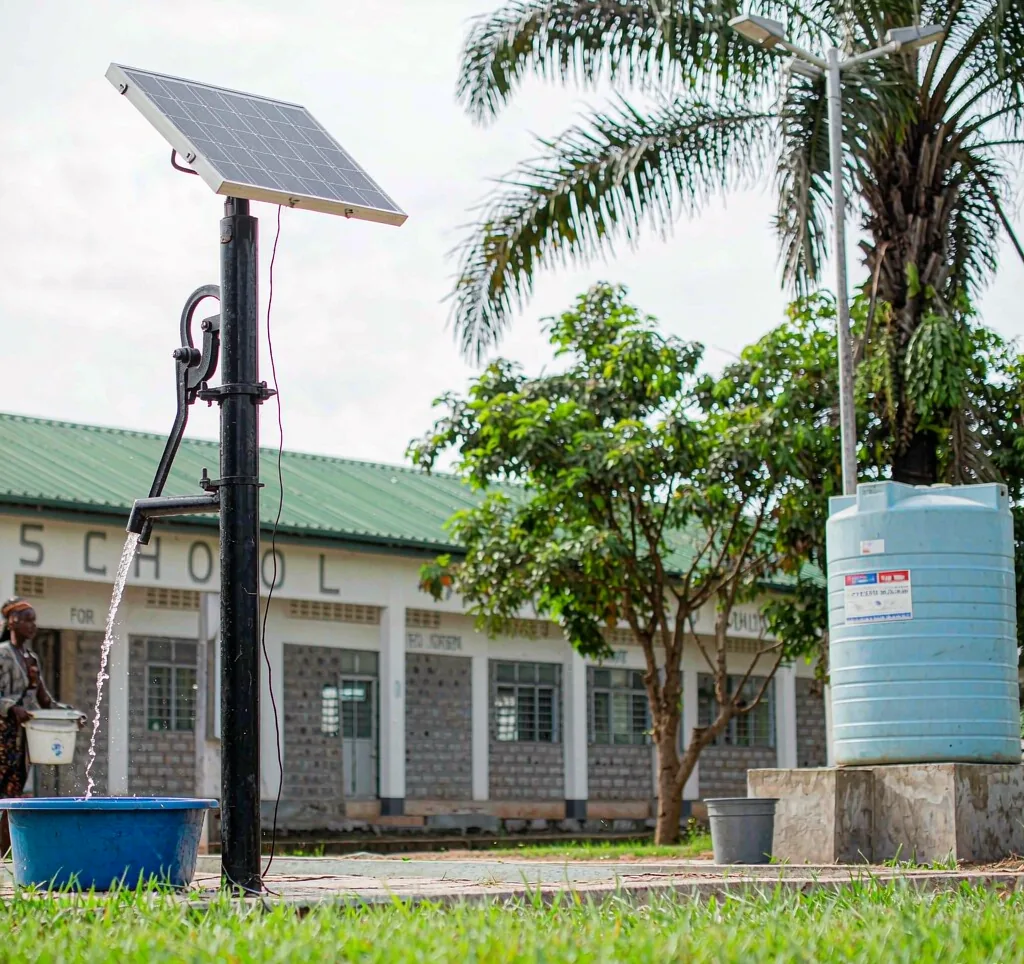
The school serves roughly 400 students in a rural district with no piped water. Its old hand pump had been broken for months, and water was trucked in twice a week at real cost. The nearest functional borehole was a 30-minute walk, which made water a constant background cost in both money and instructional time. The tank was often empty by midday, cleaning was deferred, and the latrines went unwashed, which showed up directly in stomach-illness absences. The school needed water that arrived every day without depending on a delivery truck or a broken hand pump.
System Design and Configuration
A solar submersible pump in a 40 m borehole fills an elevated 5,000 L tank, which gravity-feeds taps at the kitchen, the latrines, and a hand-wash station. The array was sized for daily demand plus margin so the tank refills even on weaker-sun days.
| Component | Specification |
|---|---|
| Pump | Solar submersible, ~0.75 kW |
| Solar array | 4 x 450 W panels |
| Storage | 5,000 L elevated tank |
| Control | MPPT, dry-run + tank float |
| Distribution | Gravity taps + hand-wash station |
The pump family is detailed in our KINBO solar submersible pumps range used here. The design pattern mirrors what works for villages; our community water supply case study covers the same gravity-storage logic at larger scale.
Results in Health and Attendance
| Metric | Before | After (solar) |
|---|---|---|
| Water cost | Trucking, recurring | Near zero |
| Tank empty by midday | Common | Rare |
| Latrine cleaning | Deferred | Daily |
Within a term, the school reported fewer stomach-illness absences, and the kitchen could cook and clean without rationing. Teachers also noted that the hand-wash stations changed daily routines; children washed before meals without being told, because water was simply there. The money previously spent on trucking was redirected to learning materials, which is the quiet dividend of a system with no fuel bill.
Lessons for Other Schools
- Size the tank for a full school day plus margin, not just average demand.
- Put taps where behavior changes: kitchen, latrines, and a hand-wash station.
- Train the caretaker on dry-run resets and panel washing so the system stays independent.
The takeaway is that a school’s water problem is usually a reliability problem, and solar pumping solves reliability better than any delivery-based alternative.
Frequently Asked Questions
Is a 5,000 L tank enough for 400 students?
Yes for daily use with gravity pressure; the key is refilling it fully every sunny day.
Do we need batteries?
Not for daytime pumping into a tank; gravity storage covers use after sunset.
What maintenance is required?
Panel washing, occasional controller checks, and keeping the intake screen clear.
How does this compare to a hand pump?
A solar set delivers far more volume with no handle labor and serves taps, not just a spout.
For B2B buyers deploying solar water supply for schools and institutions, contact KINBO for competitive FOB pricing and technical specifications.
Related Articles
- Solar Water Pumps for African Smallholder Agriculture
- Solar Irrigation Cooperatives in Africa
- Explore KINBO Solar Submersible Pumps