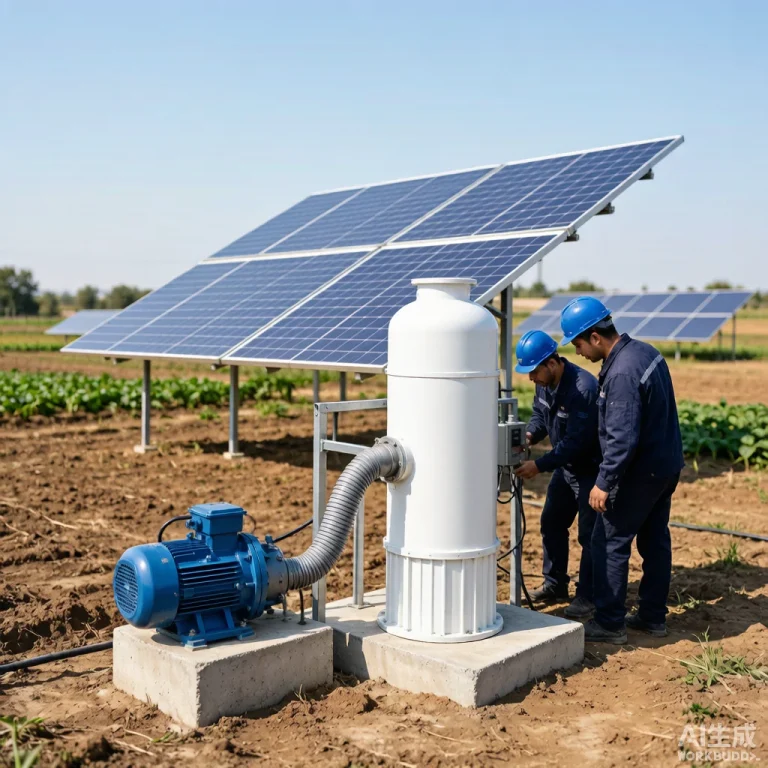
Choosing Solar Water Pumps for African Conditions: Heat, Dust, Water Quality and Remote Service
Introduction
Equipment that survives in Europe or East Asia often fails fast in Africa, not because it is bad but because the conditions are harder. Sustained heat, fine dust, gritty water, long distances to service, and voltage irregularity all punish generic kit. Choosing solar water pumps for African conditions means buying for the environment, not just the spec sheet. KINBO designs for these realities rather than around them.
Table of Contents
The Four Environmental Stressors
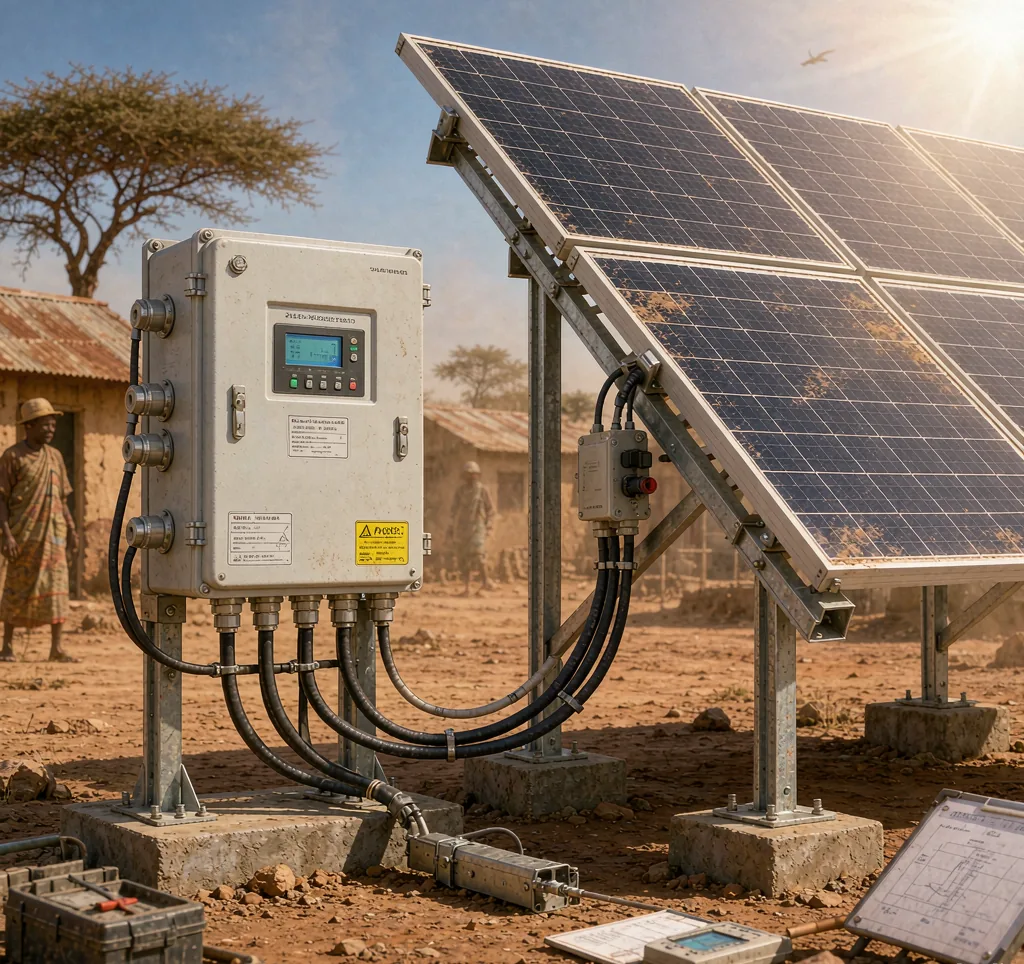
Heat, dust, water quality, and distance are what actually kill pumps in the field. High ambient temperatures derate electronics and cook seals that were never specified for them. Fine dust infiltrates enclosures and abrades anything moving. Gritty or mineral-heavy water wears impellers and scales sensors. And when the nearest technician is hours away, small weaknesses become long outages instead of quick fixes.
| Stressor | What it damages | Design answer |
|---|---|---|
| Heat | Controller electronics, seals | High-temp ratings, shade siting |
| Dust | Connectors, cooling paths | Sealed enclosures, IP-rated |
| Gritty water | Impellers, sensors | Abrasion-resistant wet ends |
| Distance | Everything, via downtime | Robust design + local spares |
Specifications That Matter Here
Read the datasheet with African eyes. Operating temperature range should cover real site heat, not laboratory heat. Ingress protection on the controller should be sealed against dust, not just drips. Pump wet ends should be specified for sediment if the source is a river or shallow well. And the MPPT window should accommodate panel behavior in high heat, when voltage sags. For the installation side that protects these choices, see our solar pump installation best practices.
Service and Spares Reality
The best pump in Africa is the one someone nearby can actually fix. Before buying, confirm who services the brand in-country and what they stock. A slightly less fancy pump with local spares and a trained technician will outperform a superior unit that waits weeks for a board from abroad. Our overview of solar pump supply chains in Africa explains why logistics quietly decides reliability more than engineering does.
A Practical Buying Checklist
- Match temperature and IP ratings to the real site, not the brochure.
- Specify abrasion-resistant wet ends for gritty sources.
- Size the array for the hottest months, when panels lose voltage.
- Confirm in-country service and spare-parts stock before signing.
- Buy the controller and pump as a matched pair, not a mix.
None of these items are exotic; they are simply the difference between equipment specified for the field and equipment specified for the brochure. Built this way, a solar pumping set shrugs off the conditions that destroy generic equipment, and it does so for years rather than seasons.
Frequently Asked Questions
What kills solar pumps fastest in Africa?
Heat and dust on the electronics, and grit in the wet end; all three are avoidable with correct specification.
Is a more expensive pump worth it?
If it is rated for the environment and supported locally, yes; otherwise a mid-range unit with service beats an unsupported premium one.
How do I protect the controller?
Mount it shaded, sealed, and ventilated, off the ground, and away from direct afternoon sun.
Should I buy pump and controller separately?
Prefer matched pairs; mismatched electronics void warranties and complicate troubleshooting.
For B2B buyers procuring solar pumping equipment for African conditions, contact KINBO for competitive FOB pricing and technical specifications.
Related Articles
- Solar Water Pumps for African Smallholder Agriculture
- Solar Water Pumps for African Pastoralists
- Explore KINBO Built-in Controller Solar Pumps