Ultra-Deep Well Solar Pumping Beyond 200 Meters: Multi-Stage Pump Selection and System Design
Introduction
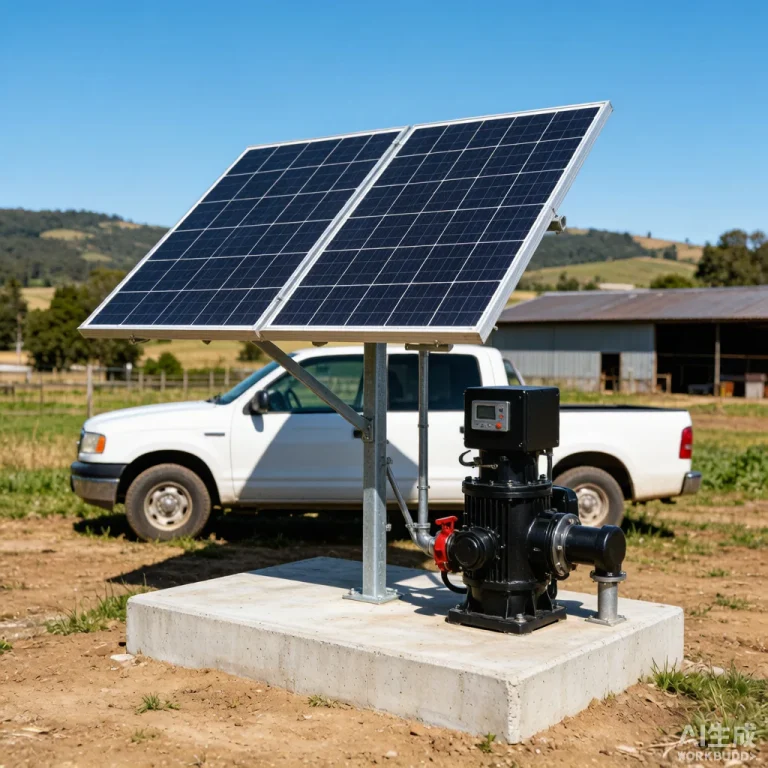
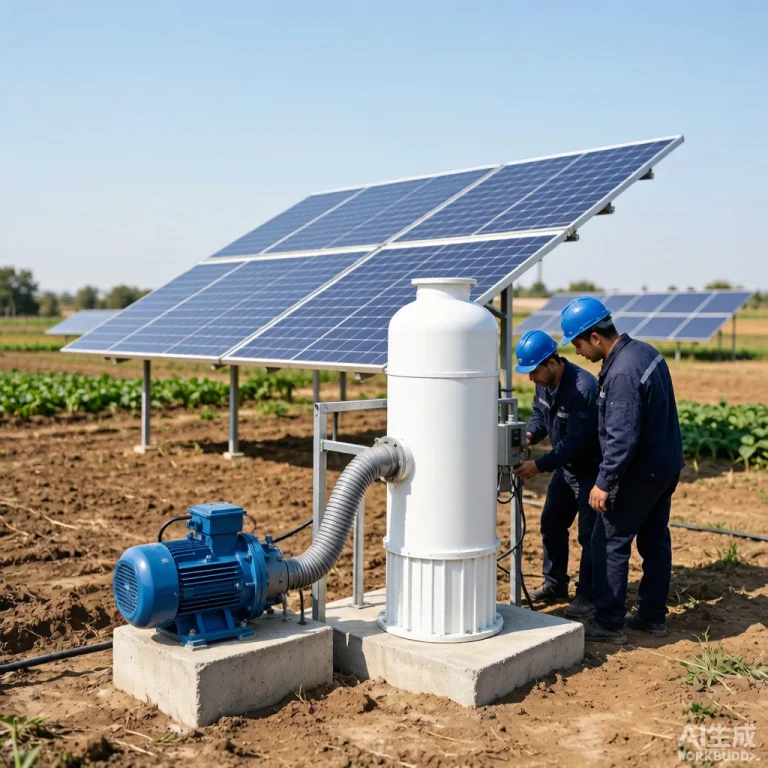
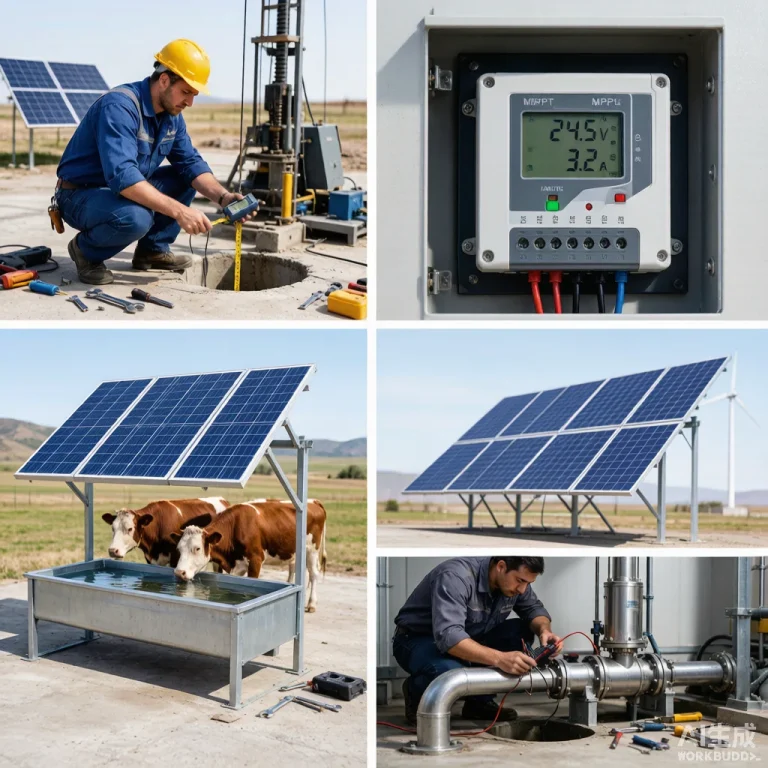
Most solar submersible pumps handle wells up to 100–150 meters, but many real sites go deeper—200, 300 or even 400 meters to a static water level. At those depths, pump selection stops being routine: head pressure, cable voltage drop, motor power and PV array size all scale in ways that break a copy-paste design. Ultra-deep wells need multi-stage submersibles, voltage-rated cable and careful PV sizing. This guide covers the engineering decisions behind reliable solar pumping beyond 200 meters. Manufacturers such as KINBO supply multi-stage submersible platforms rated for deep lift and provide head-and-flow curves so designers can match the pump to the real borehole.
Table of Contents
Why Depth Changes the Design
Every extra meter of lift is more pressure the pump must generate, and pressure scales linearly with depth: at 200 m the pump sees roughly 20 bar, at 400 m about 40 bar. That demands more stages, a stronger motor and a thicker column. But the harder problem is often electrical: the long submerged cable carries current from the controller at the surface down to the motor, and resistance causes voltage drop. Lose too much voltage and the motor underperforms or overheats. Depth therefore forces trade-offs between pump hydraulics and cable electricals that a shallow-well design never faces.
Multi-Stage Pump Selection
For deep wells the right answer is almost always a multi-stage submersible: many impeller stages stacked to build high head from a single motor. The table contrasts pump types by practical depth range.
| Pump Type | Practical Depth | Notes |
|---|---|---|
| Single-stage submersible | < 80 m | Simple, low head only |
| Multi-stage submersible (standard) | 80–200 m | Common solar duty range |
| Multi-stage deep-well (high-stage) | 200–400+ m | More stages, stronger motor |
| Surface booster (post-lift) | any (adds pressure) | Used after a submersible lift |
Start by calculating the required head from static level, drawdown and surface discharge height—our guide on how to calculate required head walks through the numbers. Then pick the stage count that meets target flow at that head on the pump curve, leaving margin for wear and low-sun days. For a companion deep-well overview, see our article on deep-well solar submersible pump selection to 200 m.
Cable Sizing and Voltage Drop
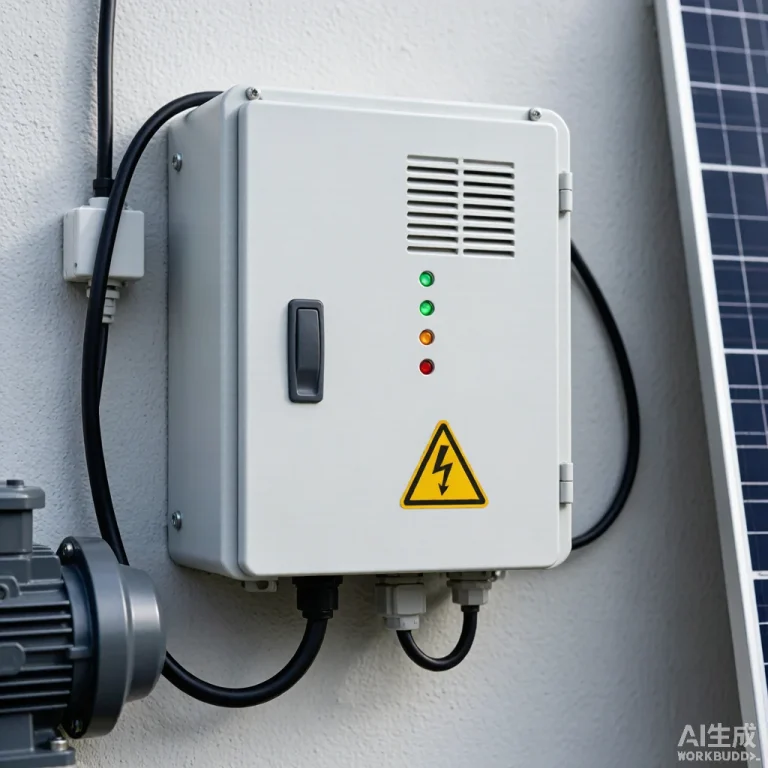
Cable is the silent failure point in deep wells. Voltage drop grows with both length and current, so a long drop at high current can rob the motor of starting torque. Use thicker cable or raise the system voltage to cut losses. The table illustrates drop at a fixed 10 A load over typical depths (illustrative, 4 mm² copper):
| Depth | Cable Length (one way) | Approx. Drop @10 A | Mitigation |
|---|---|---|---|
| 100 m | 100 m | ~4 V | Standard gauge ok |
| 200 m | 200 m | ~8 V | Upsize or raise voltage |
| 350 m | 350 m | ~14 V | Thick gauge + higher V |
Note: figures assume 4 mm² copper at 10 A and ignore connector losses; always verify against the motor’s minimum voltage and the cable’s current rating.
PV Array Sizing for Deep Lift
Deeper wells need more power for the same flow, so the PV array grows. Three rules keep the design honest:
- Size to worst-case sun, not peak: use the lowest monthly irradiance so the well still delivers in cloudy season.
- Match voltage to the run: a higher DC bus (e.g. 240 V or 380 V systems) reduces current and therefore cable drop over long depths.
- Leave controller headroom: the MPPT controller should handle the open-circuit array voltage at the well’s temperature extremes.
KINBO configures deep-well packages with higher-voltage DC buses and stage counts matched to the borehole log, so the motor receives stable voltage even at 300+ meters. Pair the pump choice with the right solar pump inverter and the array will track the curve through the day.
Frequently Asked Questions
Can a standard solar submersible pump reach 300 meters?
Only if it is a multi-stage deep-well unit with enough stages and a motor rated for the resulting pressure; a standard shallow-duty pump cannot.
How do I stop voltage drop killing the motor?
Upsize the submerged cable, raise the system DC voltage, or both—then verify the motor sees above its minimum voltage at the worst-case current.
Does a deeper well need a bigger PV array?
Yes. More head means more power per cubic meter, so the array must grow; size it to the cloudiest month, not peak sun.
Should I add a surface booster after a deep lift?
If you need distribution pressure above the tank, yes—a surface booster after the submersible lift is simpler than one giant deep-well pump.
For B2B buyers specifying ultra-deep well solar pumping, contact KINBO for competitive FOB pricing and borehole-matched system design.