Difference Between DC and AC Solar Pumps: Which One Should You Choose for Your Water Project?
Introduction
Buyers often ask whether to use a DC or AC solar pump. The difference lies in the motor and how it is driven: DC pumps run straight from panels through a controller, while AC pumps need an inverter or grid. KINBO offers both, and the right choice depends on site, budget and backup needs. This article compares them and explains which to pick.
Table of Contents
DC vs AC Basics
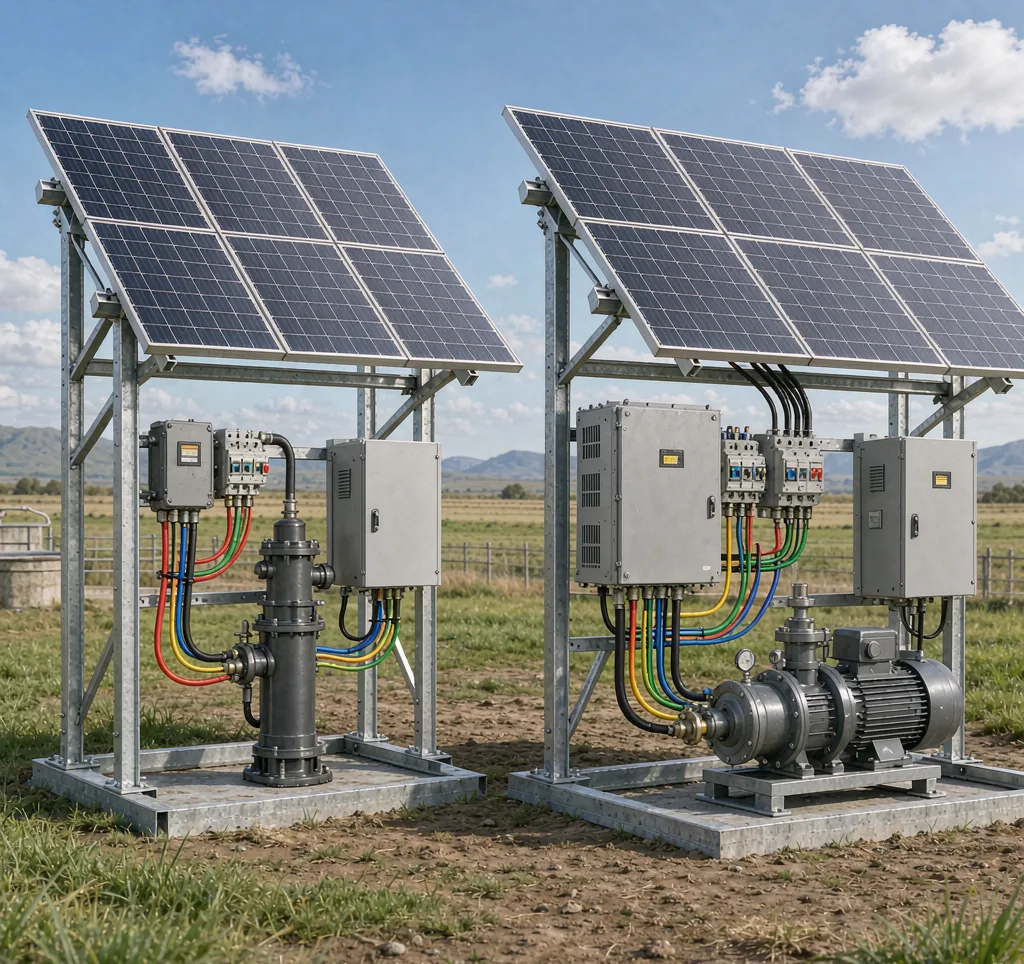
A DC solar pump uses a brushless DC motor powered directly by the PV array via an MPPT controller. An AC solar pump uses a standard AC motor driven by an inverter (from DC) or the grid. The difference affects efficiency, cost and flexibility. A guide to choosing a solar water pump expands on this.
DC pumps are purpose-built for solar; AC pumps leverage ubiquitous, standardized motor technology.
The choice often comes down to whether you already have grid or standard AC infrastructure on site.
Controller and Inverter Needs
DC systems need only an MPPT controller; AC systems need an inverter (if solar-only) or simply grid connection. Inverters add cost and a failure point but unlock AC motor availability.
| Aspect | DC pump | AC pump |
|---|---|---|
| Extra hardware | Controller only | Inverter or grid |
| Efficiency | High | Good |
| Motor choice | Limited | Wide |
For solar-only remote sites, skipping the inverter is a real simplicity win for DC.
Cost and Efficiency
DC systems are often simpler and highly efficient at small to mid sizes. AC systems can be cheaper at large sizes where standard AC motors dominate, but the inverter adds cost for solar-only setups.
At very large flows, the economics of commodity AC motors can overtake DC specialty motors.
Best Use Cases
DC suits off-grid boreholes and small farms. AC suits grid-connected sites, large flows, and where standard AC motors are preferred or already available.
Many estates already run AC pumps on grid and simply want solar to offset daytime cost.
How to Decide
Decide by source availability and scale: no grid and small-to-mid flow favors DC; grid-connected or large flow with standard motors favors AC. For mixed sites, an AC DC hybrid solar pump bridges both.
When in doubt, size the duty first, then let the source decision follow.
Frequently Asked Questions
What is the main difference between DC and AC solar pumps?
DC pumps use a brushless DC motor run directly from panels via a controller; AC pumps use a standard AC motor driven by an inverter or the grid.
Which is more efficient?
DC systems are typically very efficient at small to mid sizes because they avoid inverter losses; AC can be competitive or cheaper at large flows.
Which is cheaper?
DC is often simpler and cheaper for off-grid small-to-mid systems; AC may be cheaper at large scale but needs an inverter for solar-only use.
How do I choose for my project?
No grid and small-to-mid flow favors DC; grid-connected or large flow with standard motors favors AC; mixed sites suit a hybrid unit.
For B2B buyers choosing DC vs AC solar pumps, contact KINBO for competitive FOB pricing and technical specifications.
Related Articles
- AC DC Solar Water Pump Systems: How They Work, Benefits and When to Choose One for Your Site
- AC DC Solar Pump: Types, Built-in Controllers and How to Select One for Off-Grid Water Supply
- Explore KINBO Solar Surface Pumps