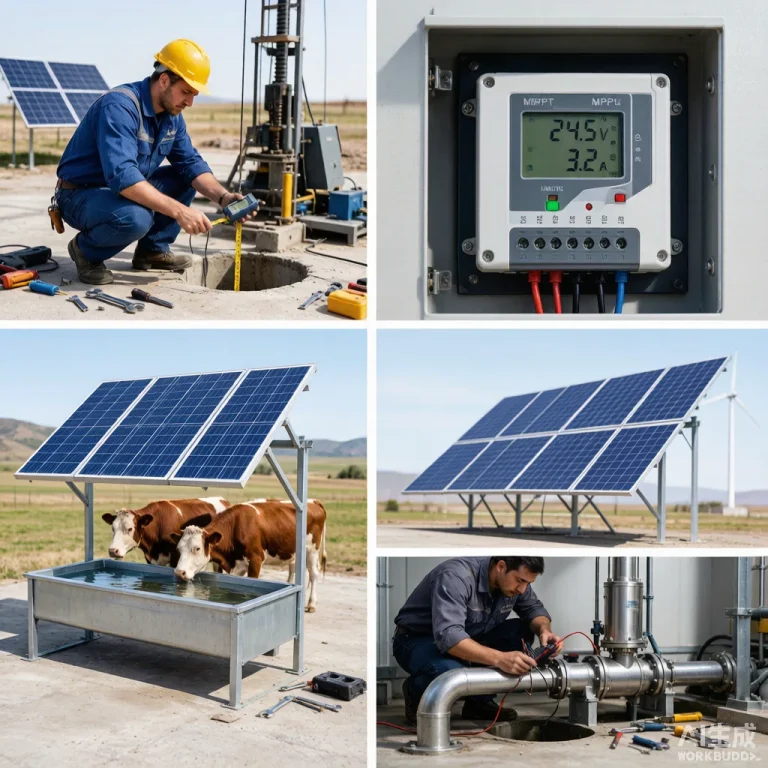
AC DC Solar Water Pump Systems: How They Work, Benefits and When to Choose One for Your Site
Introduction
An AC DC solar water pump is built to run from both direct-current (DC) solar input and alternating-current (AC) sources such as the grid or a generator, giving operators flexibility across sites and seasons. KINBO offers controllers that manage this switching automatically. This article explains how these systems work, why they matter, and how to decide whether one fits your project.
Table of Contents
How an AC DC Solar Pump Works
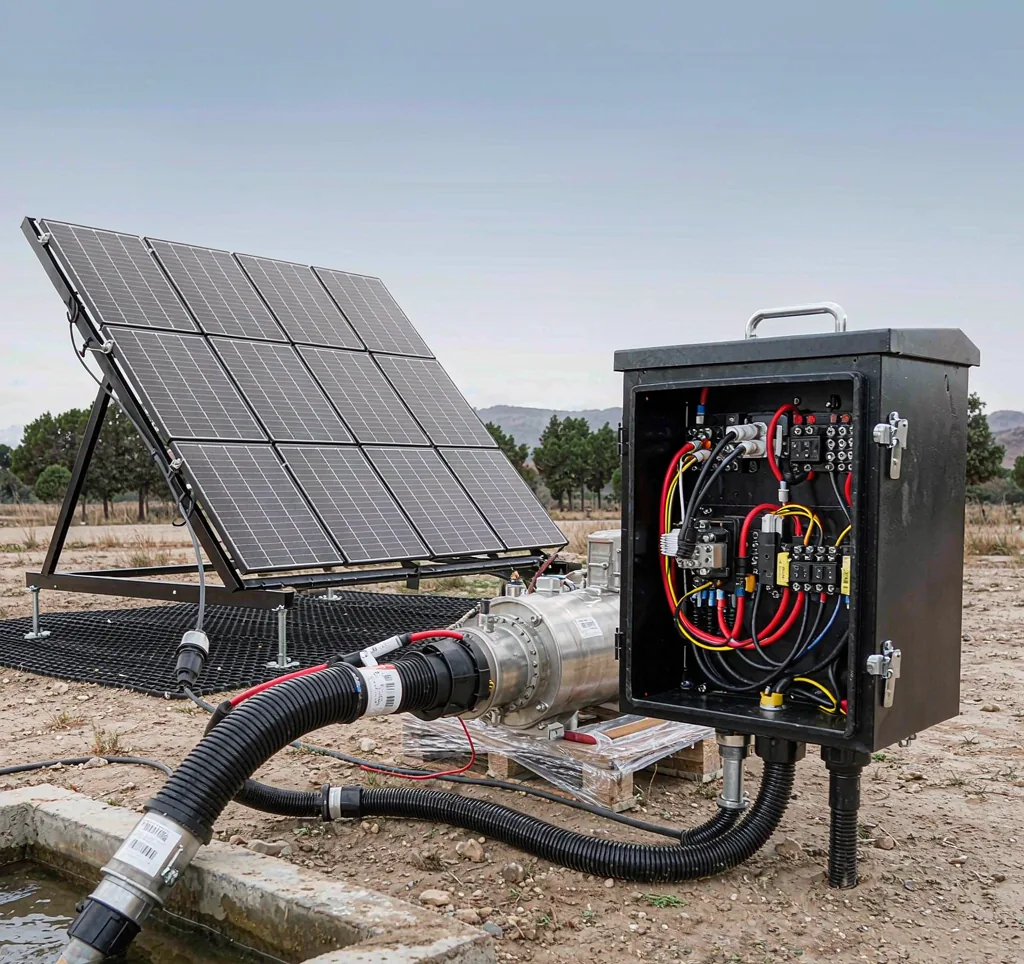
The system pairs a PV array with a controller that accepts DC solar input and can also draw AC when available. During sunny hours it runs primarily on solar; when clouds or demand peak, it blends or switches to AC. A clear walkthrough of how to choose a solar water pump helps frame the decision.
The controller is the intelligent layer: it tracks the maximum power point of the array, converts as needed, and protects the motor from unstable input.
Because the pump motor can be driven either way, one physical unit serves many duty profiles without rewiring.
Key Benefits Over Single-Type Pumps
Flexibility is the headline advantage: one pump serves grid-connected, off-grid and backup scenarios.
- Resilience against cloudy days and outages.
- Lower diesel use by preferring solar first.
- Simpler logistics with one SKU across sites.
For fleets of sites, standardizing on AC DC units dramatically simplifies sparing and training.
AC DC vs Pure DC vs Pure AC
The table contrasts the three approaches.
| Type | Best for | Limitation |
|---|---|---|
| Pure DC | Off-grid only | No grid use |
| Pure AC | Grid-connected | No solar-only |
| AC DC | Mixed sites | Higher cost |
The right choice depends on how variable your power sources are across the year.
When to Choose One
Choose an AC DC unit when your site has unreliable grid, seasonal variability, or you want one model across a fleet of mixed sites. For purely off-grid boreholes, a pure DC pump may be simpler and cheaper.
Consider it also where future grid extension is uncertain but possible.
Sizing and Selection Tips
Size to daily litres and total head first, then pick a controller rated above starting current. Confirm the unit handles your local AC voltage. KINBO documents curves so engineers can verify before ordering.
Leave headroom in the controller for motor starting surges to avoid nuisance trips.
Frequently Asked Questions
What is an AC DC solar water pump?
It is a pump system whose controller accepts both DC solar input and AC from grid or generator, switching or blending sources automatically.
When should I choose AC DC over pure DC?
Choose AC DC when the site has unreliable grid, strong seasonal variation, or you want one model across mixed sites.
Does an AC DC pump save diesel?
Yes. It prefers solar first and only draws AC when needed, cutting diesel and generator runtime.
Is an AC DC pump more expensive?
Typically yes, because the controller is more capable, but the flexibility and resilience often justify the premium for mixed sites.
For B2B buyers AC DC solar water pump selection, contact KINBO for competitive FOB pricing and technical specifications.
Related Articles
- AC DC Solar Pump: Types, Built-in Controllers and How to Select One for Off-Grid Water Supply
- AC DC Hybrid Solar Pump Systems: Combining Solar, Battery and Grid for Reliable Water Supply
- Explore KINBO Built-in Controller Solar Pumps