Solar Pump Suction Lift Limits and Priming Methods: A Surface Pump Selection Guide
Introduction
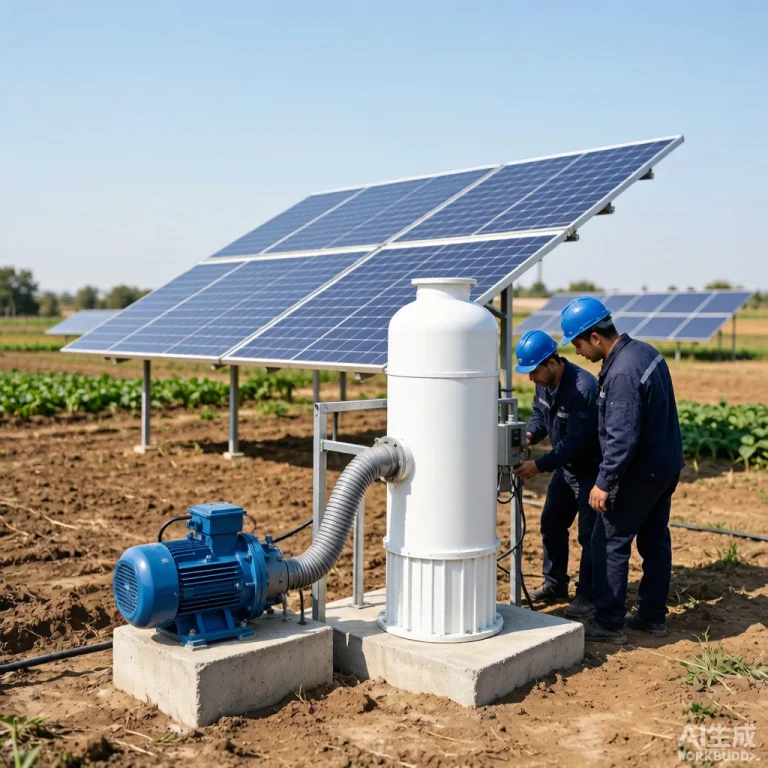
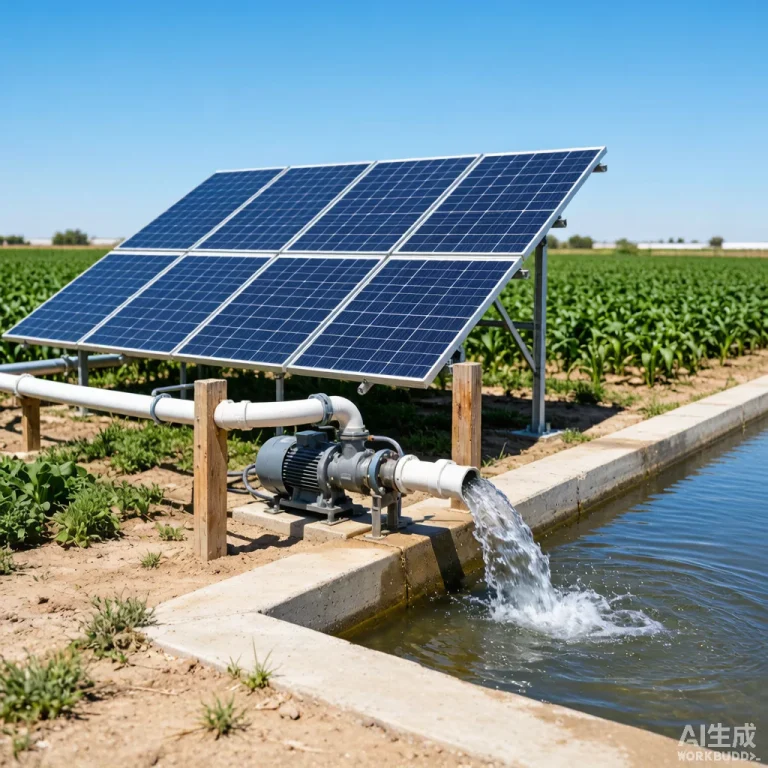
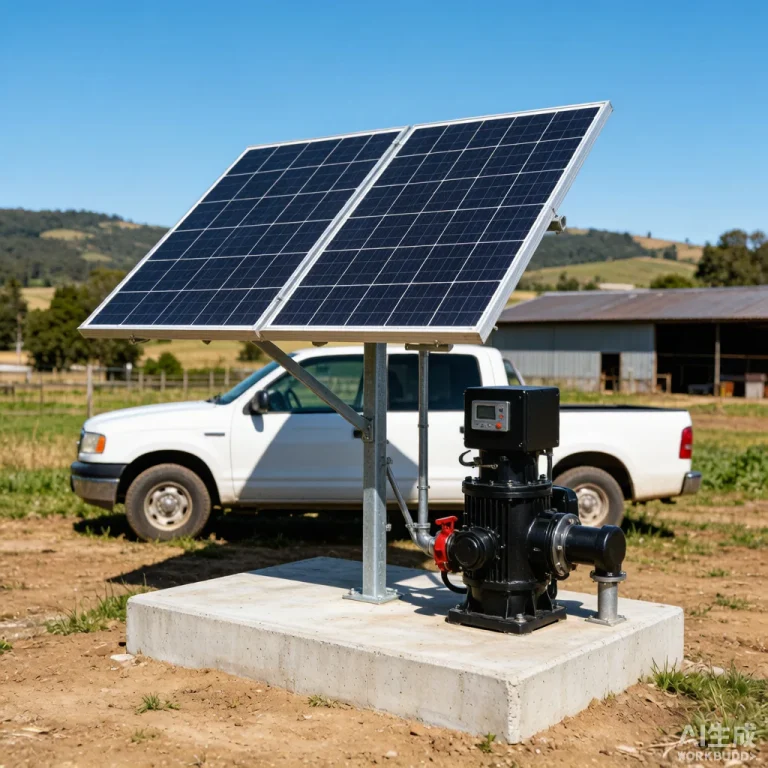
Surface solar pumps are the most economical choice when a water source is shallow, open, or close to the point of use—rivers, ponds, canals, and shallow dug wells. Unlike submersible units, a surface pump sits above the water and must lift water up through a suction pipe, which introduces a hard physical limit: it cannot pull water higher than the surrounding atmospheric pressure allows. Getting suction lift and priming right is the difference between a reliable solar pumping system and one that loses prime every hot afternoon. Suppliers such as KINBO provide both surface and submersible solar pumps so designers can match the technology to the actual site rather than forcing a one-size-fits-all solution.
Table of Contents
Understanding Suction Lift and Atmospheric Limits
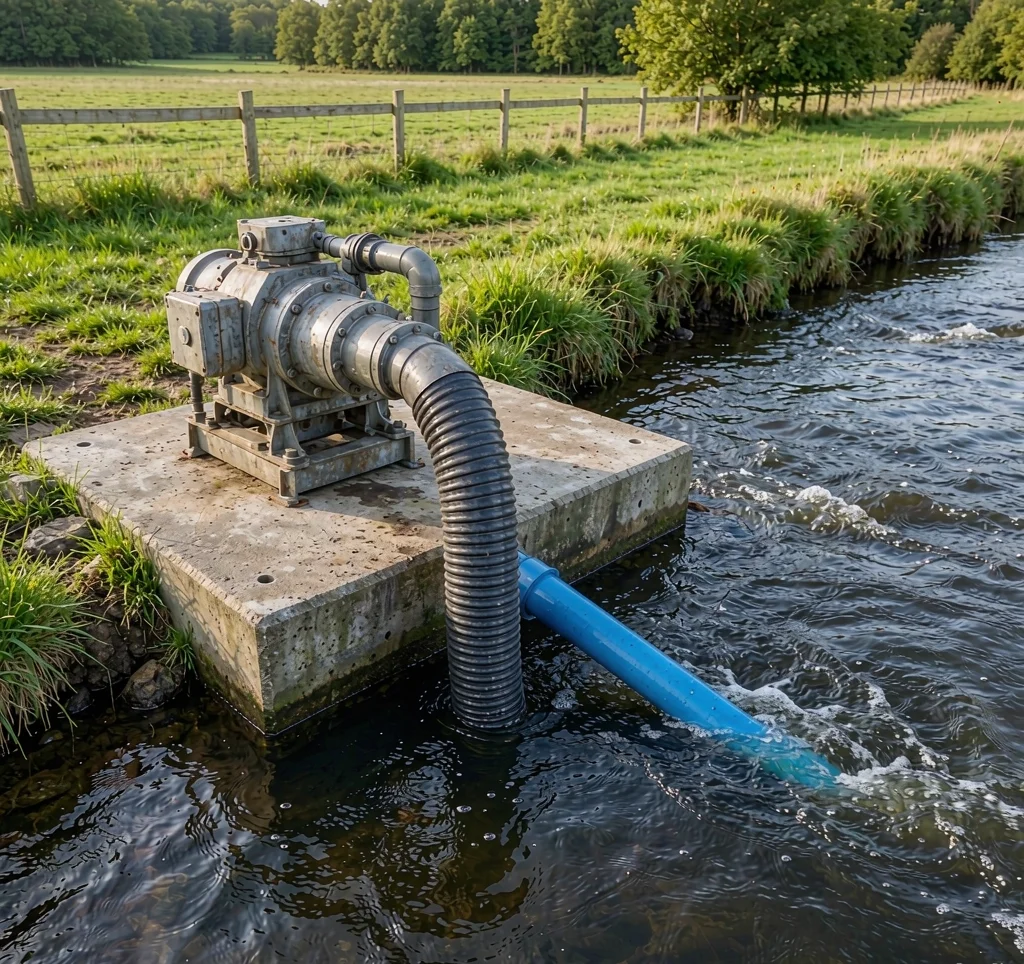
Suction lift is the vertical distance from the pump inlet (the centerline of the pump) down to the water surface when the source is below the pump. At sea level, standard atmospheric pressure can support a theoretical water column of about 10.3 meters. In practice, friction losses in the suction pipe, water vapor pressure, and pump internal losses consume most of that budget. A realistic maximum suction lift for a centrifugal solar surface pump is typically 6–7 meters, and at high altitude or high water temperature it drops further.
Why Lift, Not Pull
A pump does not “suck” water up; it creates a low-pressure region at the inlet and atmospheric pressure pushes the water up the pipe. Once the suction lift approaches the atmospheric ceiling, the water column can no longer be sustained and the pump loses prime or suffers cavitation. This is why a proper pump selection must account for the actual vertical drop from pump to water surface before anything else.
Net Positive Suction Head (NPSH) for Solar Surface Pumps
NPSH is the margin of pressure at the pump inlet above the water’s vapor pressure. If the available NPSH (NPSHa) falls below what the pump requires (NPSHr), vapor bubbles form and collapse inside the impeller—cavitation—causing noise, erosion, and premature failure. The available NPSH depends on atmospheric pressure, water temperature, static suction lift, and friction losses.
| Condition | Effect on Suction Capability | Practical Guidance |
|---|---|---|
| Sea level vs. 2,000 m altitude | Max lift drops ~2 m | Reduce lift or choose submersible |
| Water at 30 °C vs. 15 °C | Vapor pressure rises sharply | Keep lift under 5 m in warm climates |
| Long or narrow suction pipe | Friction loss cuts effective lift | Use short, wide suction lines |
| Clogged foot valve / strainer | Pressure loss, loss of prime | Clean intake screen monthly |
Note: Figures are typical design margins for centrifugal solar surface pumps; always apply the pump manufacturer’s published NPSHr curve and local altitude/temperature correction.
Common Priming Methods
A centrifugal pump must be full of water before it can move water. Because surface pumps sit above the source, they need a priming method to fill the suction line on startup. The right method depends on how often the system starts and whether an operator is present.
- Foot valve and manual prime: A one-way foot valve at the intake keeps the suction line full between runs, so a small top-up primes the pump. Common for farm and community systems.
- Self-priming pump design: An integrated priming chamber re-establishes the water column automatically after short stops—ideal for solar systems that cycle with irradiance.
- Vacuum or ejector priming: Used on larger units where manual priming is impractical; a small vacuum pump evacuates air from the suction line.
- Flooded suction: If the source is above the pump (e.g., a raised tank), gravity keeps the pump primed—the most reliable layout when terrain allows.
Intake Design and Foot Valve Selection
The intake assembly determines long-term reliability more than any other suction-side component. A poorly placed intake draws air, debris, and sediment that erode impellers and repeatedly break prime.
- Set the foot valve below the minimum water level with a strainer that keeps out leaves, silt, and aquatic life.
- Keep the suction pipe straight and short; every elbow adds friction and promotes air pockets.
- Use a non-return foot valve rated for the line size so the column stays charged between solar cycles.
- Add a priming port and isolation valve near the pump for fast manual refill during seasonal maintenance.
Sizing and Troubleshooting Checklist
Before commissioning a surface solar pump, work through the following and record the values. KINBO application engineers recommend confirming suction-side margins first, because an undersized suction line is the most common cause of repeated loss of prime in the field.
| Check | Acceptable Target | If Out of Range |
|---|---|---|
| Static suction lift | ≤ 6 m (warm/altitude ≤ 5 m) | Move pump lower or use submersible |
| Suction friction loss | ≤ 1 m of head | Increase pipe diameter |
| NPSHa − NPSHr margin | ≥ 0.5 m safety | Reduce lift or upsize pump |
| Foot valve seal | Holds column 24 h | Replace valve or O-ring |
Symptoms such as noisy operation, low flow, or visible vapor at the impeller usually point to insufficient NPSH or air ingress on the suction side—not to the PV array or controller. Diagnose the suction line before replacing electronics.
Frequently Asked Questions
What is the maximum suction lift for a solar surface pump?
In real-world conditions a centrifugal solar surface pump should not exceed about 6–7 meters of suction lift at sea level, and less at altitude or in warm water. The theoretical 10.3 m atmospheric limit is never achievable because friction and vapor pressure consume most of the margin.
Why does my surface pump lose prime when the sun is hottest?
Warm water has higher vapor pressure, which reduces available NPSH exactly when the system is also working hardest. If the suction lift is already near the limit, the pump cavitates and breaks prime. Lowering the pump, using a wider suction pipe, or switching to a submersible unit resolves it.
Is a foot valve necessary for a surface solar pump?
For a pump above the water line, yes. A foot valve holds the water column in the suction pipe between solar cycles so the pump restarts without a full manual prime each morning. Without it, the system must be re-primed every start.
When should I choose a submersible pump instead?
Whenever the water source is deeper than the achievable suction lift, or when the suction line would be long, narrow, or prone to air leaks. Submersible pumps push water from below and avoid the entire suction-lift limitation.
Conclusion
Suction lift and priming are the foundations of a reliable surface solar pumping system, yet they are the most frequently underestimated part of the design. By respecting the atmospheric ceiling, calculating NPSH honestly, selecting a robust foot valve and intake, and verifying the suction side before blaming the electronics, designers can build systems that prime quickly and run for years. When the source is too deep for a surface pump, the correct answer is a submersible unit—not an oversized surface pump fighting physics.
For B2B buyers specifying suction-limited or open-source solar pumping systems, contact KINBO for competitive FOB pricing and application engineering.