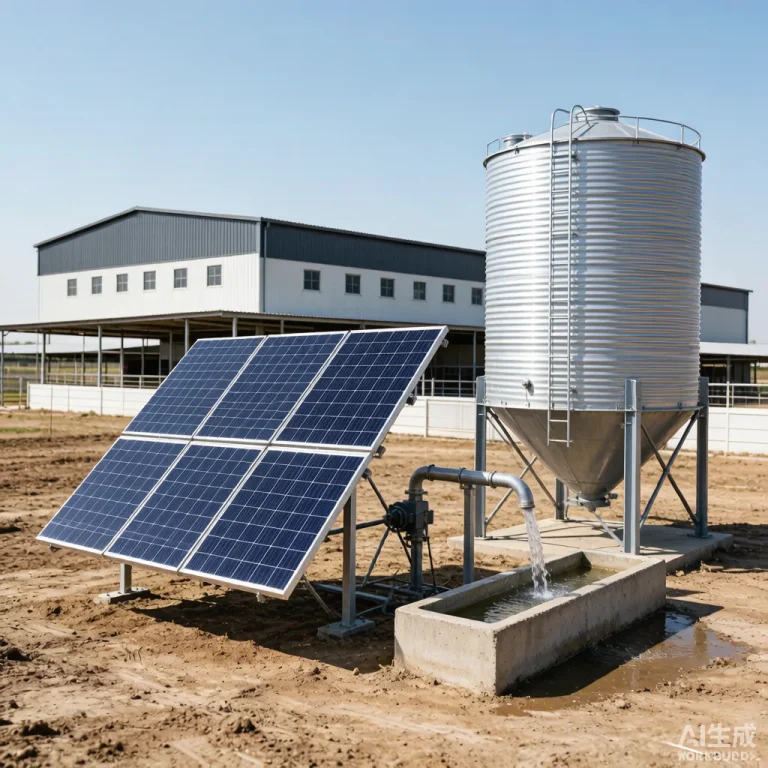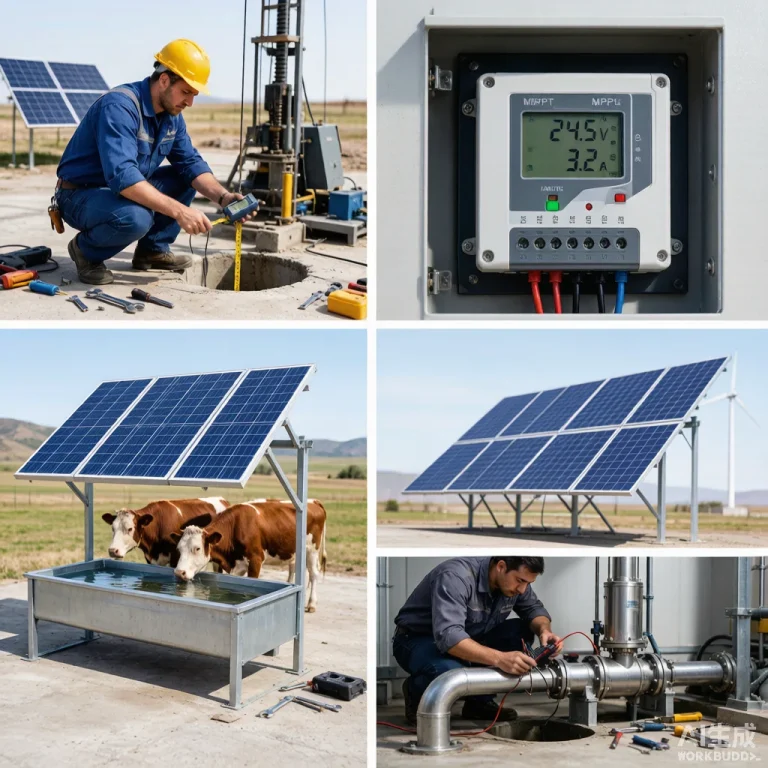
Solar Water Pumps for Coffee Plantation Irrigation: System Design and Application Guide
Introduction
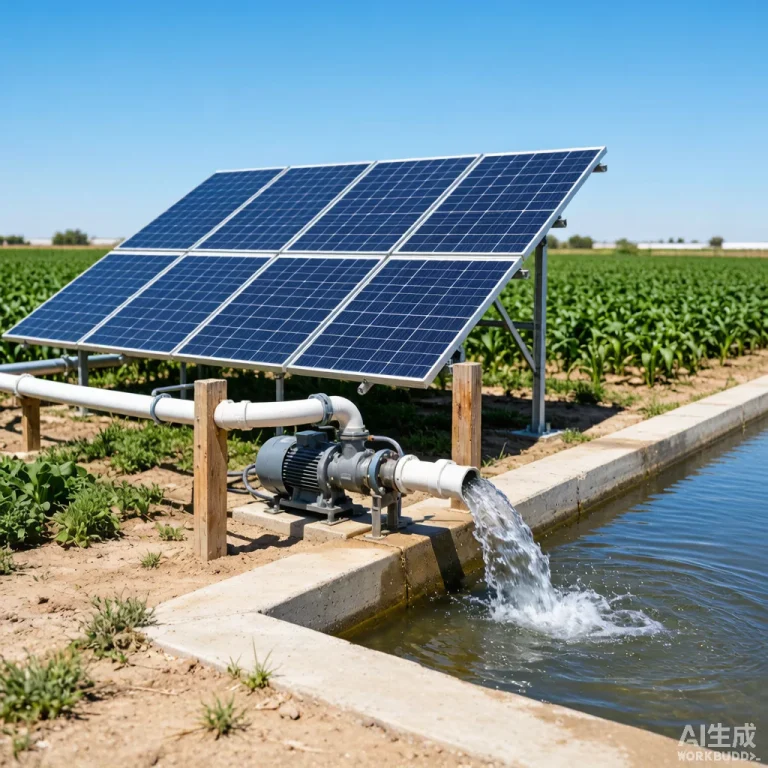
Coffee is one of the most water-sensitive perennial crops grown in tropical highlands. From flowering to cherry development, uneven irrigation directly affects bean size, yield, and cup quality. In regions such as East Africa, Central America, and Southeast Asia, many coffee farms are located far from the grid, making diesel generators and manual watering expensive and unreliable. Solar water pumps offer a clean, modular alternative that matches peak crop water demand with peak solar availability. Manufacturers like KINBO supply submersible and surface solar pumps engineered for the variable flow, pressure, and terrain challenges of large coffee estates.
Table of Contents
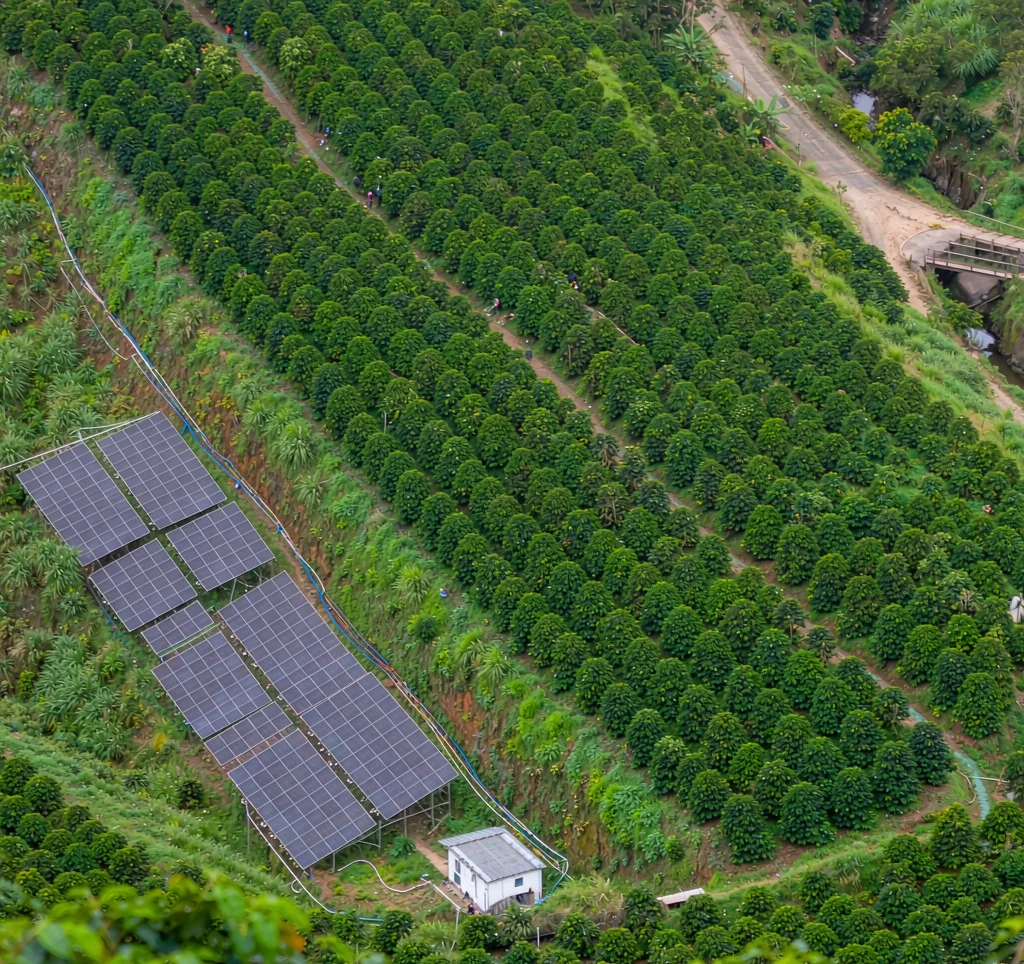
Coffee Plantation Water Requirements and Seasonal Peaks
Coffee trees require consistent soil moisture, but the highest irrigation demand occurs during flowering and the fill stage of the cherry. In many highland regions, a short dry season coincides with the most critical growth phases, forcing growers to supplement rainfall. Unlike flood irrigation, modern drip and micro-sprinkler systems deliver water directly to the root zone, raising pump pressure requirements while lowering total volumes.
| Growth Stage | Typical Water Use (mm/day) | Irrigation Priority |
|---|---|---|
| Flowering | 4–6 | Critical for fruit set |
| Cherry expansion | 5–7 | High, sustained demand |
| Ripening | 3–4 | Moderate, avoid over-watering |
| Post-harvest / dormancy | 1–2 | Low, maintenance only |
Note: Exact rates depend on rainfall, soil texture, slope, and shade cover. These figures are representative of arabica coffee at 1,200–1,800 m elevation with supplementary drip irrigation.
Solar Pump System Sizing for Coffee Irrigation
Sizing a solar irrigation solution for coffee begins with a daily water budget and the total dynamic head (TDH). Most coffee estates use a mix of boreholes, springs, and small reservoirs, so each zone may need a different pump configuration. A common approach is to size the system for the driest month, then use storage tanks and zone valves to extend pumping into early morning and late afternoon when solar radiation is lower.
Key Sizing Parameters
- Daily water volume: Hectares under irrigation × crop water requirement × distribution uniformity factor.
- Total dynamic head: Elevation lift from water source to the highest block + pipeline friction losses + drip or sprinkler operating pressure.
- Peak solar hours (PSH): Use the monthly minimum PSH for the farm latitude; in equatorial highlands this is often 4.0–5.5 hours.
- Array oversizing: Size the PV array 10–20 % larger than the pump nominal power to compensate for dust, temperature, and partial shading.
For a 5-hectare block with a peak demand of 35 m³/day and a TDH of 85 m, a 7.5 kW submersible solar pump paired with 10 kWp of panels and a 50 m³ storage tank is a typical starting point. Multiple smaller pumps are often preferred over one large pump because they allow zoned irrigation and redundancy during maintenance.
Frost Protection and Shading Considerations
High-elevation coffee farms face night-time frost events that can defoliate trees and destroy new growth. While overhead sprinklers are the traditional frost-protection method, they require very high flow rates and pressure during the coldest hours—precisely when solar pumps produce no power. Practical solar-powered designs therefore combine:
- Elevated storage tanks charged during the day to release water by gravity at night.
- Hybrid AC/DC pumps that can switch to grid or diesel during emergency frost events.
- Shade tree management that reduces radiative frost risk while still allowing enough sunlight for the PV array.
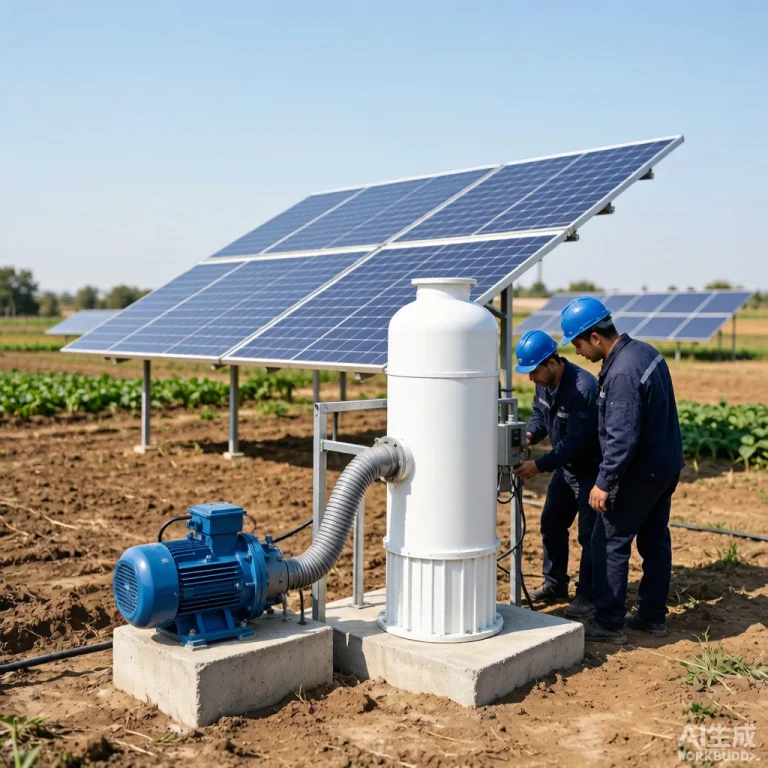
Panel orientation and row spacing must also account for shade from native trees and farm buildings. Even minor shading on one string of modules can disproportionately reduce pump output, so module-level optimizers or a carefully planned array layout are worthwhile investments.
Installation Best Practices on Sloped Terrain
Coffee plantations are rarely flat. Pipelines run along contours, pump houses are built on stable ground, and suction lines must avoid cavitation. Best practices for sloped sites include:
- Place the pump house close to the water source to keep suction lifts below 6–7 meters for surface pumps.
- Use pressure-sustaining valves at the base of steep distribution lines to prevent over-pressure at lower blocks.
- Anchor above-ground pipework against soil movement during heavy rains common in tropical highlands.
- Install debris screens and sand separators to protect drip emitters and pump impellers from volcanic sediment.
- Provide lightning and surge protection because highland farms experience frequent electrical storms.
ROI and Maintenance Comparison
Compared with diesel-powered pumping, solar water pumps eliminate fuel logistics and reduce long-term operating costs. For a mid-size coffee cooperative, the capital investment is typically recovered through fuel and maintenance savings within three to five years.
| Cost Factor (Annual) | Diesel Pump System | Solar Pump System |
|---|---|---|
| Fuel / energy | USD 3,200–5,500 | Near zero |
| Engine maintenance | USD 600–1,100 | USD 80–150 |
| Pump maintenance | USD 400–700 | USD 150–250 |
| Labor for refueling | USD 500–900 | Minimal |
| Typical payback period | N/A | 3.5–5 years |
Note: Figures are illustrative for a 5–10 hectare estate replacing a 7.5 kW diesel pump. Local diesel prices, solar resource, and financing terms will shift results significantly.
KINBO supplies solar pump systems with stainless-steel wet ends and dry-run protection, which are especially valuable in coffee country where borehole levels fluctuate seasonally.
Frequently Asked Questions
Can a solar pump irrigate an entire coffee farm without batteries?
Yes, if the system is designed with adequate water storage and zoned irrigation. The pump charges a reservoir during sunny hours, and the stored water is distributed through drip or micro-sprinkler lines using gravity or small booster pumps. Batteries are usually unnecessary for pure irrigation.
What pump type is best for coffee plantation irrigation?
Submersible solar pumps are preferred for deep boreholes, while surface solar pumps work well for rivers, springs, or reservoirs. The choice depends on water source depth, required flow, and total dynamic head rather than the crop itself.
How do I prevent frost damage when solar pumps only run during the day?
Use elevated storage tanks to store daytime pumping output and release water by gravity at night. In frost-prone microclimates, a hybrid pump that accepts grid or generator power during emergencies provides additional security.
Does shading from shade trees affect solar pump output?
Yes. Even partial shading can reduce PV string output and lower pump flow. Plan array layout to avoid morning and afternoon shade, use wider row spacing, and consider module-level power electronics if tree shade is unavoidable.
Conclusion
Solar water pumps give coffee growers a reliable, cost-predictable way to irrigate high-value crops in off-grid highlands. Success depends on matching pump capacity to peak crop water demand, designing for local topography, and providing frost protection through storage and hybrid backup. With proper sizing and installation, solar pumping becomes a long-term asset that improves yields, reduces diesel dependence, and supports sustainable farming practices.
For B2B buyers developing solar irrigation for coffee estates, contact KINBO for competitive FOB pricing and technical support.