Solar Water Pumps for Fire Protection and Emergency Water Supply: System Design and Application Guide
Solar Water Pumps for Fire Protection and Emergency Water Supply: System Design and Application Guide
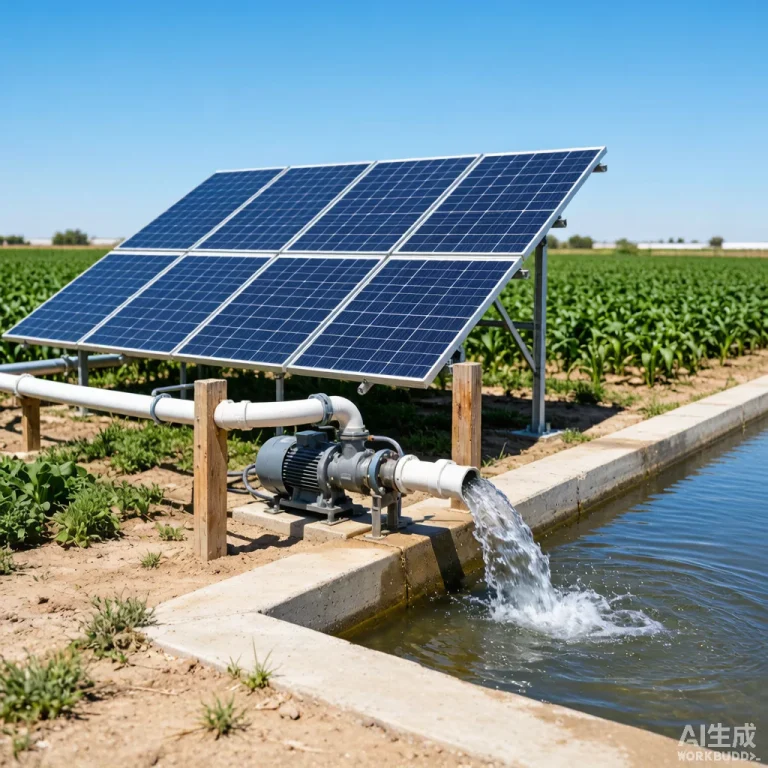
Fire and emergency water supply is usually designed around grid power or diesel, but many of the places that need it most—remote farms, off-grid villages, ranger stations, mines, and logistics yards—have neither reliable electricity nor a hydrant network. A solar water pump paired with an elevated storage tank delivers a self-contained, always-charged water buffer that needs no fuel and no grid. For these sites, solar is not a green alternative; it is often the only practical way to guarantee water at the moment it is needed. KINBO has supplied solar pumping systems for exactly this role, where reliability matters more than cost per cubic meter, because the system is the difference between a contained incident and a lost season.
Why Solar for Fire Protection and Emergency Supply
Conventional emergency pumping fails precisely when emergencies cluster: a wildfire or heat wave strains the grid, and diesel deliveries may be impossible. A solar-driven system charged into an elevated tank is immune to both. During daylight it tops up the buffer; the tank then holds pressure for immediate drawdown at any hour. For sites far from municipal mains, this removes the single largest vulnerability in their fire plan.
- No fuel dependency: the buffer is full every morning without a refill run.
- Silent standby: no engine to maintain or fail on start.
- Low lifecycle cost: after install, the only cost is occasional inspection.
System Architecture
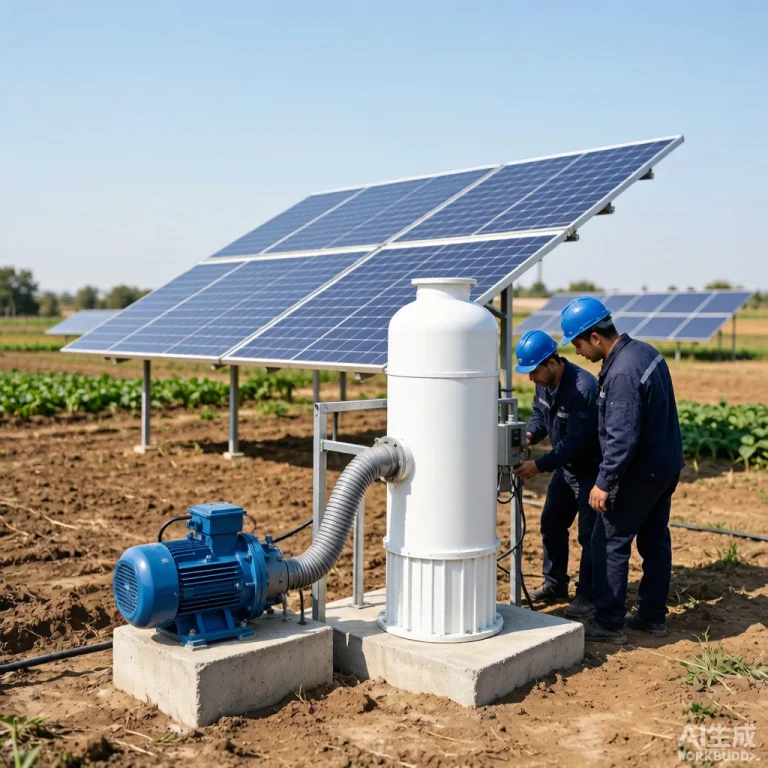
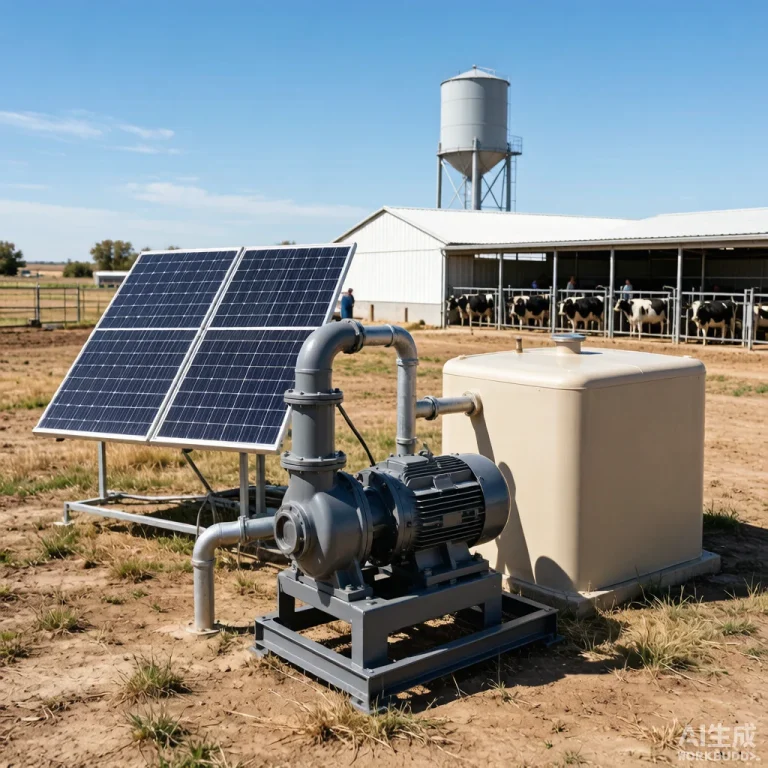
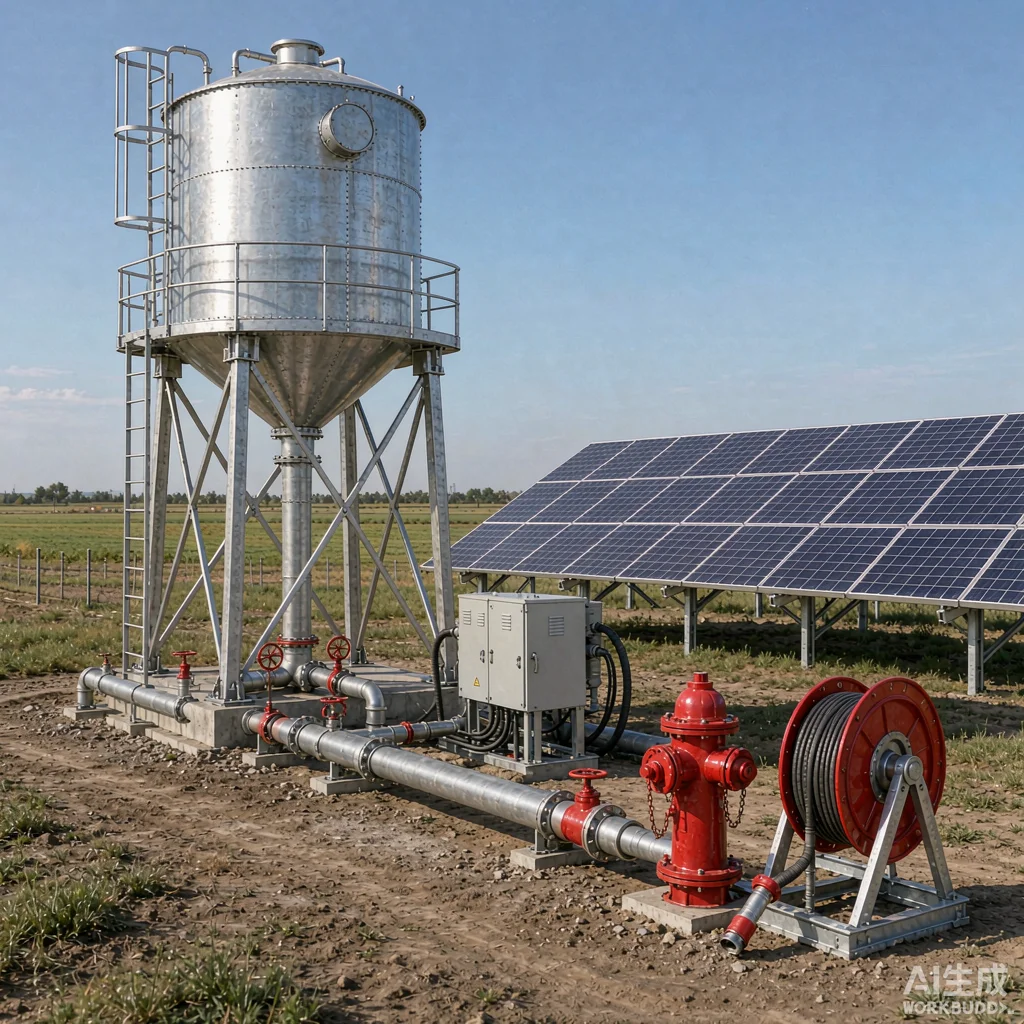
A robust solar fire-supply system has four layers. The solar submersible pump or surface pump lifts water from the well or source into an elevated tank. The tank (typically 10–30 m³) provides gravity head and buffer volume. Distribution includes at least one hydrant or hose reel plus, for larger sites, a monitor nozzle. Finally, a controller manages solar input, dry-run protection, and a bypass to a small grid or battery input when available.
Sizing Flow and Pressure
Sizing starts from the worst-case simultaneous draw, not the average. A single rural hydrant needs far less than a monitor nozzle throwing water 30 meters. Use the highest-demand device to set pump pressure, and total draw time to set tank volume.
| Device | Design flow (L/min) | Required pressure (bar) | Typical tank buffer |
|---|---|---|---|
| Hose reel / hydrant | 60–120 | 3.5–5.0 | 10–15 m³ |
| Monitor nozzle (long throw) | 150–300 | 6.0–8.0 | 20–30 m³ |
| Source refill (solar duty) | 30–80 | per lift head | continuous |
Rule of thumb: size the tank for at least 30 minutes of peak flow, and size the pump for peak pressure plus the static lift to the tank. This guarantees the first response is fully powered even before solar input ramps.
Redundancy and Reliability
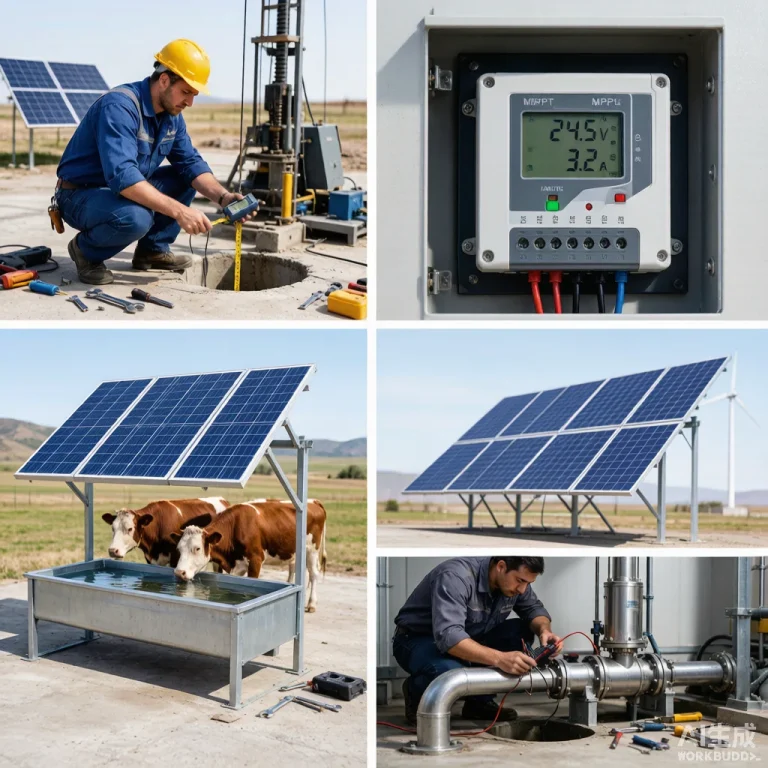
Because the system is life-safety, redundancy is not optional. Recommend a second controller input (grid or battery) so the tank can be refilled on cloudy days, a manual bypass at the hydrant, and quarterly flow testing. KINBO controllers include dry-run and over-pressure cutoffs that protect the pump during unattended standby, and a visible status light that lets a non-technical warden confirm the system is charged at a glance.
Application Scenarios
- Remote farms and estates: protect crop stores, machinery, and labor housing.
- Off-grid villages: a shared buffer tank doubles as emergency supply and daily use.
- Logistics and warehouse yards: cover storage away from mains hydrants.
- Mining and construction sites: fire water where temporary infrastructure is the norm.
Case Study: Remote Estate Fire Buffer
A 600-hectare arable estate with no grid hydrant installed a solar fire-supply system: a 3 kW brushless DC solar submersible pump at 80 m well depth, a 4 kWp panel array, and a 20 m³ elevated tank feeding two hydrants and one monitor nozzle. The alternative was a diesel fire pump with a full-time operator. Over three years the solar system eliminated roughly 1,800 L of standby diesel per month and qualified the estate for a lower property-insurance tier; payback against the diesel-plus-labor option was under 26 months, after which the buffer became a near-zero-cost asset.
| Item | Solar system | Diesel alternative |
|---|---|---|
| Installed cost | Higher upfront | Lower upfront |
| Monthly running cost | Near zero | ~1,800 L diesel + operator |
| Payback | < 26 months vs diesel option | |
Figures are a representative deployment; actual sizing depends on local fire code, draw time, and source depth.
Frequently Asked Questions
Can a solar pump supply water at night?
Yes—if paired with an elevated tank. The pump charges the tank by day; gravity then delivers pressure for nighttime or low-sun drawdown. A small grid or battery input can refill on cloudy days.
How big should the buffer tank be?
Size for at least 30 minutes of peak device flow. For a single hydrant that is roughly 10–15 m³; for a monitor nozzle, 20–30 m³.
Does it meet fire code?
Solar can meet code where the standard accepts a gravity-fed buffer with the required flow and pressure. Always confirm against the local authority; the pump is the refill source, not the sole delivery path.
What maintenance does it need?
Quarterly flow testing, annual tank inspection, and controller status checks. With dry-run and over-pressure protection, unattended standby is safe between inspections.
Designing a fire or emergency water buffer for a remote site? Contact KINBO for system sizing, redundant controllers, and reliable solar pumping packages.