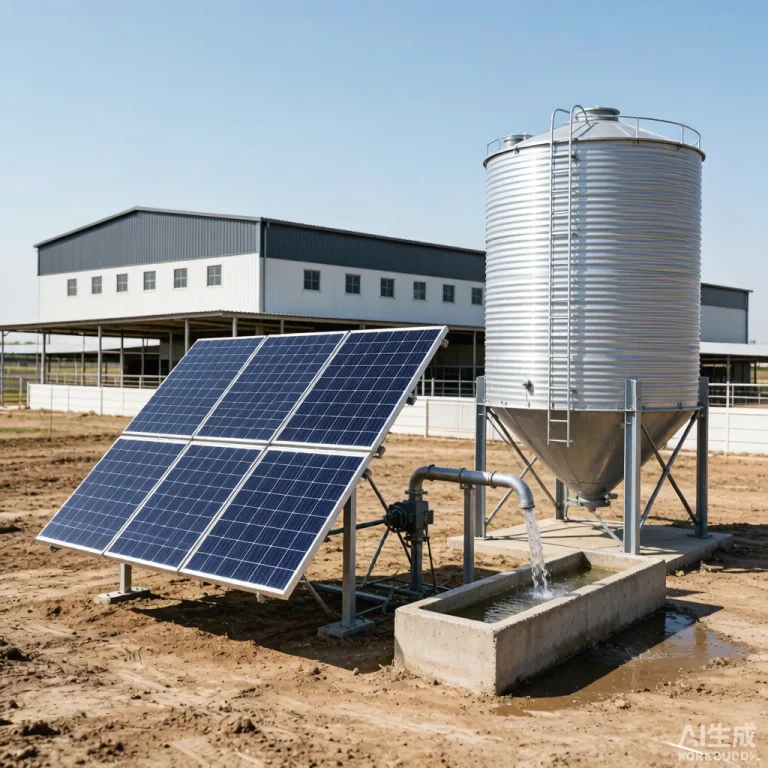
Solar Pumps for Gold Leach and Process Water in Guinea: Chemical-Duty Selection
Introduction
Leach and CIP circuits need clean, dosed water on a steady schedule—and the wrong pump contaminates the chemistry. This article covers solar pumps for gold leach and process water, using Guinea’s southern and eastern gold belt as the worked example, written by the solar-pumping specialists at KINBO. Cyanidation and carbon-in-leach duty demand material compatibility and precise flow control; a solar pump specified for the chemistry keeps recovery high and reagents where they belong. This is the chemical-duty companion to our process-water guide.
Table of Contents
Why Chemical Duty Matters
- Material compatibility is non-negotiable—cyanide, acids and slurries attack the wrong elastomers and metals, leaching contaminants into the circuit.
- Flow control protects dosing—leach and CIP need steady, metered flow; a surging pump upsets reagent balance and recovery.
- Clean feed protects carbon—filtered, grit-free water keeps the activated carbon from fouling and extends its life.
- Solar suits the profile—process water runs in daylight shifts, matching the solar duty curve without a generator.
Guinea Site Conditions
Guinea’s gold—in the south-east around Siguiri and the north-east—blends artisanal, small-scale and growing commercial operations, many off-grid and drawing from sediment-laden rivers. Our dewatering guide, slurry guide and controller guide frame the duties; for leach duty the chemistry—not just the flow—decides the pump.
Chemical-Duty Selection, Step-by-Step
- Profile the chemistry—list pH, reagents (cyanide, acids, flocculants) and temperature so the wet-end is matched, not guessed.
- Pick resistant materials—specify chemical-grade elastomers and alloys; confirm compatibility against the duty, per our sizing.
- Filter the feed—strain and settle before the pump so grit never reaches the carbon or the impeller.
- Control the flow—use a DC or VSD controller for steady, metered delivery that tracks the dosing schedule.
- Separate duties—keep process water, barren and pregnant streams on dedicated, clearly labelled lines to avoid cross-contamination.
- Monitor and log—our remote-monitoring records flow and alarms so a drift is caught before it costs recovery.
Good vs Poor Selection
| Aspect | Good selection | Poor selection |
|---|---|---|
| Materials | Chem-grade | Standard, corrodes |
| Flow | Metered, steady | Surging |
| Feed | Filtered | Grit to carbon |
| Result | High recovery | Lost metal, downtime |
For the wider duty picture, our process-water selection guide covers non-chemical streams too.
Frequently Asked Questions
Can a solar pump handle cyanide-bearing water?
Yes—with chemically compatible materials and sealed wet-ends; we specify the alloy and elastomer to the reagent profile, per our sizing.
Why does flow control matter for leach?
Leach and CIP depend on steady, metered reagent contact; a surging pump disturbs dosing and lowers recovery.
Do I need a separate pump per stream?
Best practice is dedicated, labelled lines for process, barren and pregnant streams to avoid cross-contamination and lost ounces.
How do I start a chemical-duty solar pump project in Guinea?
Send your reagent profile and duty flow, and we specify the process-water pump and controls together—our installation guide covers commissioning.
Related Articles
- Solar Pump Selection for Gold Mine Process Water
- Water Quality & Slurry Handling for Gold-Mine Solar Pumps
- Gold Mine Solar Pump Sizing Methodology
- Explore KINBO Solar Pump Products
Get a Chemical-Duty Solar Pump System for Your Guinea Gold Mine
Tell KINBO your Siguiri or north-eastern site’s reagent profile and duty flow, and we will specify a solar pump system built for leach and CIP chemistry. Contact our team for a tailored quote.
Published by KINBO · September 30, 2026 · Category: Application Cases