Solar Pump Selection for Frost Protection: Micro-Sprinkler Irrigation to Protect Orchards and Vineyards
Introduction
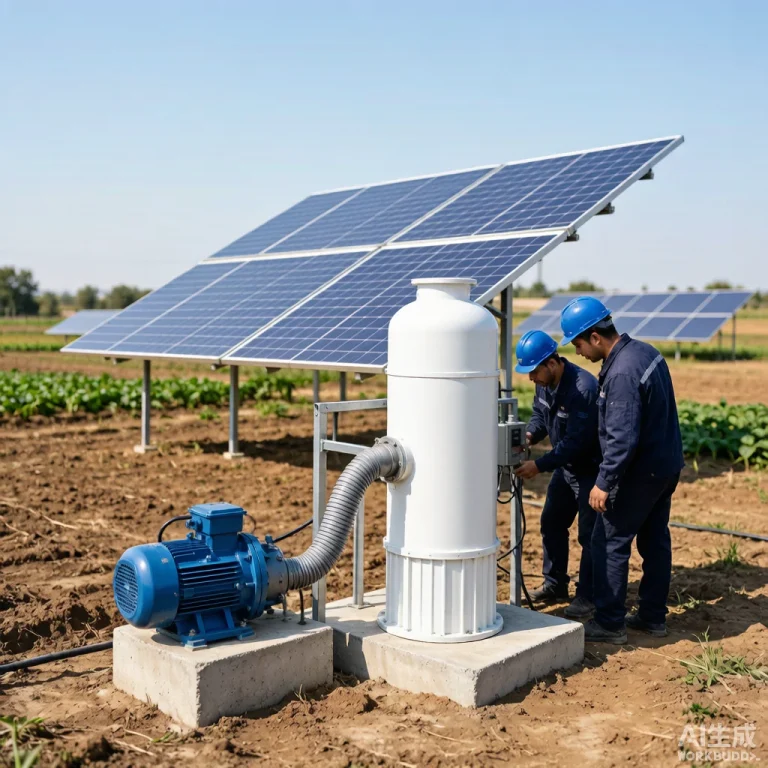
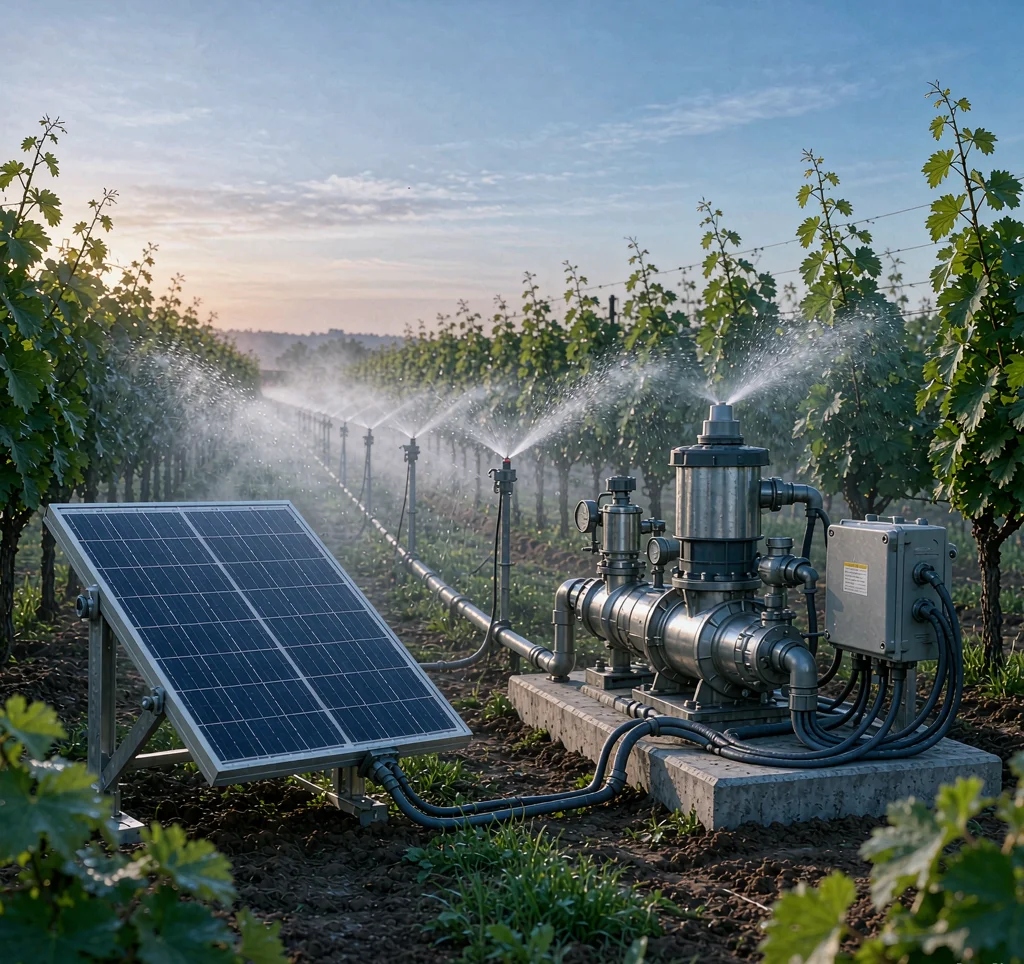
Frost is the quiet killer of orchards and vineyards. A few degrees below zero on a still spring night can wipe out a blossom set or young fruit, and the damage shows up weeks later as lost yield. The classic defence is overhead micro-sprinkler irrigation: as air temperature drops, you run water that releases latent heat as it freezes, holding plant tissue at roughly 0°C even when the air is colder. The trick is that the pump must deliver a steady, low-pressure flow through many small emitters all night long—exactly when it is cold, still and often sunny-free. A solar pump is well suited because frost risk peaks on clear, calm nights after clear days, and the water can be pumped during the day into a buffer and released at night, or run live from a battery-backed array. This guide covers solar pump selection for frost-protection micro-sprinklers. For frost-sensitive sites, solar pumping specialists such as KINBO supply low-pressure packages tuned to the evenly distributed flow that micro-sprinklers demand.
Table of Contents
How Micro-Sprinkler Frost Protection Works
The physics is counter-intuitive but reliable: when water freezes it gives off heat (about 334 kJ per kg). A continuous film of water around the bud or blossom stays at 0°C while freezing, protecting it from colder air. The requirement is continuous water—if the flow stops, the protective ice warms and the tissue freezes. So the pump’s job is not peak flow but uninterrupted, even, low-pressure distribution across every emitter in the block.
Flow and Pressure Demand
Micro-sprinklers for frost protection are low-pressure devices, but there are many of them. The table shows typical planning figures.
| Parameter | Typical Range | Why |
|---|---|---|
| Emitter pressure | 1.0–1.5 bar | Low, even throw over the canopy |
| Emitter flow | 20–60 L/h each | Enough to keep ice wet, not flood |
| Block area per emitter | 20–50 m² | Spacing sets total emitter count |
| Run duration | 6–12 h / night | Through the whole cold window |
Multiply emitters by flow to get total block demand; that, not peak pressure, drives the pump size. Our sprinkler irrigation selection guide covers higher-pressure spray types if you also irrigate the same block by day.
Sizing the Solar Pump
Because the duty is low-pressure but long-duration and often at night, sizing differs from daytime irrigation:
- Compute total flow—emitters × per-emitter flow, across the largest block protected at once.
- Add mainline friction—long orchard rows add head; size pipe so pressure stays even at the far emitter.
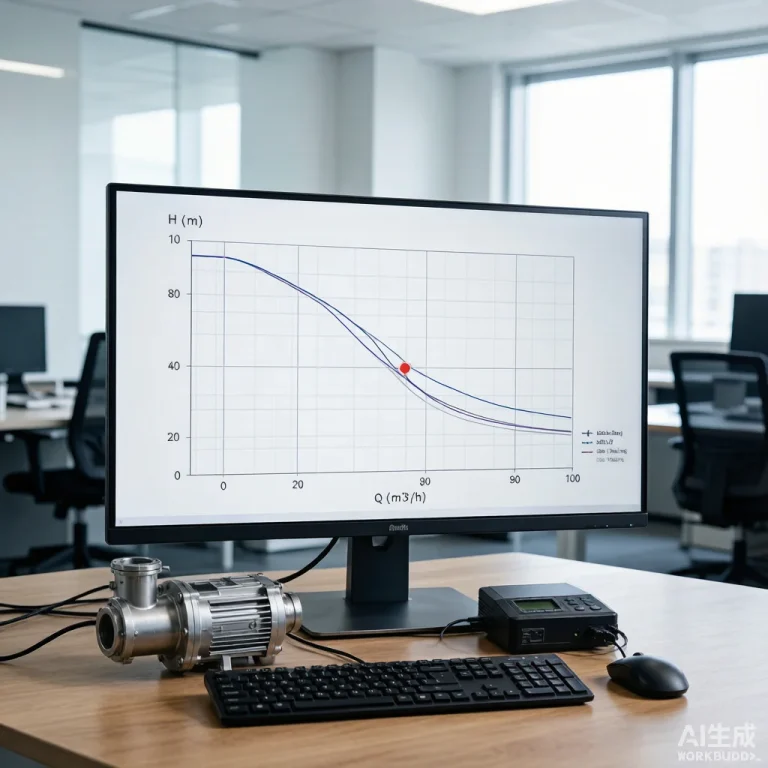
- Choose low-pressure pump—a centrifugal or diaphragm pump happy at 1–1.5 bar is ideal; avoid oversizing pressure you will only throttle away.
- Plan energy storage—frost nights are clear and sunless, so you cannot pump live from the array; you must fill a tank by day or run from batteries.
- Build in redundancy—a frost event is a single point of failure for the crop; a backup pump or generator inlet is prudent.
Day-Fill vs Night-Run Options
Two sound architectures for solar-driven frost protection:
| Approach | How It Works | Best When |
|---|---|---|
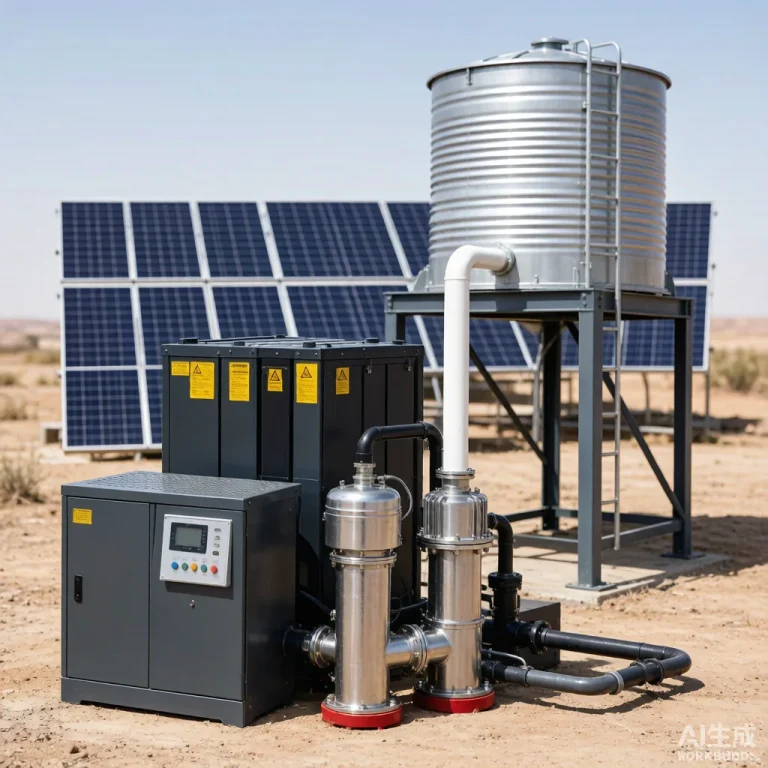
| Day-fill, night-release | Solar pump fills an elevated tank by day; gravity or a small booster feeds emitters at night | Reliable, no night power needed |
| Battery-backed live run | Array + battery runs the pump directly through the night | No large tank, but needs battery capacity |
The day-fill approach is usually the most robust: a modest solar pump tops up the tank every clear day, and a simple level switch or timer releases water when temperature drops.
Frequently Asked Questions
Can a solar pump protect against frost at night with no sun?
Only indirectly. You either fill a tank during the day and release at night (no pump running then), or run the pump from battery storage charged by the day’s sun. A live, sun-only pump cannot run on a dark frost night.
Why low pressure instead of high?
Frost-protection micro-sprinklers are designed for a gentle, even coat—high pressure just atomises the water and wastes it. Low, steady pressure across many emitters is what protects the crop.
How big a tank do I need?
Enough for the longest cold window: total emitter flow × hours of protection, plus margin. A 10 m³/h block running 10 hours needs ~100 m³; size the tank or battery accordingly.
Can the same system irrigate by day?
Yes. Many growers use the same pump and mainline for daytime irrigation at higher pressure and frost protection at low pressure, switching emitter sets or pressures by season.
Related Articles
- Solar Pump Selection for Sprinkler Irrigation
- Solar Pump Pipe Diameter and Velocity Optimization
- Explore KINBO Solar Pump Products
Get a Frost-Protection Solar Pump Specification
Tell KINBO your block area, emitter count and flow, and whether you prefer day-fill or battery-backed operation, and we will specify a low-pressure solar pumping package with the right tank or storage for uninterrupted frost nights. Contact our team for a tailored quote.
Published by KINBO · September 18, 2026 · Category: Pump Selection Guide