
Solar Pumps for Car Wash and Commercial Vehicle Washing: Off-Grid Wash-Bay Water Supply
Introduction
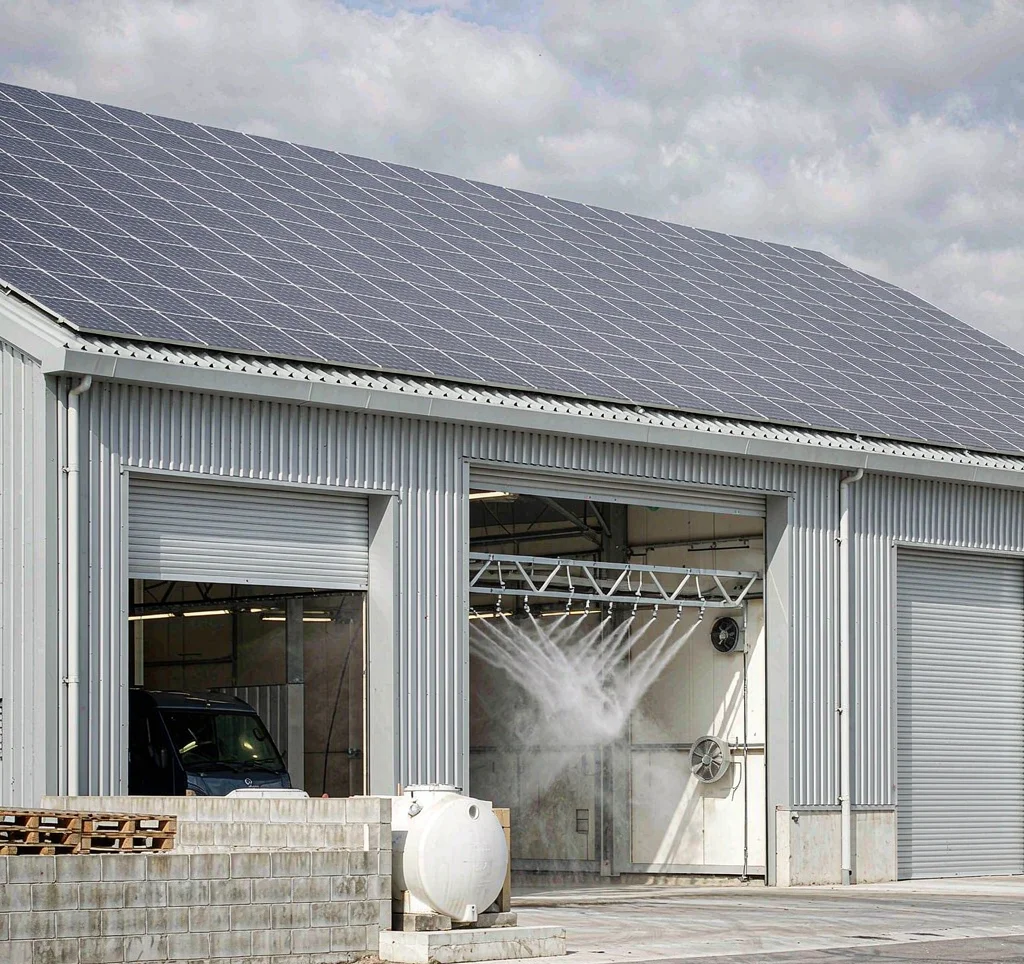
Vehicle washing—trucks, buses, mining haul trucks, agricultural machinery—is a water-hungry, repetitive operation that often happens far from reliable grid power. A solar water pump turns sunlight into wash water with no diesel generator and no electricity bill, and because washing happens in daylight when the sun is strongest, solar matches the load almost perfectly. The design focus is different from irrigation: you need steady pressure for a satisfying rinse, a buffer tank to smooth demand, and often a recycle or settling step to cut water use. This article covers how to specify a solar pump for commercial car and truck wash duty. Solar pumping suppliers such as KINBO build robust, high-pressure packages suited to dusty, continuous wash bays where reliability matters more than elegance.
Table of Contents
How Much Water a Wash Bay Uses
Wash demand is intermittent and bursty: a truck wash might use 500–2,000 L in a single session, while a car wash uses 100–300 L per vehicle. The table gives planning figures by duty.
| Duty | Water per Session | Sessions / Day | Daily Total |
|---|---|---|---|
| Car / light vehicle | 100–300 L | 20–100 | 3–20 m³ |
| Truck / bus | 500–2,000 L | 5–30 | 5–40 m³ |
| Mining haul truck | 1,500–4,000 L | 2–15 | 10–50 m³ |
Because washing is daytime work, a solar pump can refill the buffer tank across the working day and meet peaks from stored water rather than from instantaneous pump output.
Pressure and Flow for a Good Rinse
A weak rinse leaves soap and dust behind; too much pressure wastes water and can damage surfaces. Typical targets:
- Car / light wash—3–6 bar at 10–20 L/min per gun.
- Truck / bus—5–8 bar at 20–40 L/min per gun, often with a foam lance.
- Heavy equipment–6–10 bar to blast packed mud off tyres and undercarriage.
- Multiple guns—size total flow for the number of simultaneous operators, not just one.
A pressure pump (booster) between the buffer tank and the guns holds the setpoint steady as guns open and close—similar in principle to the VFD constant-pressure approach used elsewhere.
Buffer Tank and Pump Sizing
The solar pump should be sized to refill the buffer tank over the daylight hours, while the tank carries the peak wash bursts. The relationship:
| Element | How to Size |
|---|---|
| Buffer tank | Hold at least the largest single peak + half a day’s demand; bigger smooths cloudy days |
| Solar source pump | Daily volume ÷ effective sunlight hours, plus lift and friction head |
| Pressure booster | Peak simultaneous gun flow × target pressure |
Water Reuse and Settling
Wash water is mostly dust and soap, not contamination—so recycling is common and cuts both water draw and the solar pump’s daily load. A simple settling tank or reed bed lets you recirculate the bulk of the water and only top up with fresh solar-pumped supply. This is especially valuable at remote mines and depots where every cubic metre of hauled or pumped water has a cost. For dusty-site water handling more broadly, our dust suppression guide covers related pumping duties.
Frequently Asked Questions
Will a solar pump keep up with a busy wash bay?
If you size the buffer tank to absorb peak bursts and the solar pump to refill it across the day, yes. The pump does not need to match instantaneous gun flow—the tank does that.
Do I need a booster pump as well as the solar pump?
For a steady rinse with multiple guns, a booster between tank and guns is recommended. The solar pump fills the tank; the booster delivers pressure on demand.
Can I run the wash bay after sunset?
Only with battery storage or a grid/genset hybrid. A direct solar wash bay runs on sunlight; size the tank to cover late-afternoon demand and stop at dusk, or add storage for evening shifts.
Is recycled wash water safe to pump?
Settled, filtered wash water is fine for most pumps, but it carries grit—use a strainer and a sand-tolerant pump, and avoid fine-nozzle systems that clog easily.
Related Articles
- Solar Pump Selection with VFD Control
- Solar Pumps for Dust Suppression at Mines and Quarries
- Explore KINBO Solar Pump Products
Get a Solar Wash-Bay Pump Package
Share your daily wash volume, number of simultaneous guns and available sunlight with KINBO, and we will specify a solar source pump, buffer tank and pressure booster sized for a steady, low-cost rinse—with water-reuse options for remote sites. Contact our team for a tailored quote.
Published by KINBO · September 18, 2026 · Category: Application Cases