Solar-Powered Fish Farm Aeration: A Practical Case Study in Rural Aquaculture Water Supply
Introduction
Fish farming depends on dissolved oxygen, and aerating a pond is energy-hungry work. A rural tilapia operation with no reliable grid faced exactly this problem until it switched to a solar powered fish farm aeration system. This case study walks through the design, the measured results, and the lessons for other off-grid aquaculture sites. KINBO supplied the DC pumping and control hardware for the installation.
Table of Contents
Site Background and Challenge
The farm runs two earthen ponds totaling about 0.4 hectares for tilapia. The nearest grid connection was unreliable and diesel aerators were expensive to fuel and prone to breakdowns during peak summer demand, when oxygen crashes are most likely. Recurrent heatwaves had already caused two summer fish kills, so reliable daytime aeration was no longer optional but a precondition for the farm’s survival. The operator wanted a daytime aeration system that ran hands-off from sunrise to sunset.
System Design and Configuration
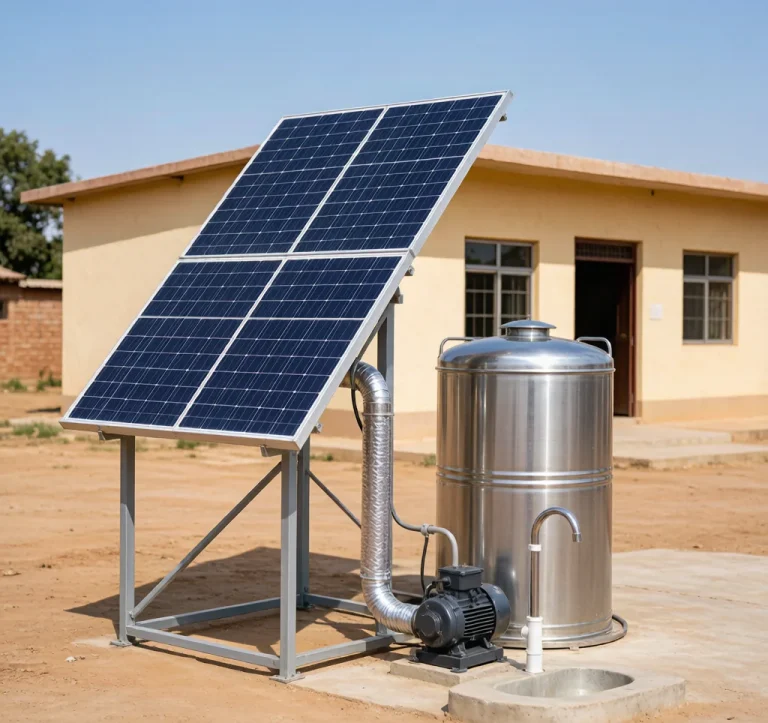
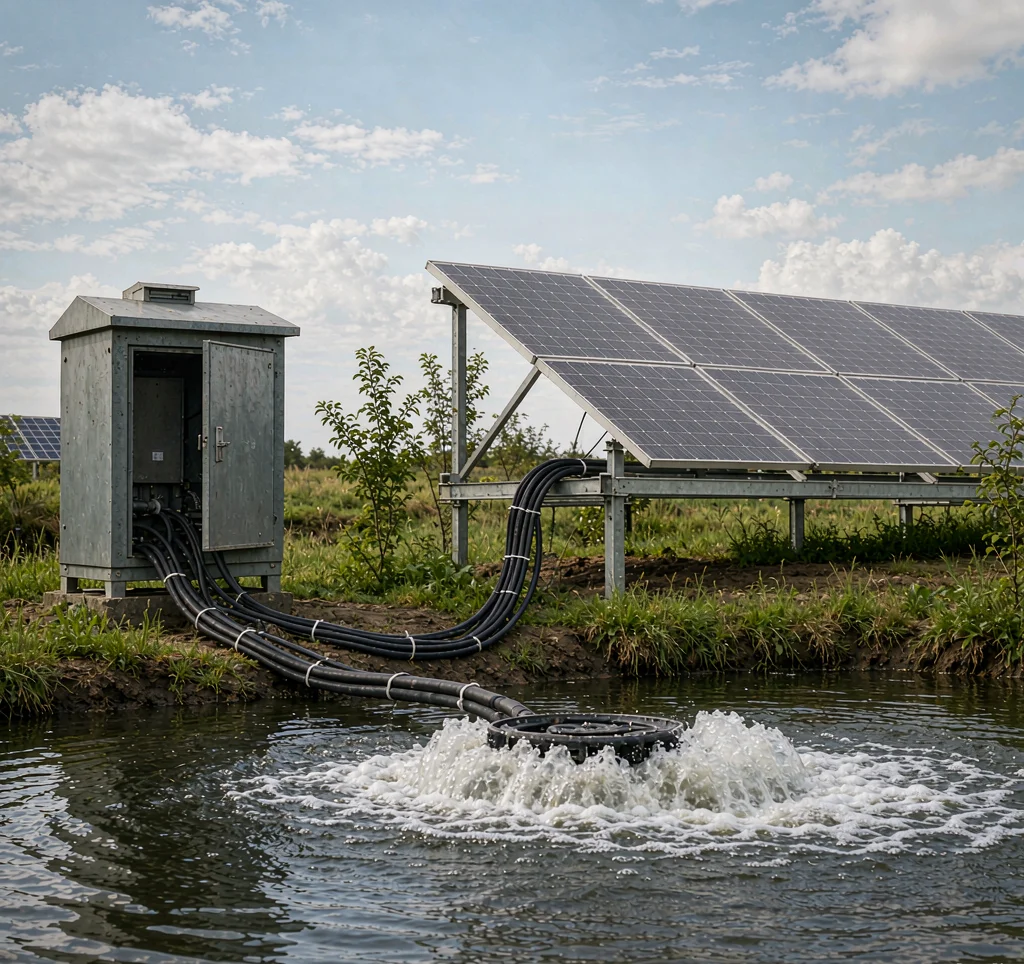
Two DC submersible pumps feed paddlewheel diffusers that circulate and oxygenate the water. A ground-mounted panel array drives the system through MPPT controllers with dry-run protection.
| Component | Specification |
|---|---|
| Pumps | 2 x DC submersible, 750 W each |
| Solar array | 4 x 450 W panels, ground-mounted |
| Controller | MPPT with dry-run protection |
| Aeration | 2 paddlewheel diffusers |
| Storage | None (daytime aeration) |
The same pump family is detailed in our KINBO solar submersible pumps lineup, which covers the 750 W class used here.
Results and Benefits
After one season, the operator compared the solar setup against the previous diesel aerators.
| Metric | Diesel (before) | Solar (after) |
|---|---|---|
| Daily fuel cost | ~ $12 | $0 |
| CO2 emissions | ~ 9 kg/day | 0 |
| Uptime | ~ 70% | ~ 99% |
| Maintenance load | High | Low |
Beyond the numbers, the operation changed. Staff stopped hauling diesel and the pond stayed oxygenated through the summer peak, when two previous fish kills had occurred. The operator reinvested the fuel savings into higher-value fingerling stock, lifting revenue per production cycle and de-risking the business against feed-price swings.
Lessons Learned
- Size the array for peak oxygen demand at midday, not the daily average.
- Add a small battery buffer if night aeration is required for dense stocking.
- Train a local technician on diffuser cleaning and panel washing to protect uptime.
Monitoring dissolved oxygen with a low-cost probe helps the operator time aeration to the pond’s actual demand rather than running flat-out all day. Where stocking density rises, adding a second pump-and-diffuser pair is straightforward because the array and controller were sized with headroom. The operator now plans a battery buffer for night aeration during the hottest months, when oxygen crashes are most likely and the market price for fish is highest.
Frequently Asked Questions
Can the system aerate at night?
The base design runs on daylight. Add a battery bank sized for night DO demand if stocking density requires 24-hour aeration.
Is there a limit on pond size?
Scale by adding pump and diffuser pairs; the constraint is midday oxygen demand versus available panel area.
What maintenance does it need?
Clean diffusers monthly, wash panels, and verify controller status indicators; very low compared with diesel engines.
What is the payback versus diesel?
Typically 12-18 months once fuel and engine service savings are counted, faster at high diesel prices.
For B2B buyers designing off-grid aquaculture and aeration systems, contact KINBO for competitive FOB pricing and technical specifications.
Related Articles
- How to Size a Solar Water Pump for Livestock Watering
- Solar Pump Surge Protection and Earthing
- Explore KINBO Solar Submersible Pumps