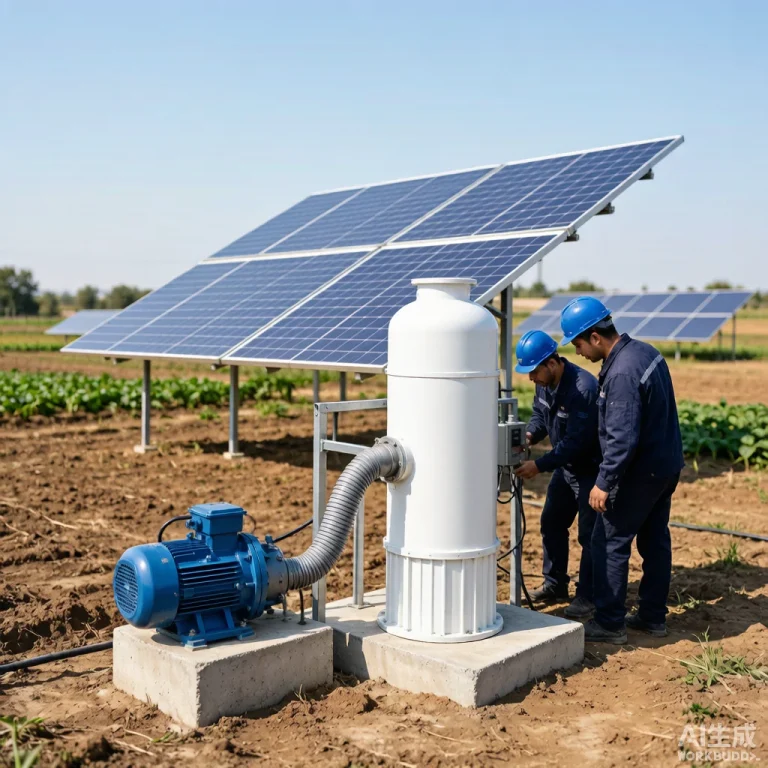
Solar Pump Selection with Variable Frequency Drive (VFD) Control: Matching Pump Speed to Demand
Introduction
Most solar pumping systems run the pump straight off the solar array through a DC controller: more sun means more speed, less sun means less. That works, but it ties pump output directly to the weather and gives you little control over pressure or flow during the day. A variable frequency drive (VFD) sits between the controller and the pump motor and lets you set the pump speed independently of incoming power, holding steady pressure even as the sun moves and clouds pass. Selecting a solar pump with VFD control is therefore a different sizing exercise than a simple direct-drive unit. This guide covers when VFD control pays off, how it changes pump selection, and the trade-offs to weigh. Solar pumping specialists such as KINBO offer VFD-equipped packages that hold constant pressure across varying daylight, which simplifies everything from drip zones to multi-outlet distribution.
Table of Contents
When VFD Control Makes Sense
A VFD is not needed on every solar pump, but it earns its place in several common situations. The table below maps typical scenarios to the benefit you get.
| Scenario | Why VFD Helps | Typical Payoff |
|---|---|---|
| Drip or micro-sprinkler with fixed emitter pressure | Holds design pressure as solar input swings | Even emission, no over-pressure blown lines |
| Multi-outlet or zoned distribution | Maintains pressure when one zone opens/closes | No pressure sag at the far tap |
| Grid-hybrid or genset backup | Soft start, smooth handover between sources | Reduced inrush, longer motor life |
| Variable daily demand (tank fill by noon) | Throttles speed to hit a target level | No overshoot, no spill, predictable fill |
| Single fixed-speed borehole, steady load | Little benefit | Simpler direct-drive is cheaper |
How VFD Changes Pump Selection
With a VFD you size the pump for the worst-case duty point and let the drive trim speed for partial loads, rather than over-sizing the array to brute-force a fixed speed. Key selection steps:
- Define the duty point—the highest simultaneous flow and pressure the system must deliver (e.g. all drip zones open at 2.0 bar).
- Select the pump curve at its rated speed to sit comfortably on that duty point, leaving headroom above and below.
- Size the motor for the rated-speed duty, not the peak solar output—the VFD caps speed so the motor never sees more than its nameplate.
- Size the array to reach rated speed around midday under good sun; the VFD then slows the pump in the morning and evening automatically.
- Set the pressure target on the drive (constant-pressure mode) so flow follows demand without manual valving.
Constant Pressure vs Fixed Speed
The practical difference shows up in the field. A fixed-speed pump delivers a fixed flow at a fixed head; open an extra outlet and pressure everywhere drops. A VFD in constant-pressure mode senses pressure at the outlet and nudges motor speed up or down to hold the setpoint. The comparison below is the one buyers notice.
| Metric | Fixed-Speed Solar Pump | VFD Constant-Pressure Solar Pump |
|---|---|---|
| Pressure under changing demand | Drops when more outlets open | Held at setpoint automatically |
| Morning / evening output | Full speed only when sun is strong | Ramps smoothly from first light |
| Motor starting current | High inrush on each start | Soft start, minimal inrush |
| Water hammer risk | Higher on stop/start | Reduced by ramp control |
| Capital cost | Lower | Higher (drive + panel) |
Trade-offs and Sizing Rules
VFD control is not free. Weigh these before specifying:
- Cost—the drive and enclosure add to the bill; justified where pressure stability or soft start protects downstream equipment.
- Efficiency—a VFD is itself a loss; at very low speeds the losses can outweigh the pump savings, so avoid running far below rated speed for long stretches.
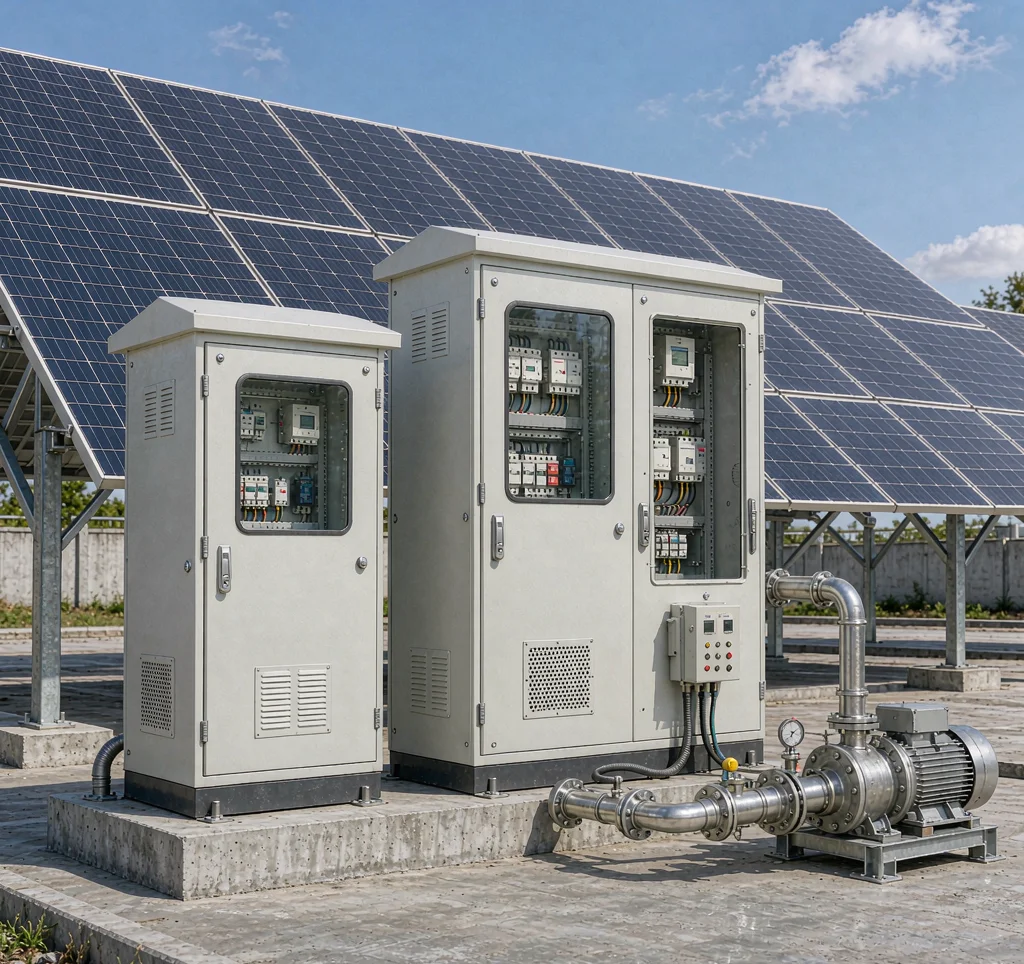
- Cooling and dust—the cabinet needs ventilation and a clean site; in dusty or hot enclosures, derate the drive or use a filtered, fan-cooled box.
- Setpoint discipline—constant pressure is only as good as the sensor; a cheap or mis-located pressure transducer causes hunting. Mount it on the discharge, away from the pump and any air pocket.
- Array headroom—give the VFD enough solar headroom to reach rated speed at midday, or the pump will never hit full duty even on clear days.
For a deeper look at managing pressure surges in solar systems, see our guide on solar pump water hammer protection and surge control.
Frequently Asked Questions
Does a VFD let a smaller solar array run the same pump?
Not quite. The VFD controls speed, not energy. To reach the same flow and pressure you still need the same midday solar input; the drive simply spreads that output more usefully across the day and trims it to demand.
Can I add a VFD to an existing direct-drive solar pump?
Only if the pump motor is VFD-rated (typically a 3-phase AC motor) and the existing controller can hand off to a drive. Many small DC solar pumps are not VFD-compatible; in that case a VFD-equipped package from the start is the cleaner route.
Will constant-pressure mode waste water on cloudy days?
No—if the tank or demand is met, the drive slows the pump toward zero rather than dumping flow. Pair it with a level switch on the tank to stop completely at full.
Is VFD control worth it for a single borehole with one tap?
Usually not. The simpler direct-drive unit is cheaper and has fewer parts to fail. Choose VFD when you have multiple outlets, sensitive emitters, or a grid/genset hybrid.
Related Articles
- Solar Pump Water Hammer Protection and Surge Control
- Solar Pump Pressure Tank Sizing
- Explore KINBO Solar Pump Products
Get a Sized VFD Solar Pump Package
Tell KINBO your duty point—peak flow, required pressure, and water source—and we will specify a VFD-equipped solar pumping package with the right motor, drive and array headroom for steady pressure from sunrise to sunset. Contact our team for a tailored quote.
Published by KINBO · September 18, 2026 · Category: Pump Selection Guide