Solar Pump Pressure Tank Sizing: Calculate the Right Capacity for Constant Pressure
Introduction
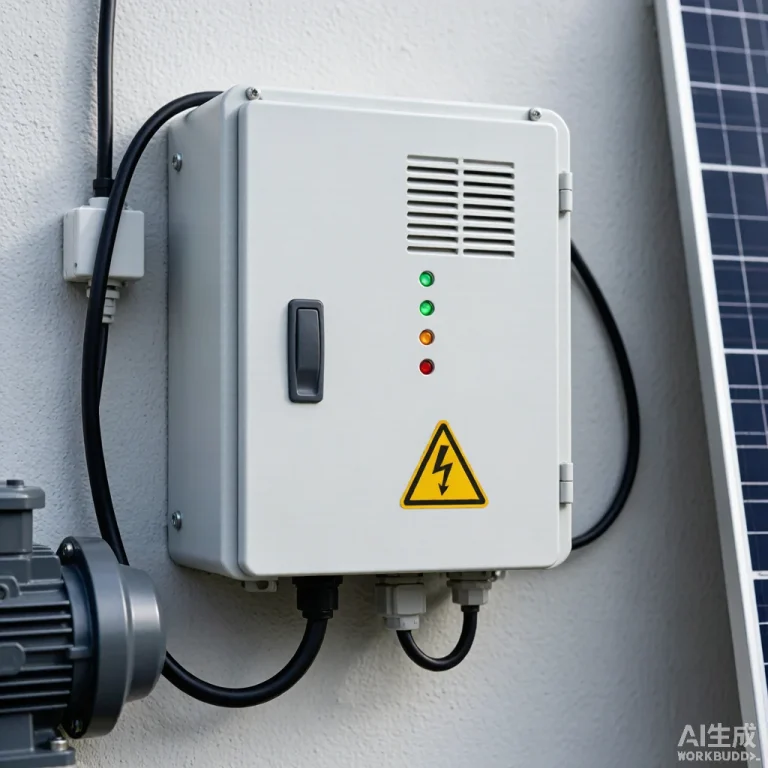
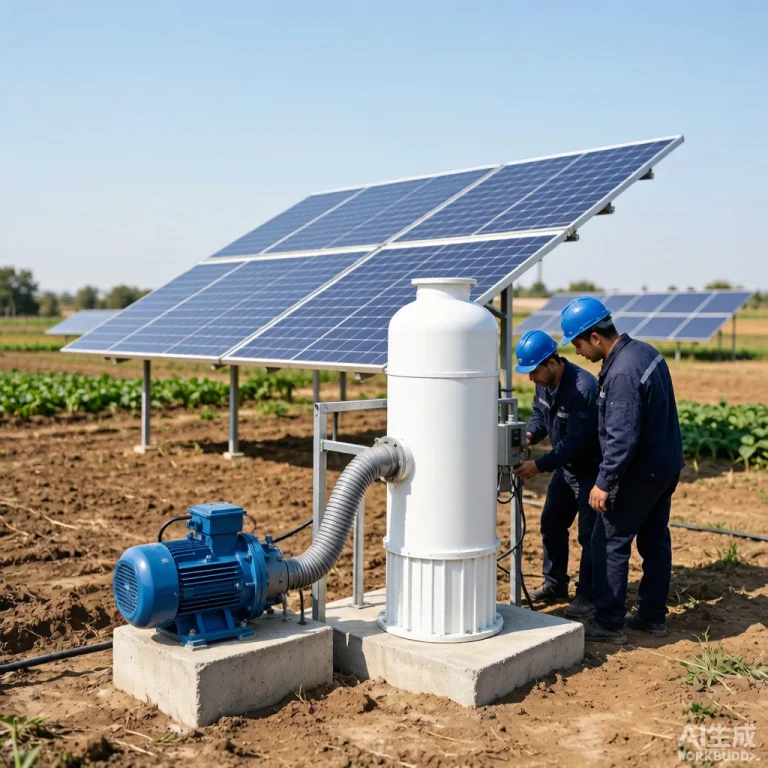
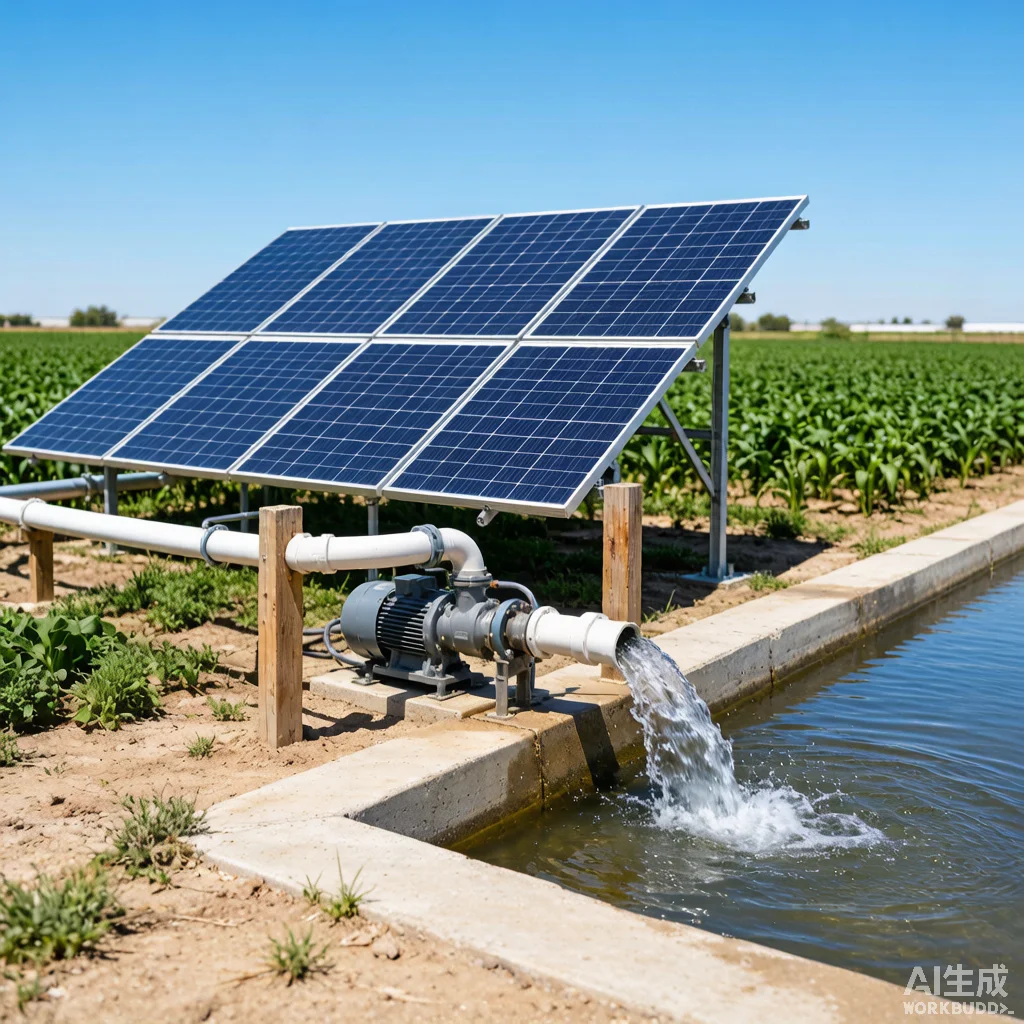
KINBO solar pump systems can be configured with pressure tanks for domestic water supply, providing consistent tap pressure without batteries.
Table of Contents
Pressure Tank Sizing Fundamentals
A pressure tank stores water under compressed air pressure, allowing the pump to cycle on and off rather than running continuously. Proper sizing prevents short-cycling that wears out the pump motor and controller. The tank’s drawdown capacity (usable water between pump cut-in and cut-out pressures) should equal or exceed the pump’s output during one minute of operation.
For a 1.5 kW solar pump delivering 30 L/min with a 20-40 PSI pressure switch setting, the recommended drawdown is 30 liters. A tank with 30L drawdown requires a total tank volume of approximately 100 liters (diaphragm tanks typically deliver 25-35% of total volume as drawdown). The formula: Tank Volume = Drawdown Required ÷ Acceptance Factor (typically 0.30 for diaphragm tanks at 20/40 PSI).
Pressure Switch Settings for Solar Pumps
Solar pump pressure switches should use lower cut-in/cut-out settings than grid-powered systems to minimize energy consumption. A 20/40 PSI setting (cut-in 20 PSI, cut-out 40 PSI) is standard for domestic supply. Higher settings (30/50 or 40/60 PSI) increase energy consumption by 15-25% and reduce daily water output proportionally.
| t | a | b | l | e | |||||||||||||||||||||||
|---|---|---|---|---|---|---|---|---|---|---|---|---|---|---|---|---|---|---|---|---|---|---|---|---|---|---|---|
| H | o | u | s | e | h | o | l | d | S | i | z | e | |||||||||||||||
| D | a | i | l | y | W | a | t | e | r | U | s | e | |||||||||||||||
| R | e | c | o | m | m | e | n | d | e | d | T | a | n | k | ( | t | o | t | a | l | v | o | l | ) | |||
| P | r | e | s | s | u | r | e | S | e | t | t | i | n | g |
[[‘1-3 people’, ‘300-600 L’, ’60-80 L’, ’20/40 PSI’], [‘4-6 people’, ‘600-1,200 L’, ‘100-150 L’, ’20/40 PSI’], [‘7-10 people’, ‘1,200-2,000 L’, ‘150-200 L’, ’30/50 PSI’], [‘Community (50+ people)’, ‘5,000+ L’, ‘Elevated storage tank’, ‘Gravity feed’]]
Frequently Asked Questions
Q: Should I use a diaphragm tank or a bladder tank with a solar pump?
A: Diaphragm tanks are preferred for solar applications. They have a replaceable bladder and simpler maintenance. For systems with variable solar power input, the diaphragm design handles frequent cycling better than traditional galvanized tanks.
Q: What happens if the pressure tank is undersized?
A: The pump short-cycles (rapid on/off cycling), which accelerates motor wear, increases controller stress, and reduces overall system lifespan by 30-50%. Short-cycling also wastes solar energy during the motor startup surge.
Q: Can I use a solar pump without a pressure tank?
A: Yes, with an elevated storage tank providing gravity-fed distribution. This is often more energy-efficient than pressurized systems for agricultural and community applications. For domestic use where tap pressure is expected, a pressure tank or booster pump is necessary.
For B2B buyers specifying domestic water supply systems, contact KINBO for pressure tank sizing support.
Related Articles