Solar Pump Selection for Deep Borehole and High-Head Water Supply at Gold Mines
Introduction
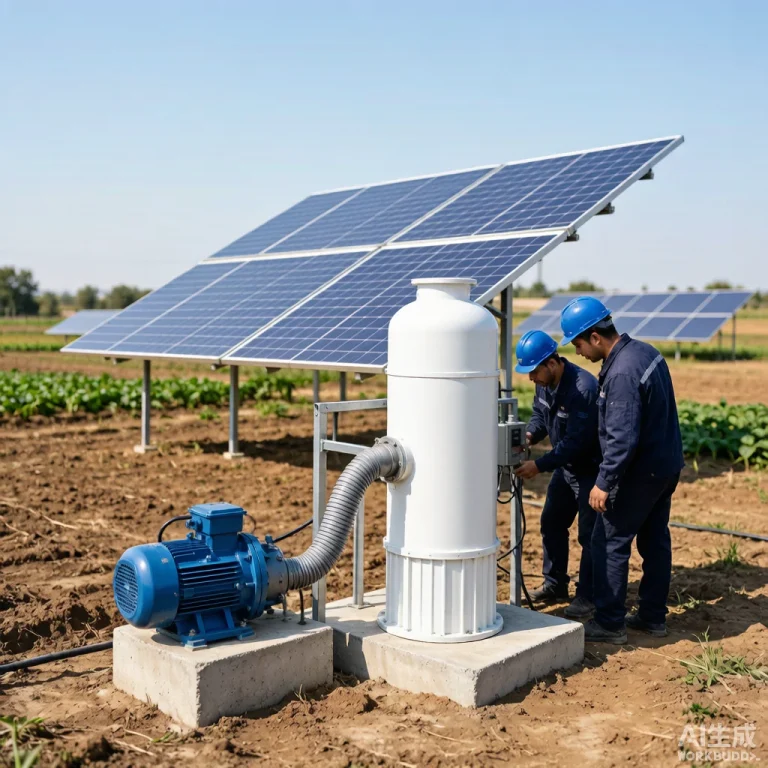
Many gold mines in Africa sit far from any river or reliable surface supply. The water they depend on comes from deep underground—often 100 to 300 metres below the surface—lifted through a narrow borehole against a very high head. Doing that with diesel or an absent grid is expensive and fragile. A deep-well solar submersible pump turns the mine’s own groundwater into a free, off-grid supply once the sun is up, and a battery buffer carries it through. This guide, from solar pumping specialists at KINBO, shows how to select a solar pump for deep borehole and high-head water supply at a gold mine without guessing.
Table of Contents
Why Deep Boreholes at Gold Mines
- Surface water is seasonal—many African gold belts dry up for months; the borehole keeps the mine running year-round.
- Remote siting—exploration and artisanal sites are nowhere near grid power, so the lift must be self-powered.
- High static lift—deep aquifers mean the pump fights a long column of water before any pressure is delivered at surface.
- Camp + process demand—the same borehole can feed both worker supply (our camp water guide) and process make-up.
Choosing the Submersible Pump
For a borehole, the pump is almost always a solar submersible, selected to the casing diameter and the duty:
- Helical-rotor (progressive cavity) submersible—excellent for high head at modest flow and tolerant of slightly sandy water; a workhorse for deep gold-mine bores.
- Multistage centrifugal submersible—higher flow at moderate-to-high head; needs cleaner water and good sand control.
- Controller—an MPPT solar pump controller matches the array to the motor and soft-starts the pump, protecting the column and the electronics.
- Sand management—a well-screen and settling period keep abrasive load off the wet-end (see our abrasive-water guide).
Sizing Head and Array
Total Dynamic Head (TDH) drives the whole selection:
- Static lift—distance from pump setting to surface discharge.
- Friction loss—in the drop pipe and surface lines; rises with flow and pipe length.
- Delivery pressure—needed if the water feeds a tank on height, a scrubber or a fire ring-main.
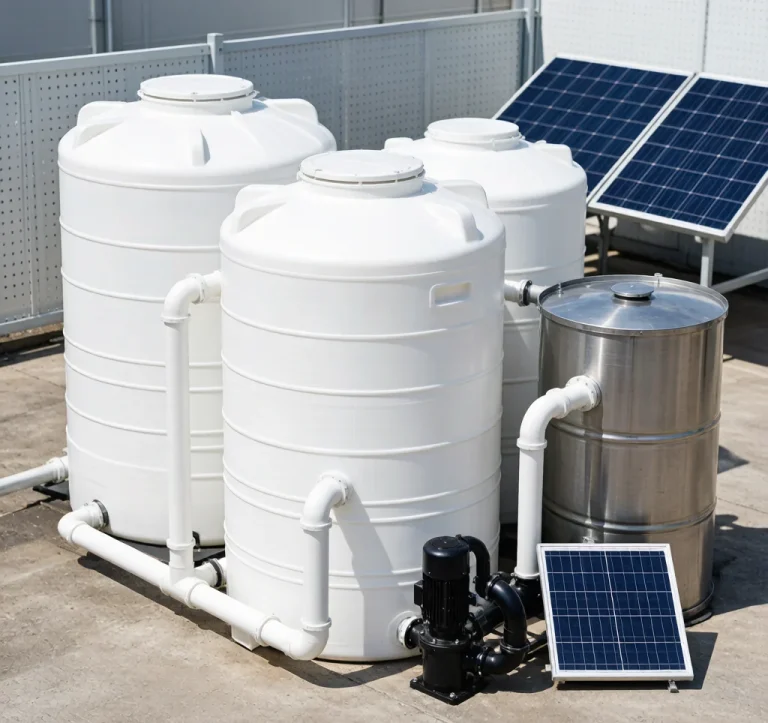
Size the PV array to deliver the required wattage at worst-case solar, with ~20% headroom, and add a battery or elevated tank buffer so supply continues through cloud and at night. For a broader high-head discussion see our high-head selection guide.
Solar vs Diesel Borehole Pump
| Factor | Diesel Borehole Pump | Solar Submersible Borehole |
|---|---|---|
| Energy | Perpetual diesel + trucking | Free PV, small battery |
| Deep-head capability | Strong, but fuel cost scales with run-hours | Strong; cost independent of hours |
| Failure points | Engine, fuel chain | Controller + array only |
| Best fit | Sites with cheap steady fuel | Off-grid deep bores, African camps |
For the full cost case, our solar-vs-diesel analysis shows typical payback of 1–3 years at remote sites.
Frequently Asked Questions
How deep can a solar borehole pump lift?
Commercial solar submersibles routinely serve 100–300 m and beyond with helical-rotor or multistage designs; the limit is the TDH and the motor’s rated head, not the solar source itself.
What if the borehole yields sandy water?
Use a well-screen, develop the bore properly, and choose a sand-tolerant helical pump with abrasion-resistant wet-ends; keep solids out of the motor section.
Can one borehole supply camp and process?
Yes—size flow for the combined demand and use a buffer tank to decouple pumping from peaks; our camp and process-water guides cover the split.
Do I need a battery for a borehole?
Not strictly; daytime pumping into a tank works. A battery or larger tank simply extends supply into night and cloud so the mine never runs dry.
Related Articles
- Solar Pump Selection for High-Head and Long-Lift Duty
- Solar Pump Selection for Tank Fill and Bulk Transfer
- Solar Pump Selection for Gold Mine Process Water
- Explore KINBO Solar Pump Products
Get a Deep-Borehole Solar Pump for Your Mine
Send KINBO your borehole depth, static water level, yield and required surface flow/pressure, and we will specify a solar submersible—pump, controller, PV and buffer—that lifts your gold mine’s groundwater reliably off-grid. Contact our team for a tailored quote.
Published by KINBO · September 22, 2026 · Category: Pump Selection Guide