Solar Pump Selection for Abrasive and Sediment-Laden Water: Slurry, Greywater and Effluent Pumping
Introduction
Clean borehole water is the easy case. The hard case is water that scrapes, clogs and corrodes: river intake with suspended sand, greywater from a settlement, effluent from a process tank, or slurry at a mine or construction site. Standard solar pump wetted parts wear out fast in those streams, and a wrong material choice means frequent failures. Selecting a solar pump for abrasive and sediment-laden water is about wear-rated impellers, slurry-duty seals, the right strainer and a realistic duty point. This guide covers how to choose the pump and protect it. Manufacturers such as KINBO offer wear-rated submersible and surface platforms with hardened impellers and strainer options so the system survives gritty water instead of drowning in it.
Table of Contents
Why Abrasive Water Wears Pumps Out
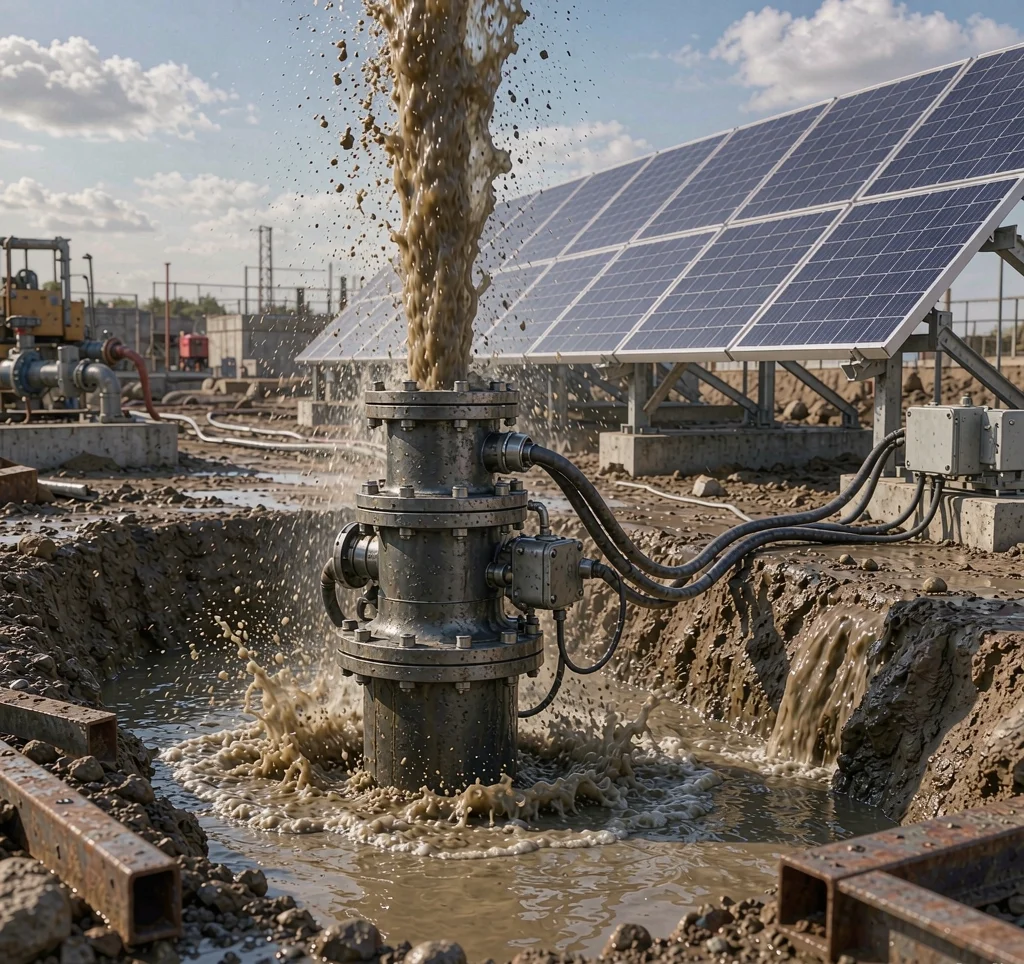
Abrasion comes from suspended solids—sand, silt, grit—that act like liquid sandpaper on impellers, casings and mechanical seals. Higher solids concentration, larger particle size and higher velocity all accelerate wear. Sediment also clogs strainers and, if it settles in a pipe, raises friction loss. The design goal is to slow the attack: wear-rated materials at the wetted surfaces, a strainer that stops the big stuff before the pump, and a duty point that avoids the high-velocity edges of the pump curve.
Material and Impeller Selection
Match the wetted parts to the grit load. The table shows typical choices by severity.
| Severity | Impeller / Casing | Seals | Notes |
|---|---|---|---|
| Low (clear-ish) | Standard composite / SS | NBR / FKM | Routine duty |
| Medium (sandy) | Hardened SS / bronze | FKM | Strainer essential |
| High (slurry) | Hardened alloy / CD4MCu | Double mechanical / SiC | Lower speed, oversize |
For managing the sediment before it reaches the pump, our guide on solar pump sand and sediment management covers strainer sizing, settling and rinse schedules in detail.
Strainer and Intake Design
A good intake is cheaper than a rebuilt pump. Key rules:
- Fit a strainer sized to the pump’s solids tolerance—too fine clogs, too coarse lets grit through.
- Add a settling or first-flush stage so heavy sand drops before the pump.
- Keep intake velocity low (wide-mouth or diffuser) to avoid sucking bed material.
- Rinse strainers on a fixed schedule during high-turbidity periods.
- In stall a pressure or flow alarm so clogging is caught early, not after burnout.
KINBO supplies matched strainer and riser kits per model so the intake is specified, not improvised, in the field.
Slurry vs Greywater vs Effluent
These three “dirty” streams need different handling, summarized below.
| Water Type | Main Risk | Pump Focus |
|---|---|---|
| Slurry (mine, construction) | High abrasion, density | Hardened alloy, lower speed |
| Greywater (settlement) | Fibers, biofilm clog | Open impeller, coarse strainer |
| Effluent (process) | Chemical + solids | Chemical-rated + wear-rated |
Note: pair chemical resistance with abrasion rating for effluent; a corrosion-proof but soft impeller still wears fast in grit.
Frequently Asked Questions
Can a standard solar pump handle sandy river water?
For light sand, yes with a proper strainer and hardened impeller; for heavy or continuous grit, use a slurry-rated pump or expect rapid wear.
What impeller is best for abrasive water?
A hardened-alloy or bronze open/semi-open impeller resists wear and passes solids better than a tight clearances closed impeller.
How often should I clean the strainer?
On a fixed schedule during turbid periods—weekly to daily in flood or mine conditions; less often for stable sources.
Does grit affect the PV array or controller?
Not directly, but clogged intake raises load and strainer losses, so size the array with margin for dirty-water duty.
For B2B buyers specifying solar pumping for abrasive or sediment-laden water, contact KINBO for competitive FOB pricing and wear-rated system design.