Solar Pump Battery Storage Sizing and Configuration: Hybrid System Design for Reliable 24/7 Water Supply
Solar Pump Battery Storage Sizing and Configuration: Hybrid System Design for Reliable 24/7 Water Supply
Introduction
Solar water pumps are the most cost-effective way to supply water in off-grid areas, but direct solar operation depends on daylight. When pumping stops in the evening, storage tanks usually carry the load; when the application needs pressurized water at night, continuous operation, or resilience through cloudy periods, battery storage becomes the missing piece of the system.
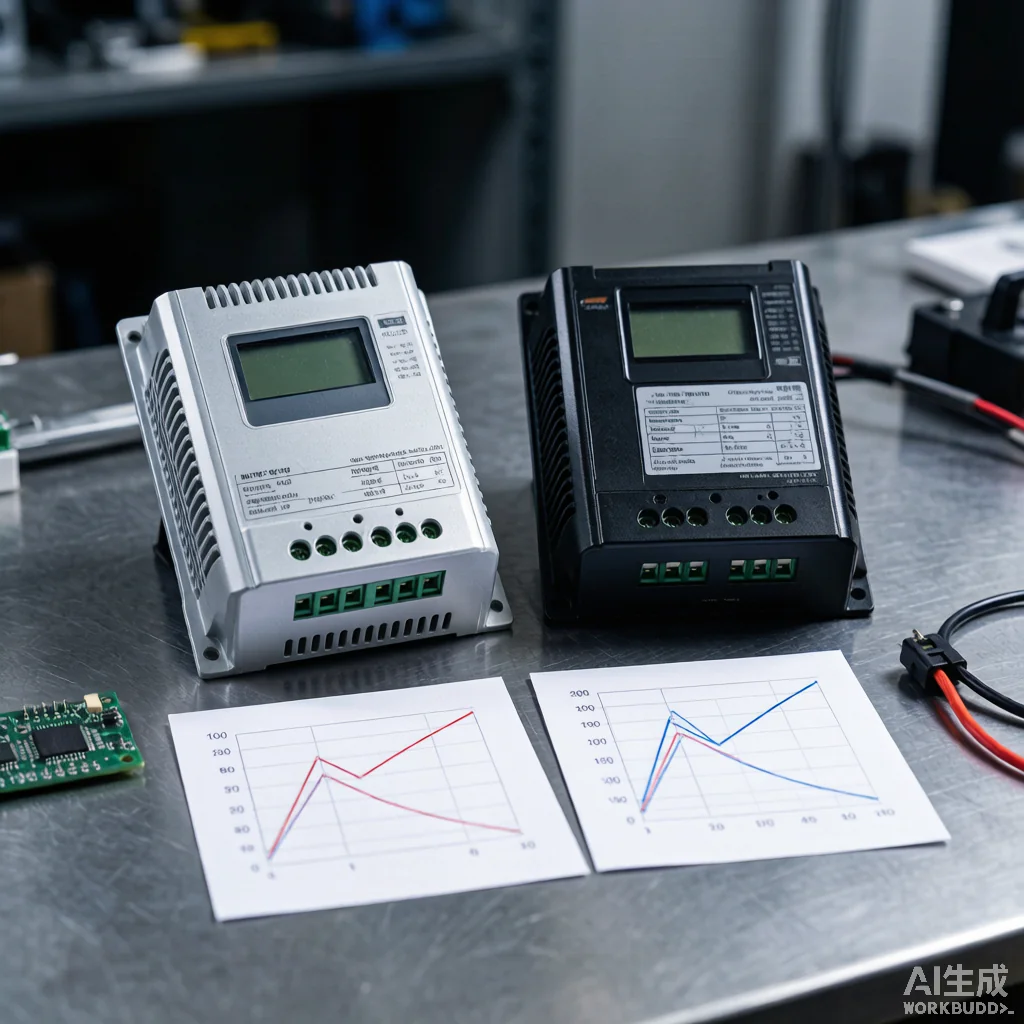
This guide explains when to add batteries, how to size the bank, and how to match voltage and controllers so the hybrid system runs reliably for years. KINBO supplies matched solar submersible pumps, controllers, and hybrid pumping packages, and we see battery sizing errors more often than any other design mistake. Before configuring storage, review the fundamentals of MPPT versus PWM charge controllers because that decision determines how the battery bank is charged and protected.
Table of Contents
Why Add Battery Storage
A battery bank is not required for every solar pump. Many borehole systems pump during the day into an elevated tank and never need a battery. Storage becomes valuable when one or more of the following conditions apply:
- Night-time pressurized supply: booster pumps or point-of-use systems must deliver pressure after sunset.
- Cloudy-day resilience: the water supply cannot tolerate more than one day of reduced pumping.
- Small reservoir: the site cannot build a large elevated tank, so the pump must run on demand.
- Power stability: grid or generator backup is expensive, unreliable, or unavailable during peak periods.
In most rural water projects, water storage remains the cheapest buffer. Batteries are justified for reliability and pressure, not as a substitute for a well-sized tank.
| Strategy | Night Operation | Relative Cost | Best Fit |
|---|---|---|---|
| Direct solar + tank | No | Low | Irrigation and gravity-fed supply |
| Battery hybrid | Yes | Medium | Pressurized, booster, and critical supply |
| Grid or generator backup | Yes | High running cost | Emergency and high-load pumping |
Key Components of a Hybrid System
A battery-backed solar pump system contains the same core elements as a standard system plus three additional components. Get these right and the whole system stays stable.
Battery Bank
The bank stores energy at a defined DC voltage, normally 24 V, 48 V, or higher for larger pumps. Lithium iron phosphate (LiFePO4) is increasingly common because it handles deep discharge better than lead-acid and has a longer cycle life, but it needs a compatible battery management system.
Hybrid Controller or Inverter
The controller manages solar input, battery charging, and pump load priority. A hybrid controller can start the pump when solar power is strong, charge the battery with surplus, and draw from the battery when irradiance drops.
Protection and Monitoring
Every bank needs battery disconnect, overcurrent protection, and temperature compensation. Remote monitoring is a major advantage for agricultural sites, because it lets the operator see state of charge and pump runtime without visiting the borehole. KINBO hybrid controllers include these protection features as standard on matched systems.
Battery Sizing Method
The goal of sizing is to match the bank to the pump’s daily energy use, not to the solar array size. Follow these steps:
- Calculate pump energy: daily water volume and total head determine pump runtime and energy in kilowatt-hours.
- Choose autonomy: one or two days of operation without solar input, depending on cloud risk and criticality.
- Apply depth of discharge: use 50 percent for lead-acid and 80 percent for LiFePO4.
- Add system losses: include inverter and wiring efficiency of 85 to 92 percent.
- Convert to amp-hours: divide the required watt-hours by the system voltage.
Required capacity (Ah) = daily energy (kWh) x autonomy days / (system voltage x depth of discharge x system efficiency).
| Pump Power | Daily Energy | Bank Voltage | LiFePO4 Capacity | Autonomy |
|---|---|---|---|---|
| 1.5 kW | 4.5 kWh | 48 V | 150 Ah | 1 day |
| 2.2 kW | 7.0 kWh | 48 V | 200 Ah | 1 day |
| 4.0 kW | 12.0 kWh | 96 V | 200 Ah | 1 day |
Note: the table assumes 6 hours of equivalent runtime, 80 percent depth of discharge, and 90 percent system efficiency. Always verify with the pump duty cycle and site irradiance data.
Voltage and Controller Matching
Voltage matching is the most common source of field failures. The battery bank voltage must match the controller’s battery input range and the pump motor’s operating voltage family. A 48 V bank feeding a 48 V DC pump is straightforward; an AC pump requires a hybrid inverter that converts battery DC to the correct AC output.
Choose an MPPT charge controller when the solar array voltage is higher than the battery voltage, which allows thinner cables and better low-light harvesting. The controller must also be rated for the combined charging current from the array and the maximum continuous load current of the pump. For more detail on pump performance, see our guide to solar pump flow rate and head curves.
Cost and ROI Analysis
Battery storage adds upfront cost but can replace expensive grid usage or reduce generator fuel. The payback depends on how many night-time pumping hours are actually needed. The example below compares a 2.2 kW system with a one-day LiFePO4 bank against a generator-only night strategy.
| Item | Battery Hybrid | Generator Night Supply |
|---|---|---|
| 5-year energy cost | $1,400 | $3,800 |
| Maintenance | Low | High |
| 5-year total | $4,200 | $5,100 |
Note: values are illustrative for a 2.2 kW pump running 2 hours per night in a region with moderate fuel prices.
Frequently Asked Questions
Can battery storage be added to an existing solar water pump system?
Yes, in most cases a battery bank can be added if the existing pump uses a compatible DC voltage or a hybrid controller with battery input. Retrofitting an AC pump usually requires a hybrid inverter that can manage solar, battery, and grid or generator input. Confirm voltage, current limits, and communication compatibility before purchasing the bank.
How many days of autonomy should a solar pump battery bank provide?
For agricultural and community water supply, one to two days of autonomy is the standard starting point. A one-day bank covers overnight pumping and short cloudy periods, while a two-day bank adds resilience during consecutive overcast days. Increasing autonomy beyond two days usually costs more than adding water storage capacity.
Battery storage or water storage: which is better for a solar pump?
Water storage tanks are cheaper per liter of stored capacity and are usually the first choice for irrigation and drinking water supply. Battery storage is preferred when the application needs pressurized water on demand at night, such as a booster system or a small commercial facility. Many hybrid projects combine a modest battery bank with a large water tank to control cost.
For B2B buyers designing hybrid solar pump systems, contact KINBO for competitive FOB pricing and technical specifications.