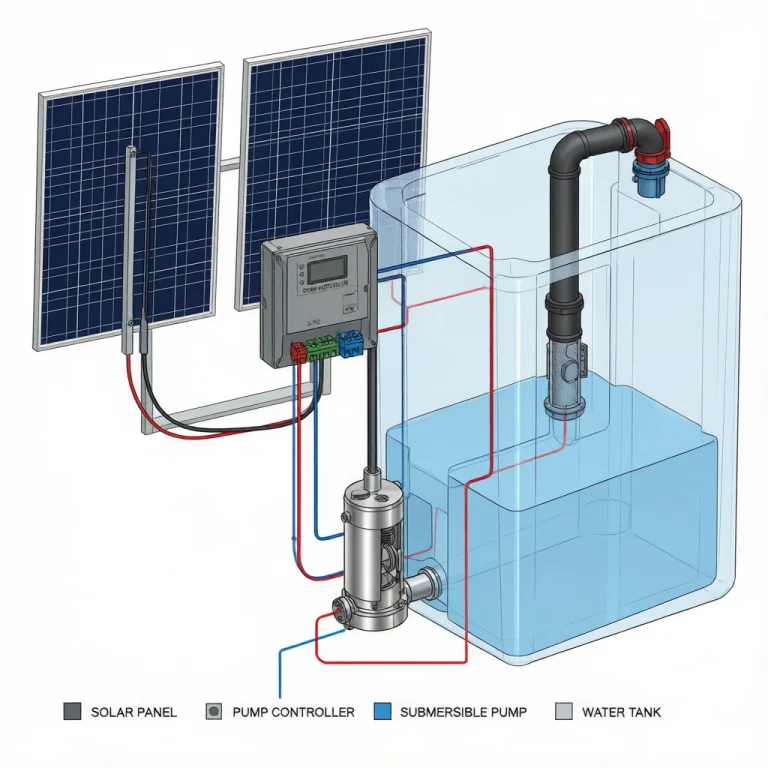
Solar Pump Cavitation: Causes, Warning Signs and Prevention for Longer Pump Life
Solar Pump Cavitation: Causes, Warning Signs and Prevention for Longer Pump Life
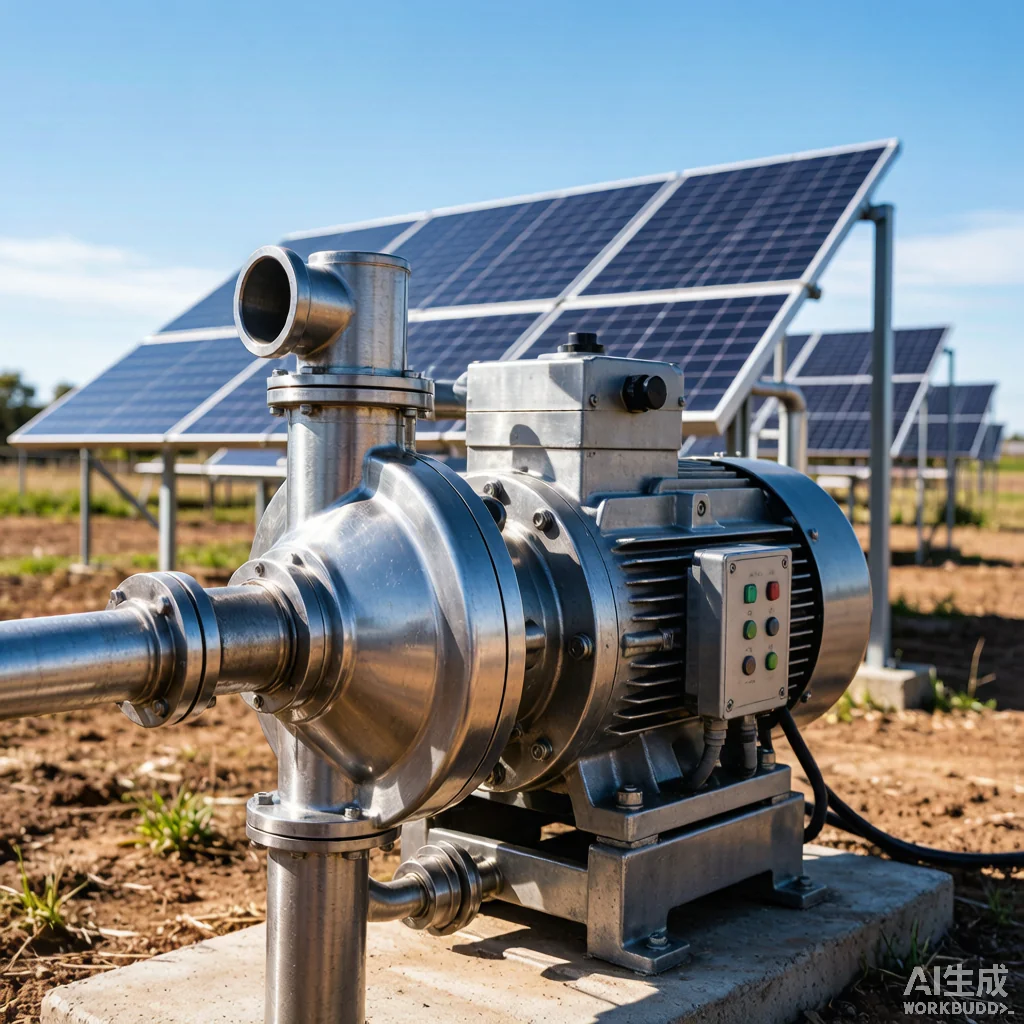
Introduction
Cavitation is one of the most destructive — and most preventable — failure modes in solar water pumping. It silently erodes the impeller, generates noise and vibration, and can reduce a pump’s service life from years to months. For off-grid installations where a failed pump means lost irrigation or a community without drinking water, understanding cavitation is not an academic exercise; it is an essential part of system design and operation.
KINBO designs solar pumping systems for demanding agricultural and water-supply applications worldwide, and cavitation prevention is built into our selection guidance. This article explains what cavitation is, how to recognize it early, and the practical steps you can take to prevent it. For a deeper look at matching a pump to its hydraulic conditions, see our guide on how to calculate required head for pump selection.
Table of Contents
What Is Cavitation and Why It Happens
Cavitation begins when the pressure in a liquid drops below its vapor pressure. Inside a pump, this happens most often at the impeller inlet, where the fluid accelerates and pressure dips to its lowest point. When the local pressure falls below the water’s vapor pressure, the water literally boils at ambient temperature, forming thousands of microscopic vapor bubbles.
These bubbles are short-lived. As they are carried by the flow into a higher-pressure region of the impeller, they collapse violently. Each collapsing bubble releases a tiny but intense shock wave and micro-jet against the metal surface. Individually these events are negligible, but they occur millions of times per second, concentrated on the same impeller zones. Over time, the cumulative effect is what engineers call cavitation erosion: pitting, pockmarked surfaces, and eventually material loss.
The key technical parameter that governs cavitation is the Net Positive Suction Head (NPSH). Every pump has a required NPSH (NPSHr) specified by the manufacturer, and every installation has an available NPSH (NPSHa) determined by the system. The golden rule is simple: NPSHa must exceed NPSHr by a comfortable margin, typically 0.5 to 1 meter or more. When that margin disappears, cavitation begins.
Warning Signs of Cavitation
Cavitation rarely fails a pump without warning. It announces itself through a combination of symptoms that a trained operator can detect long before catastrophic damage occurs.
- Noise: The classic sign is a sound like gravel, marbles, or popping rattling inside the pump. This is the sound of bubbles collapsing against the impeller.
- Vibration: Asymmetric bubble collapse creates uneven forces on the impeller, producing vibration that can loosen fittings and accelerate bearing wear.
- Reduced flow and pressure: Because vapor bubbles displace liquid, the pump delivers less water and lower discharge pressure than expected for its speed.
- Pitting on the impeller: On inspection, the impeller blades show a characteristic pitted, sponge-like erosion pattern, usually on the suction side near the blade tips.
If any of these signs appear, the system should be shut down and inspected immediately. Continuing to run a cavitating pump compounds the damage and can lead to impeller fracture or mechanical seal failure.
Common Causes in Solar Pump Systems
Solar pumping has its own characteristic cavitation risks, some of which differ from grid-connected pumping because of how the system is installed and operated.
| Cause | How It Happens | Typical Fix |
|---|---|---|
| Excessive suction lift | Surface pump placed too high above the water source | Lower the pump or reduce lift below rated limit |
| Undersized suction pipe | High velocity creates friction and pressure drop | Increase suction pipe diameter |
| Clogged intake screen | Debris, algae, or silt restricts the suction flow | Clean or enlarge the intake strainer |
| Hot or low-level water | Warm water has a higher vapor pressure | Increase submergence or cool the source |
| Running far from BEP | Pump operated at high flow far right of best efficiency point | Throttle or re-select the pump to match duty |
Prevention: Design and Operation
Preventing cavitation is far cheaper than repairing its damage. The most effective measures are applied at the design stage, before the pump is ever installed.
Design-stage prevention: First, calculate the available NPSH for your installation and compare it against the manufacturer’s required NPSH with a safety margin. Second, keep suction lift to a minimum — submersible pumps avoid the suction-lift problem entirely by sitting inside the water. Third, size suction piping generously and minimize bends, valves, and fittings that add friction. Fourth, ensure the intake is always adequately submerged so air cannot be drawn in.
Operational prevention: Keep intake screens clean, since a partially clogged screen is a frequent cause of cavitation in dirty water sources. Monitor the pump for unusual noise or vibration and investigate promptly. Avoid operating the pump at flow rates far above its best efficiency point, which increases the NPSH requirement. For systems drawing from variable sources, consider a low-level cutoff so the pump never runs when the water level drops below a safe submergence.
KINBO application engineers routinely verify NPSH margins and suction piping design for customer installations. For guidance on protecting the full electrical and mechanical system, see our article on preventive maintenance for solar submersible pumps.
Frequently Asked Questions
What causes cavitation in a solar water pump?
Cavitation occurs when the pressure at the pump impeller inlet drops below the vapor pressure of the water, causing vapor bubbles to form and then collapse violently. Common causes include excessive suction lift, restricted or undersized suction piping, a partially clogged intake, pumping hot water, and running the pump far to the right of its best efficiency point.
What does pump cavitation sound like?
Cavitation often sounds like gravel or marbles rattling inside the pump, or a crackling noise. It is frequently accompanied by vibration, reduced flow, and a drop in discharge pressure. The noise comes from thousands of vapor bubbles collapsing against the impeller surface.
How can I prevent cavitation in a solar pump?
Keep suction lift within the pump’s rated limit, use adequately sized suction piping with minimal bends and fittings, keep the intake screen clean, ensure adequate net positive suction head available (NPSHa) exceeds the required value with a safety margin, and avoid operating the pump far from its best efficiency point.
Is cavitation more likely in solar pumps than grid pumps?
Not inherently, but solar systems face specific risks. Off-grid installations are often placed near variable water sources where levels fluctuate, and operators may have less training. Submersible solar pumps largely avoid suction-lift cavitation because they sit inside the water, but surface pumps drawing from ponds or rivers need careful attention to suction lift and intake cleanliness.
Worried About Cavitation in Your System?
The KINBO engineering team can verify your NPSH margin and suction design. Get expert guidance and full after-sales support.
August 19, 2026 | Author: KINBO Editorial Team
Related Articles