Winter Operation of Solar Water Pumps: Cold Climate Guide for Year-Round Performance
Introduction
Solar water pumps are predominantly deployed in warm climates, but a growing number of installations serve high-altitude and cold-region applications where winter temperatures regularly drop below freezing. Operating a solar pump in cold conditions introduces unique challenges: ice formation in pump columns, reduced battery performance if used, increased panel efficiency (contrary to intuition), and changing water viscosity that affects pump curves. KINBO solar pumps are specified for operation from -15°C to +50°C ambient, with cold-climate options available for extreme environments.
Table of Contents
Preventing Freeze Damage
Water expanding as it freezes generates pressures exceeding 200 MPa—enough to crack steel pump housings. The critical freeze risk zones are: exposed surface piping, the pump column above the frost line (typically 0.6-1.2m depth depending on climate), pressure tanks and gauges, and the pump itself if installed in a shallow well where the water column can freeze from the top down. Prevention strategies include burying all piping below the frost line, installing automatic drain-back valves that empty exposed pipes when the pump stops, using heat tape on critical above-ground components, and specifying submersible pumps installed below the frost line where water temperature remains stable at 4-8°C year-round.
Solar Panel Performance in Cold Weather
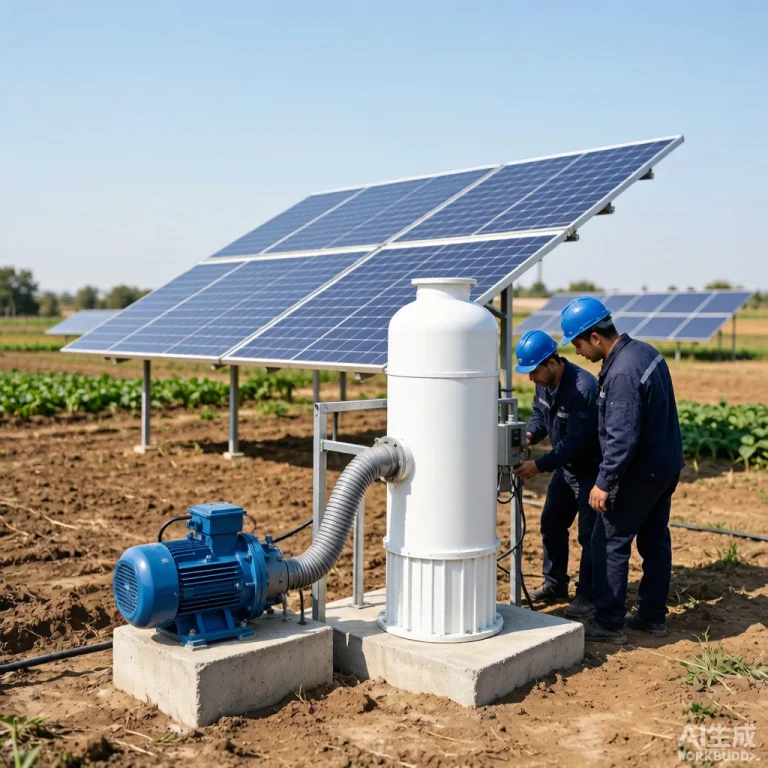
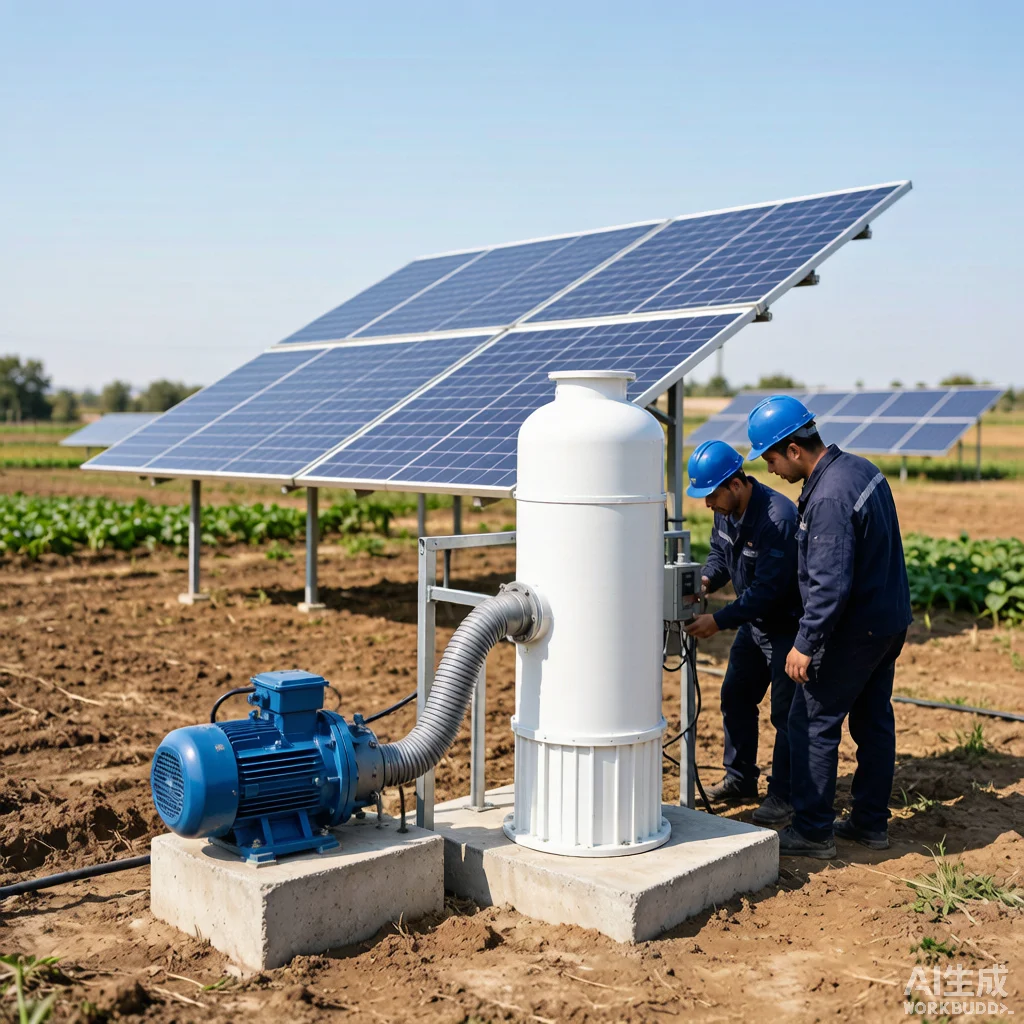
Cold weather actually improves panel efficiency—silicon photovoltaic cells gain approximately 0.35% efficiency per degree below 25°C. A panel operating at -10°C produces 12% more power than at 25°C at the same irradiance. However, snow coverage eliminates output entirely until cleared. Panel tilt angles of 45°+ encourage snow to slide off, and bifacial panels mounted on reflective white ground cover harvest additional reflected irradiance. The cold-weather efficiency gain partially offsets the reduction in daily sun hours during winter months, making year-round solar pumping viable in latitudes up to 50°N.
Cold-Climate System Design
| Component | Standard Design | Cold-Climate Upgrade |
|---|---|---|
| Pump | Standard submersible | Install below frost line; cold-rated seals |
| Piping | Buried 600mm | Buried 1.2m + drain-back valve |
| Controller | Outdoor enclosure | Insulated + heated enclosure |
| Panels | Fixed 30° tilt | Adjustable 45-60° winter tilt |
| Storage Tank | Above-ground | Buried or insulated + heating element |
Winter Maintenance Checklist
- Pre-winter (October/November): Drain all exposed pipes and pressure tanks if the system will be shut down for winter. Test the drain-back valve. Clear vegetation that might shade panels during low winter sun angles. Verify that the controller enclosure heater (if installed) activates below 5°C.
- During winter: Clear snow from panels within 24 hours of snowfall—a soft brush prevents scratching. Monitor well water temperature; if it approaches 2°C, reduce flow rate to minimize supercooling risk at the pump intake. Check that livestock water troughs have functioning ice-prevention (floating balls, insulated covers, or low-wattage heaters).
- Spring restart: Gradually pressurize the system; sudden pressure on cold-soaked components risks brittle fracture in PVC fittings. Inspect all seals and gaskets that may have taken a compression set during cold storage. See our maintenance guide for detailed checklists.
Frequently Asked Questions
Q: Can solar pumps operate in sub-zero temperatures?
A: Yes, if the pump is installed below the frost line where water remains liquid (4-8°C). The pump motor generates some self-heating during operation, providing additional freeze protection. The limitation is not the pump itself but preventing ice blockage in the above-ground discharge piping.
Q: Do I need batteries for winter solar pumping?
A: Not for the pump, but water storage becomes more critical. With shorter winter days providing 3-5 pumping hours vs 6-8 in summer, storage volume should be sized for the lowest-production month. Battery-free direct-drive solar pumps work reliably in winter if the storage buffer is adequate.
Q: How do I prevent livestock water troughs from freezing?
A: Large-volume troughs (1,000L+) resist freezing through thermal mass alone. For smaller troughs, insulated covers with small access holes, floating balls that reduce exposed surface area, or a small dedicated solar panel powering a 12V trough heater are effective solutions.
For B2B buyers planning solar pump installations in cold-climate regions, contact KINBO for cold-rated equipment specifications and winterization design support.
Related Articles
- Solar Water Pump Maintenance Guide
- KINBO Livestock Watering Solutions
- Explore KINBO Solar Submersible Pumps