Wind-Solar Hybrid Water Pumping Systems: Design Principles for Reliable Off-Grid Water Supply
Introduction
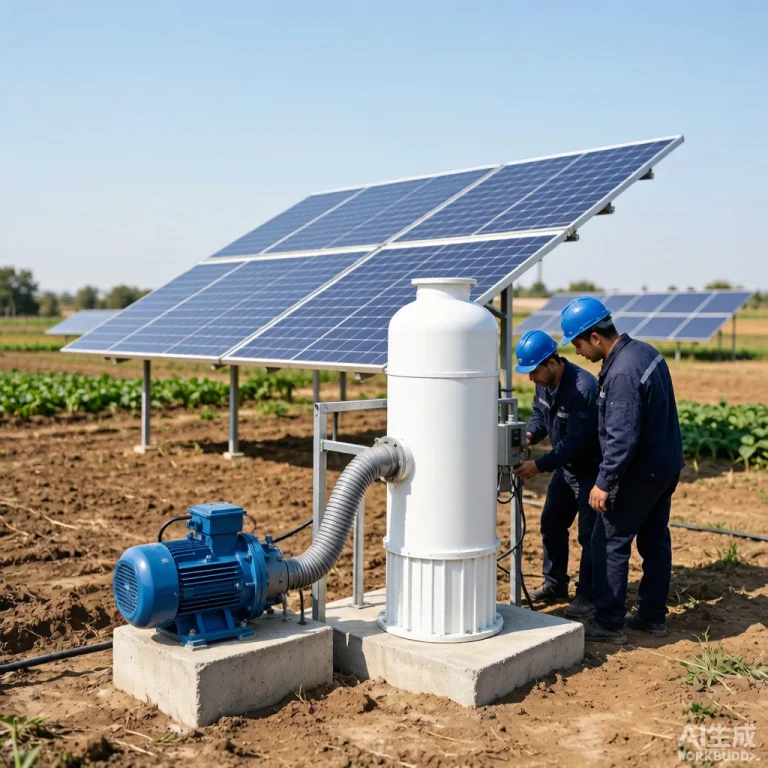
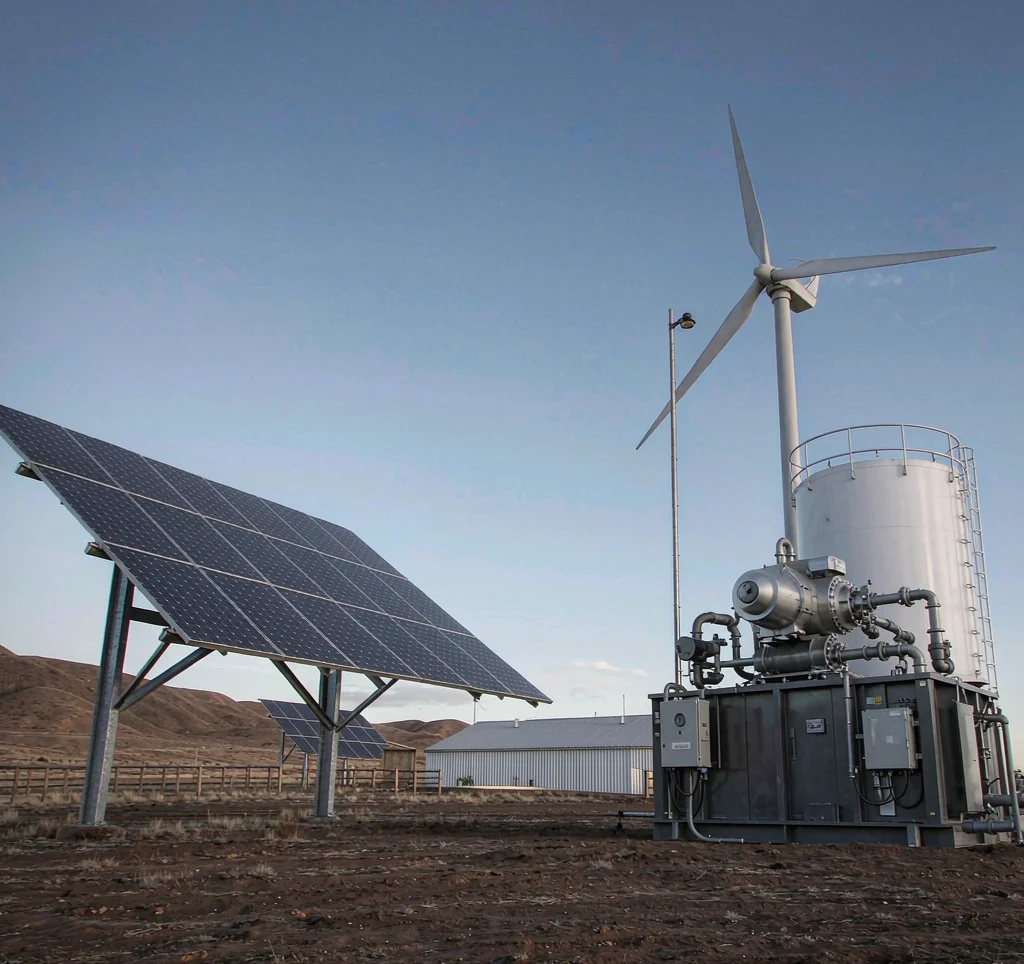
A single renewable source is rarely enough on its own. Solar irradiance drops at night and during long cloudy spells, while wind resources often strengthen exactly when the sun is weak. For remote farms, villages and livestock stations that depend on uninterrupted water supply, a wind-solar hybrid water pumping system pairs photovoltaic panels with a small wind turbine to smooth out those gaps. The result is a more consistent daily water yield with far less reliance on diesel or batteries. Manufacturers such as KINBO have deployed hybrid packages where the two resources complement each other across seasons, and the engineering logic is straightforward: when one source fades, the other is usually rising. This article walks through the design principles, sizing method and control strategies that make a wind-solar hybrid pump reliable in off-grid conditions.
Table of Contents
Why Pair Wind and Solar for Water Pumping
Solar and wind are negatively correlated in many climates. In arid and coastal regions, midday sun is strong but afternoon sea breezes or nighttime highland winds pick up when panels go quiet. A wind-solar hybrid water pumping design captures both, lifting the capacity factor of the whole plant. For a community water point or an irrigation scheme, that translates directly into fewer days of low or zero supply. It also reduces the sized battery bank: instead of storing many sunless hours, the system leans on wind to fill the gap. The trade-off is added complexity—a second generation source, a combiner and a controller that understands both inputs—but for sites with a usable wind resource, the reliability gain is worth it.
| Aspect | Solar-Only | Wind-Solar Hybrid |
|---|---|---|
| Resource coverage | Daytime only | Day and night |
| Low-sun performance | Drops sharply | Wind compensates |
| Battery requirement | Large bank | Smaller or none |
| Seasonal dips | Monsoon / winter weak | Wind offsets dips |
| Capital cost | Lower | Higher |
| Supply continuity | Moderate | High |
System Architecture: Turbines, PV and a Shared Controller
At the heart of a hybrid plant is a controller that accepts DC from both the PV array and the turbine rectifier. Small wind turbines typically output three-phase AC that is rectified to DC; the controller then blends it with PV DC and drives the pump motor through an MPPT stage. Proper fusing, surge protection and a diversion load for the turbine are essential—wind turbines can overspeed in high gusts, and the excess energy must be dumped safely rather than forced into the pump. KINBO field designs usually route the turbine through its own charge controller before the common bus, isolating faults so a turbine issue never takes the solar side offline. For the pumping unit itself, a submersible or surface pump is selected on the same head-and-flow basis used for any solar pump; see our guide on how to configure solar panels for your water pump to size the PV portion first, then add wind capacity to cover the deficit.
Sizing a Wind-Solar Hybrid Pump
Sizing starts from the daily hydraulic energy needed: flow multiplied by total head. That energy is then split between the two sources according to local solar and wind data, and each source is sized to its share. A practical example for a 20 m³/day supply at 30 m head:
| Step | Basis | Result |
|---|---|---|
| Daily hydraulic energy | 20 m³ × 30 m × 9.81 / 3600 | ~1.63 kWh/day |
| PV array (70% solar) | 1.14 kWh ÷ (4.5 PSH × 0.8) | ~0.32 kWp |
| Wind turbine (30%) | 0.49 kWh ÷ (0.18 CF × 24h) | ~0.11 kW |
| Pump motor | matched to peak | 0.75 kW brushless DC |
Figures are illustrative for a 20 m³/day, 30 m head site; actual sizing depends on measured solar and wind data plus pump efficiency.
Battery-Free vs Hybrid Storage
Many hybrid pumps run battery-free, pumping directly whenever either source produces. A buffer tank stores water instead of electricity, which is cheaper and longer-lived. Battery-free suits most agricultural and community supplies. Where demand is rigidly timed—say a pressurized distribution line—a modest battery or a wind-only battery bank smooths delivery. The choice hinges on the cost of storage versus the cost of a slightly larger PV-plus-wind array.
Operations, Maintenance and Seasonal Balancing
Maintenance is the sum of two simpler systems. A short field checklist keeps both healthy:
- Inspect turbine blades, guy wires and tail vane every quarter for fatigue or corrosion.
- Clean PV surfaces and check connector torque monthly during dusty seasons.
- Verify the shared controller firmware, surge devices and diversion load function.
- Log daily water output to expose a failing turbine brake or soiled panel string early.
Seasonally, balance the load: in high-wind winters the turbine may carry most of the duty, so verify its diversion load; in calm summers lean on PV and confirm array tilt. A simple logbook turns slow performance decline into a planned service rather than an emergency.
Frequently Asked Questions
Can a wind-solar hybrid pump run completely without batteries?
Yes. In direct-pumping mode the pump runs whenever sun or wind is available and a buffer tank stores the water; batteries are optional and only needed for rigidly timed pressure supply.
Is the added wind turbine worth the extra cost?
On sites with a genuine average wind above roughly 3.5–4 m/s, the reliability gain and reduced battery size usually justify it; on calm sites it is not.
How do you protect the system when wind is too strong?
A turbine charge controller with a diversion (dump) load safely dissipates excess energy and prevents overspeed and overvoltage on the common bus.
Can existing solar pumps be retrofitted with wind?
Often yes—add a rectified turbine input and a combiner to the existing pump controller, provided the controller supports a second DC source and adequate fusing.
For B2B buyers designing wind-solar hybrid pumping for remote farms, villages or livestock stations, contact KINBO for competitive FOB pricing and technical specifications.