Solar Pump Piping Material Selection: PVC, HDPE, Galvanized Steel and Stainless Compared
Solar Pump Piping Material Selection: PVC, HDPE, Galvanized Steel and Stainless Compared
Introduction
The pump is only half of a solar water pumping system. Between the source, the pump, the storage tank and the field, every meter of pipe must carry water reliably for years under pressure, sunlight and sometimes corrosive water. Choosing the wrong piping material is one of the most common — and most expensive — mistakes in off-grid installations, leading to leaks, pressure loss, contamination and premature failure.
KINBO supplies solar pumping systems for agriculture, livestock and community water worldwide, and our engineers specify pipe materials as carefully as the pump itself. This guide compares the four most common options and explains how to match them to your duty. For the hydraulics behind pipe choice, see our article on pipeline friction loss calculation for solar pumps.
Table of Contents
The Four Common Piping Materials
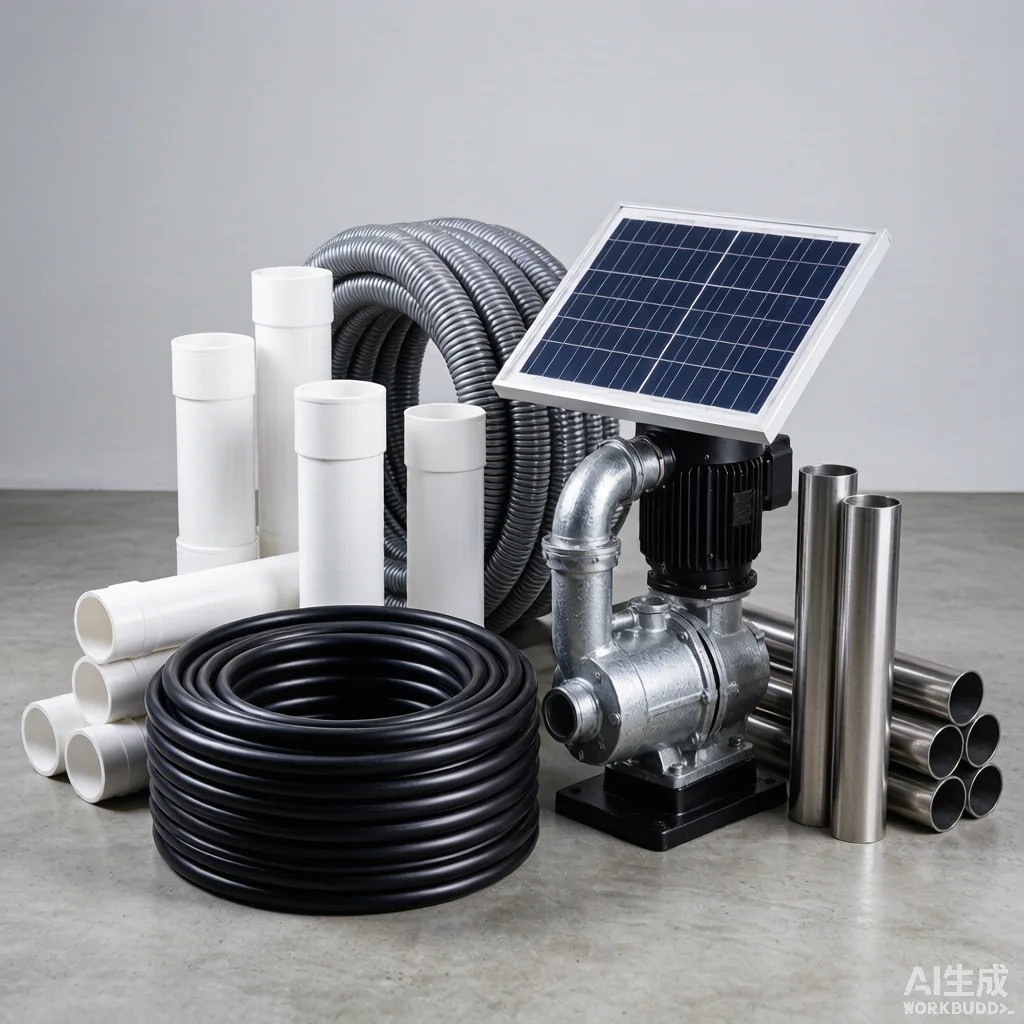
Most solar pump installations draw from a small set of pipe materials, each with distinct strengths. Understanding them is the first step to a correct specification.
PVC (Polyvinyl Chloride)
PVC is the workhorse of low-cost irrigation and domestic water systems. It is light, cheap, easy to cut and glue, and available in pressure-rated schedules (40, 80, 120). It is ideal for submersible pump riser columns and above-ground lines where pressure is moderate. Its weakness is UV sensitivity and brittleness in freezing or shifting ground.
HDPE (High-Density Polyethylene)
HDPE is a flexible black pipe joined by heat fusion, producing seamless, leak-free joints. It withstands ground movement, root intrusion and burial without cracking, and its carbon black content gives excellent UV resistance. It is the preferred choice for long buried mains and rural community lines, though fittings require fusion equipment.
Galvanized Steel
Galvanized steel was the traditional choice for suction lines and high-pressure duty. It is rigid and strong but heavy, labor-intensive to thread, and the zinc coating eventually corrodes — especially in acidic or saline water — releasing iron that stains and narrows the bore. It is increasingly replaced by HDPE and stainless.
Stainless Steel
Stainless steel (304 or 316) is the premium option for corrosive or hygienic duty. It resists nearly all water chemistries, is cleanable to food grade, and lasts decades. Its cost limits it to critical sections: suction piping, pressure tanks, and treated or potable water lines rather than entire long runs.
Head-to-Head Comparison
The table below summarizes how the four materials stack up across the parameters that matter most in solar pumping.
| Material | Max Typical Pressure | UV / Burial | Corrosion Resistance | Relative Cost |
|---|---|---|---|---|
| PVC (Sch 80) | Up to ~16 bar | Poor UV, OK buried | Good (non-metallic) | Low |
| HDPE (PN16) | Up to ~16 bar | Excellent both | Excellent | Medium |
| Galvanized steel | High | Good both | Fair (zinc wears) | Medium-High |
| Stainless 304/316 | Very high | Good both | Excellent (316 best) | High |
How to Select by Application
Match material to duty rather than defaulting to the cheapest option. A few rules of thumb cover most solar pump projects:
- Submersible riser column: Use PVC schedule 80 or certified drop pipe rated for the static head plus surge. Avoid thin-wall pipe that can collapse under column weight.
- Buried main to tank or field: HDPE fused pipe is the most reliable, especially over long distances or unstable soil.
- Above-ground seasonal lines: PVC is fine if shaded or painted; otherwise use UV-stable HDPE.
- Corrosive or potable water: Stainless or HDPE; never bare galvanized for drinking water long term.
- High-pressure booster sections: Stainless or rated steel where pressure peaks exceed PVC limits.
KINBO application engineers verify pipe rating against the system’s maximum operating and surge pressure, not just the static head, so joints and walls never become the weak point. Learning the friction implications helps size the pipe diameter correctly — see our guide on pipeline friction loss calculation.
Suction vs Discharge Piping
The suction side deserves special attention because it operates below atmospheric pressure. On the suction line, a collapsing or air-leaking joint is fatal — it draws air and causes cavitation or loss of prime. Use rigid, non-collapsing pipe (PVC sch 80, steel or stainless) on suction runs, keep them short with minimal fittings, and never use flexible hose that can flatten under vacuum. The discharge side is far more forgiving and can use HDPE or PVC confidently.
Frequently Asked Questions
Can I use PVC pipe for a solar submersible pump discharge?
Yes, but only within its pressure rating. PVC is common for submersible pump riser columns and above-ground lines where pressure stays below the pipe’s rated working pressure with a safety margin. Use schedule 80 PVC for higher pressure and avoid exposing thin-wall PVC to direct sunlight, which degrades it over time.
Is HDPE or PVC better for buried solar pump piping?
HDPE is generally better for buried lines because it is flexible, resists ground movement and root intrusion, and is joined by heat fusion that eliminates leak points. PVC is rigid and cheaper but becomes brittle in cold or shifting soils. For long buried mains, HDPE is the more reliable choice.
When should stainless steel piping be used?
Use stainless steel (typically 304 or 316) where corrosion is severe — saline water, aggressive groundwater, or hygienic applications such as dairy and food processing. It is the most durable and cleanable option but the most expensive, so it is usually reserved for the suction side, pressure tanks, and treated-water lines rather than entire long runs.
Not Sure Which Pipe Your System Needs?
The KINBO engineering team specifies pipe materials, diameters and joint methods for your exact duty and water chemistry. Get expert guidance and full after-sales support.
August 21, 2026 | Author: KINBO Editorial Team
Related Articles