Solar Pumps for Gold Mining in Cameroon: Why Off-Grid Solar Pumping Wins in the Forest Zone
Introduction
Cameroon’s goldfields sit far from reliable power. The richest alluvial and hard-rock sites in the East and Adamawa regions are exactly where the grid does not reach, so every litre of process, dewatering and camp water has to be pumped by something. For most operators, solar pumps for Cameroon gold mining are not a green extra but the only practical way to run. KINBO builds rugged solar pumping sets sized for dusty, wet, off-grid mine duties. Getting this right early avoids buying the wrong pump twice, which is a common and expensive mistake at remote sites.
Table of Contents
Why Solar Fits Cameroon’s Gold Belt
Gold mining needs water at every step: washing ore, running sluices, cooling, dust suppression and camp supply. In Cameroon’s forest zone, hauling diesel to a remote pit is slow and expensive, and the grid is simply absent. Solar pumping turns the one resource the sites have in abundance, sunlight, into the water the operation needs, with no fuel convoy and no outage risk.
The country already has a growing base of solar pumping know-how; our overview of solar pump systems for gold mining in Cameroon covers the broader alluvial context these sites sit within.
The Water Duties on a Gold Site
| Duty | Typical need | Pump type |
|---|---|---|
| Pit dewatering | Continuous, variable level | Submersible |
| Sluice / wash water | High flow, low head | Surface / centrifugal |
| Camp and drinking | Clean, steady | Pressurized system |
| Dust suppression | Intermittent spray | Surface pump |
Solar vs Diesel in the Forest Zone
Diesel pumps are familiar but brittle here: fuel is costly and sometimes unavailable during the rainy season when tracks wash out, and engines need parts and skills that are scarce at the pit. A solar set has no engine to break and no fuel to source; it just runs. The crossover where solar becomes cheaper than diesel is often within a season or two of continuous operation, after which the water is effectively free.
Choosing a KINBO Setup
- Map the duties before sizing: dewatering, wash, camp and dust each have different head and flow.
- Size the array with rainy-season margin so output holds through weaker sun.
- Favor submersible for pits and surface/centrifugal for sluice and wash lines.
- Add a tank so water is available whenever the crew needs it, not only at peak sun.
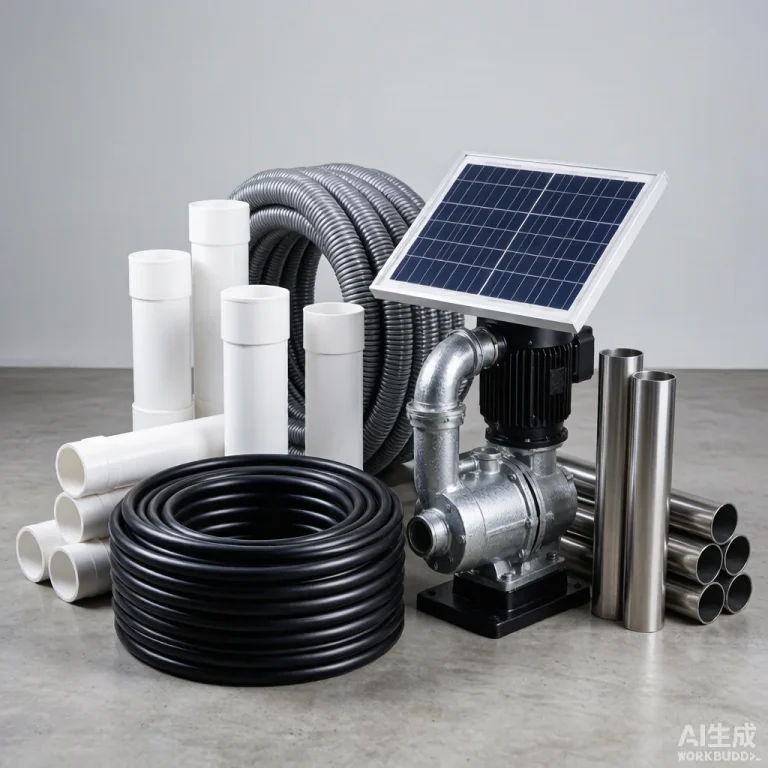
The right answer is rarely one pump for everything; it is a small family of solar-driven units matched to each duty, which keeps every part of the site supplied without a diesel generator humming in the background.
Frequently Asked Questions
Do solar pumps work during the rainy season?
Yes. Array sizing includes weaker-sun margin, and a buffer tank carries water through cloudy stretches.
Can solar handle continuous dewatering?
A submersible solar pump with a tank and float control can dewater a pit around the clock within solar limits.
Is solar cheaper than diesel here?
Usually within one to two seasons of steady use, after which fuel savings compound.
What about night or low-sun pumping?
Add battery or hybrid input for true 24-hour duty; otherwise size a tank to bridge the night.
For B2B buyers specifying off-grid solar pumping for Cameroon gold mining sites, contact KINBO for competitive FOB pricing and technical specifications.
Related Articles
- How to Choose a Gold Mining Pump for Cameroon
- Gold Dredge and Sluice Pumps for Cameroon Placer Mining
- Explore KINBO Solar Submersible Pumps