Gold Dredge and Sluice Pumps for Cameroon Placer Mining: Practical Design and Setup Tips for Reliable Recovery
Introduction
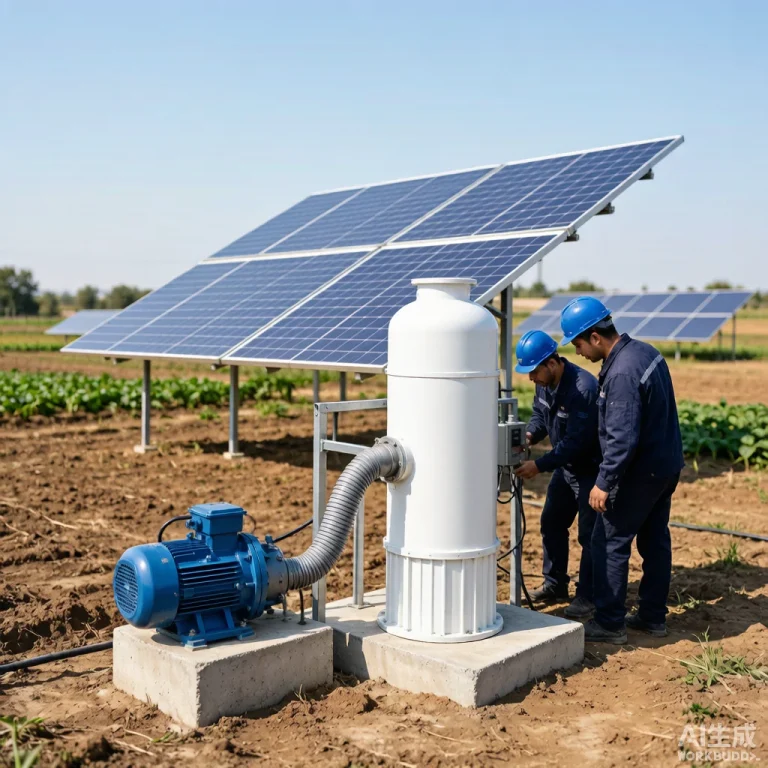
Placer gold lives in moving water, and a dredge or sluice is really a water-handling machine first and a gold trap second. Getting the gold dredge and sluice pump for Cameroon right decides how much material a team processes and how much fine gold stays in the box. These design tips cover flow, head, sediment and loop setup. KINBO surface and slurry-rated solar pumps are built for exactly this duty. These units operate across Cameroon’s placer belts; our overview of solar pump systems for gold mining in Cameroon sets the national context.
Table of Contents
Matching Flow to Your Sluice
A sluice needs enough water to keep material moving and gold settling, but not so much that it scours the fine gold out the end. The pump must deliver the sluice’s design flow at the head from the water source to the header box. Undersize and material stalls; oversize and you wash away your recovery. When in doubt, size slightly above the recommended flow and throttle at the header box, because too little water stalls material while too much merely wastes a little power. Start from the sluice manufacturer’s recommended flow per unit width, then size the pump to hold that through the day.
Handling Sediment and Grit
Placer water carries sand and grit that destroy standard impellers. Specify a slurry-rated or open-impeller pump, use a intake screen, and settle heavy solids before they reach the pump. A simple settling pond ahead of the recirculation pump is the cheapest insurance in the system.
| Element | Why it matters |
|---|---|
| Intake screen | Stops rocks and debris reaching the impeller |
| Settling pond | Drops heavy grit before the pump |
| Slurry impeller | Resists wear from suspended sand |
| Correct flow | Keeps gold in the sluice, not washed out |
Building a Recirculation Loop
Rather than pumping fresh water continuously, most Cameroon placer sites recirculate: pump from a pond, through the sluice, to a settling area, and back. This cuts total water demand and keeps the pump away from raw sediment. The loop also means a smaller solar array can serve a larger operation, because the same water does its job many times.
Setup and Tuning Tips
- Set the header box level so flow is even across the sluice width.
- Screen the intake and clean it daily; a clogged screen starves the sluice.
- Size the solar array for the loop’s running watts plus margin, with a tank buffer.
- Tune flow so material moves but concentrate stays trapped.
A pressure gauge at the header box turns tuning from guesswork into a number, so flow can be reset quickly after cleaning or a screen change. Done well, the dredge or sluice becomes a closed, efficient system where the pump’s only job is to keep water moving, and the gold does the rest.
Done well, the dredge or sluice becomes a closed, efficient system where the pump’s only job is to keep water moving, and the gold does the rest.
Frequently Asked Questions
What pump type suits a sluice?
A surface or centrifugal pump sized for the sluice’s design flow at low head; slurry-rated for grit.
Why recirculate instead of fresh water?
It cuts demand, reduces sediment through the pump, and lets a smaller array serve a bigger site.
How do I avoid washing out fine gold?
Match flow to the sluice spec; too much velocity scours gold out the downstream end.
What wears out fastest in placer duty?
The impeller, from suspended grit; screening and settling ponds extend its life sharply.
For B2B buyers designing dredge and sluice pumping for Cameroon placer mining, contact KINBO for competitive FOB pricing and technical specifications.
Related Articles
- Solar-Powered Gold Mine Dewatering in Cameroon Case Study
- How to Choose a Gold Mining Pump for Cameroon
- Explore KINBO Solar Surface Pumps