
Solar-Powered Gold Mine Dewatering in Cameroon: A Forest-Belt Case Study in Reliability and Uptime
Introduction
A forest-belt gold site in Cameroon was losing days every week to a diesel dewatering pump that kept breaking and ran out of fuel when the tracks washed out. The operator switched to a solar submersible set and changed the site’s reliability. This solar gold-mine dewatering Cameroon case study walks through the design and the result. KINBO supplied the submersible and controller for the install.
Table of Contents
Site and Old Routine
The pit sat in a rainy, road-poor part of the forest zone. The diesel pump needed fuel trucked in, broke down when silt clogged the intake, and could not keep the pit dry during the wet season when inflow peaked. Crews lost productive hours bailing and waiting, and gold recovery suffered because processing stopped whenever water rose.
System Design and Configuration
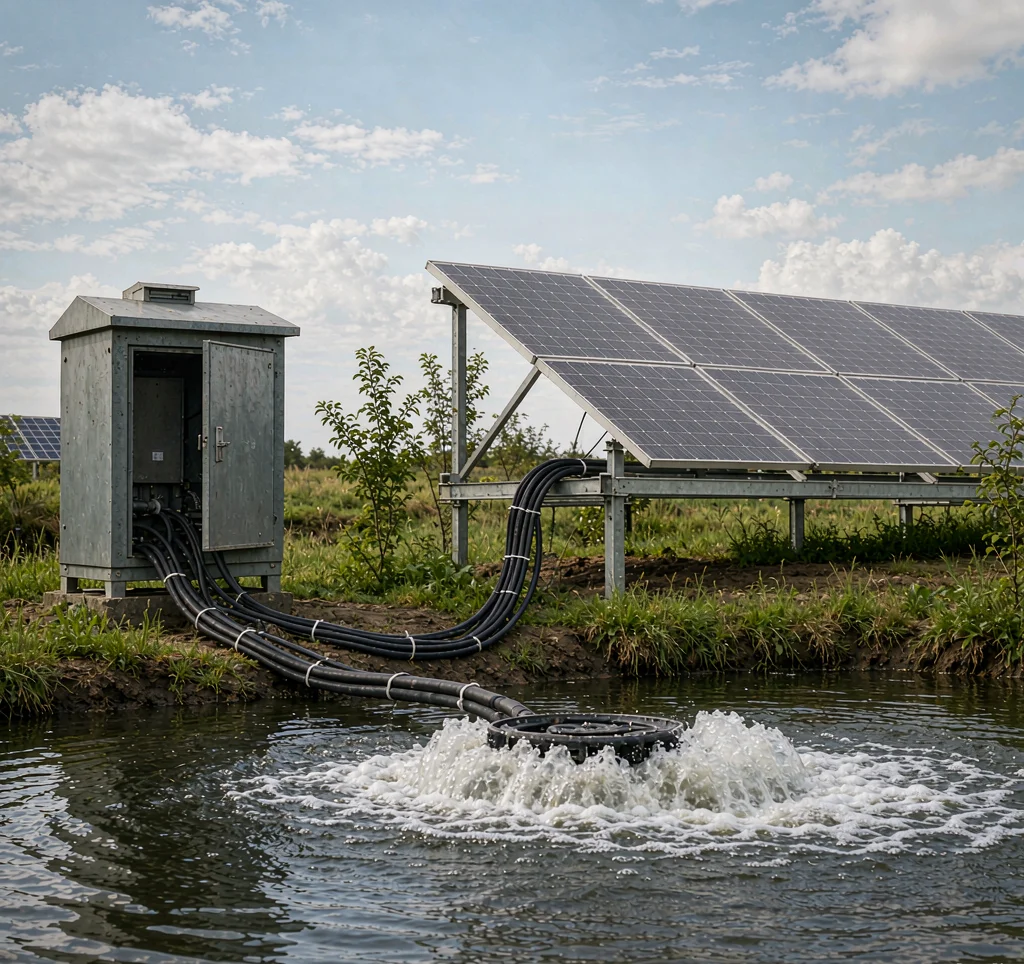
A solar submersible dewaters the pit to a settling pond, where a second surface pump returns clarified water to the sluice loop. The array was sized for the wet-season inflow plus margin, and float control keeps the pit at a safe level without attendance.
| Component | Specification |
|---|---|
| Dewatering pump | Solar submersible, ~1.5 kW |
| Recirculation pump | Solar surface, slurry-rated |
| Solar array | 8 x 450 W panels |
| Control | MPPT, dry-run + float |
The pump family is detailed in our KINBO solar submersible pumps range used here. This site sits within Cameroon’s fast-growing off-grid gold economy; our overview of solar pump systems for gold mining in Cameroon frames the wider context. The recirculation loop was the quiet win: instead of pumping fresh water continuously, the site reuses settled water, cutting total demand roughly in half.
Measured Savings and Reliability
| Metric | Before (diesel) | After (solar) |
|---|---|---|
| Fuel cost | High, intermittent | Near zero |
| Downtime from pump | Frequent | Rare |
| Wet-season pit control | Poor | Stable |
With the pit dry and the sluice loop fed, the crew processed material on days it previously would have lost to bailing. Crew morale also improved; knowing the pit would be dry each morning removed the daily uncertainty that had previously dictated the work plan. The operator estimated the recovered production alone covered the install within two seasons, before counting the fuel no longer bought.
Lessons for Similar Sites
- Size for wet-season inflow, not the dry-season average; that is when dewatering matters most.
- Recirculate settled water; it halves demand and protects the pump from fresh silt.
- Float control at the pit means no one has to babysit the pump through the night.
Documenting the wet-season inflow number up front was the single decision that made the array size correct rather than guessed. The takeaway is that dewatering is not a side task at a forest-zone gold site; it is the heartbeat, and solar makes that heartbeat steady.
Frequently Asked Questions
Can solar really keep a pit dry in the wet season?
Yes, if the array is sized for peak inflow plus margin, which is exactly when dewatering matters.
Why recirculate instead of fresh water?
It halves demand and keeps abrasive silt out of the pump, extending life.
What if the sun is weak for days?
A buffer tank and correct array margin bridge cloudy spells; hybrid input covers true 24-hour duty.
Is maintenance heavy?
Light: panel washing, intake screening, and occasional checks, far less than a diesel engine.
For B2B buyers deploying solar dewatering for Cameroon gold sites, contact KINBO for competitive FOB pricing and technical specifications.
Related Articles
- How to Choose a Gold Mining Pump for Cameroon
- Solar Pumps for Cameroon Gold Mining
- Explore KINBO Solar Submersible Pumps