Solar Pumps for Floating Intake from Lakes and Reservoirs: Off-Grid Surface Water Abstraction
Introduction
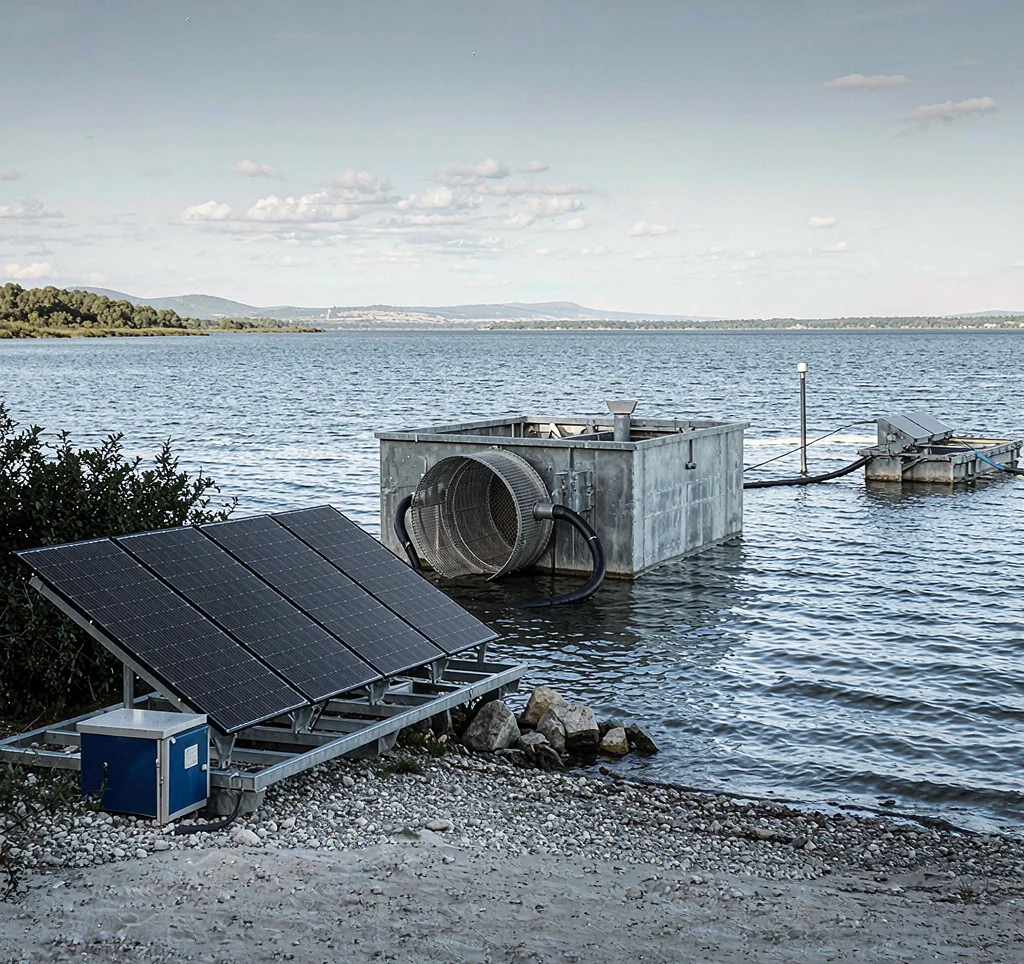
Lakes, reservoirs, irrigation dams and quarry pits are often the only water nearby—but drawing from them is not as simple as dropping a hose in the water. Surface levels move with the season, the water carries weed, silt and debris at the edge, and the intake can suck air or clog if it sits too high or too low. A floating intake solves this: a pontoon or buoyant cage holds the suction at a stable, debris-free depth, rising and falling with the water level so the pump always has a clean, air-free supply. Pair it with a solar pump and you get an off-grid abstraction point for irrigation, dust control, livestock or community supply straight from the surface source. This article covers how to design a solar pumping system around a floating lake or reservoir intake. Solar pumping suppliers such as KINBO provide rugged floating-intake kits and pumps sized for variable surface levels and dirty intake water.
Table of Contents
Why a Floating Intake
A fixed shore or bed intake fights two problems a floating one avoids. The table contrasts them.
| Issue | Fixed Intake | Floating Intake |
|---|---|---|
| Falling water level | Intake exposed, sucks air | Rides the surface, stays submerged |
| Edge weed / surface scum | Draws in the worst layer | Sits below scum, above bed |
| Sediment at the bottom | Pulls silt when low | Held clear of the bed |
Intake Depth and Level Swing
The floating body holds the suction at a set depth below the surface—typically 0.3–1.0 m, below the warmest, scummiest top layer but well above the silt. The key design number is the level swing: how far the surface rises and falls across the season. A floating intake handles any swing automatically; a fixed one must be placed below the lowest expected level, which can mean a very deep, hard-to-service suction. Plan for:
- Maximum drawdown—how low the lake gets in drought; the floating intake still works, but check the pump’s suction lift limit.
- Mooring—anchor the pontoon so it cannot drift into reeds or snap the suction line in wind.
- Access—you will need to reach it for screen cleaning; keep it within a short boat or bank reach.
Pump and Suction Line Design
The pump is usually a surface (self-priming or flooded-suction) unit on the bank, pulling through the floating intake via a flexible suction hose. Points to get right:
- Suction lift—keep the pump close to the water and below the high-water line so prime holds; long vertical lifts strain a surface pump.
- Hose and float—use a weighted, abrasion-resistant suction hose that won’t kink as the pontoon moves; the float must support both hose and strainer.
- Non-return valve—fit one at the intake so the line stays primed between runs and the pump restarts without re-priming.
- Pump type—for the dirty, variable source a robust centrifugal or helical rotor pump suits; size flow and total head (lift + friction + outlet pressure) as normal.
For the broader task of lifting surface water, see our guide on solar pumps for surface water intake.
Debris, Screens and Seasonal Care
Surface sources are the debris capital of pumping. Manage it:
| Risk | Control |
|---|---|
| Leaves / weed | Coarse strainer on the intake, cleaned weekly |
| Silt after rain | Keep intake off the bed; pre-sediment if very turbid |
| Ice in winter | Deeper intake depth, or pull and store the float in hard freeze |
Because the floating intake already sits in cleaner mid-water, screen maintenance is lighter than with a bed intake—but it is still the main recurring chore.
Frequently Asked Questions
How deep should the intake sit below the surface?
Typically 0.3–1.0 m. Deep enough to avoid surface scum and wave-driven air, shallow enough to stay clear of the silt bed and easy to service.
Will the floating intake work when the lake is very low?
Yes—it rides down with the surface. The limit is the pump’s suction lift: if the bank pump is too far above the low-water line, it may lose prime. Place the pump low and close.
Does the pontoon need power?
No. The float is passive; only the pump is powered (here, by solar). The suction hose simply follows the float as the level moves.
Can I use a floating intake for drinking water?
Only with treatment after abstraction. Surface water carries pathogens and should be filtered and disinfected before human use, regardless of how clean the intake looks.
Related Articles
- Solar Pumps for Surface Water Intake
- Solar Pumps for Dust Suppression at Mines and Quarries
- Explore KINBO Solar Pump Products
Get a Floating-Intake Solar Pump Package
Share your surface level swing, required flow and delivery head with KINBO, and we will specify a solar pump with a floating intake kit—correct float, strainer and suction line—for reliable abstraction from your lake or reservoir. Contact our team for a tailored quote.
Published by KINBO · September 18, 2026 · Category: Application Cases