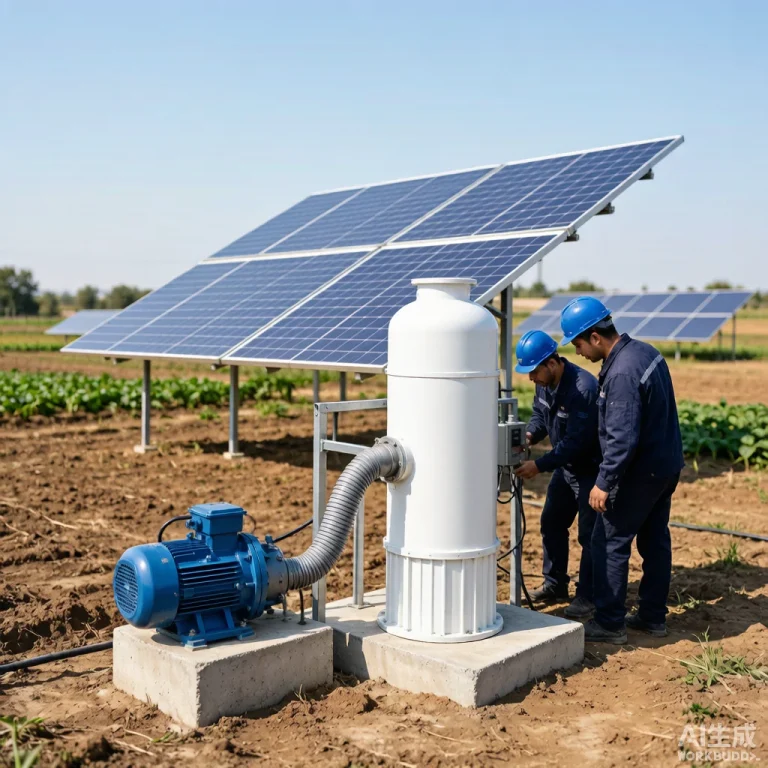
Solar Pumps for Dust Suppression at Mines, Quarries and Construction Sites: Off-Grid Misting Systems
Introduction
Open-pit mines, quarries and construction sites are dust factories. Every haul truck, crusher and stockpile kicks fine particulate into the air, and in dry seasons that dust chokes workers, damages equipment and breaches environmental limits. The standard control is water—sprayed as mist over roads and piles—but hauling that water with diesel pumps is expensive and carbon-heavy. A solar water pump turns on-site sun into suppression water with no fuel, and it scales naturally with the long daylight hours when dust is worst. This article covers how to design solar pumping for dust suppression: flow and pressure for misting, water sourcing and the reliability the site demands. Manufacturers such as KINBO build rugged solar pump packages suited to abrasive site water and continuous-duty misting.
Table of Contents
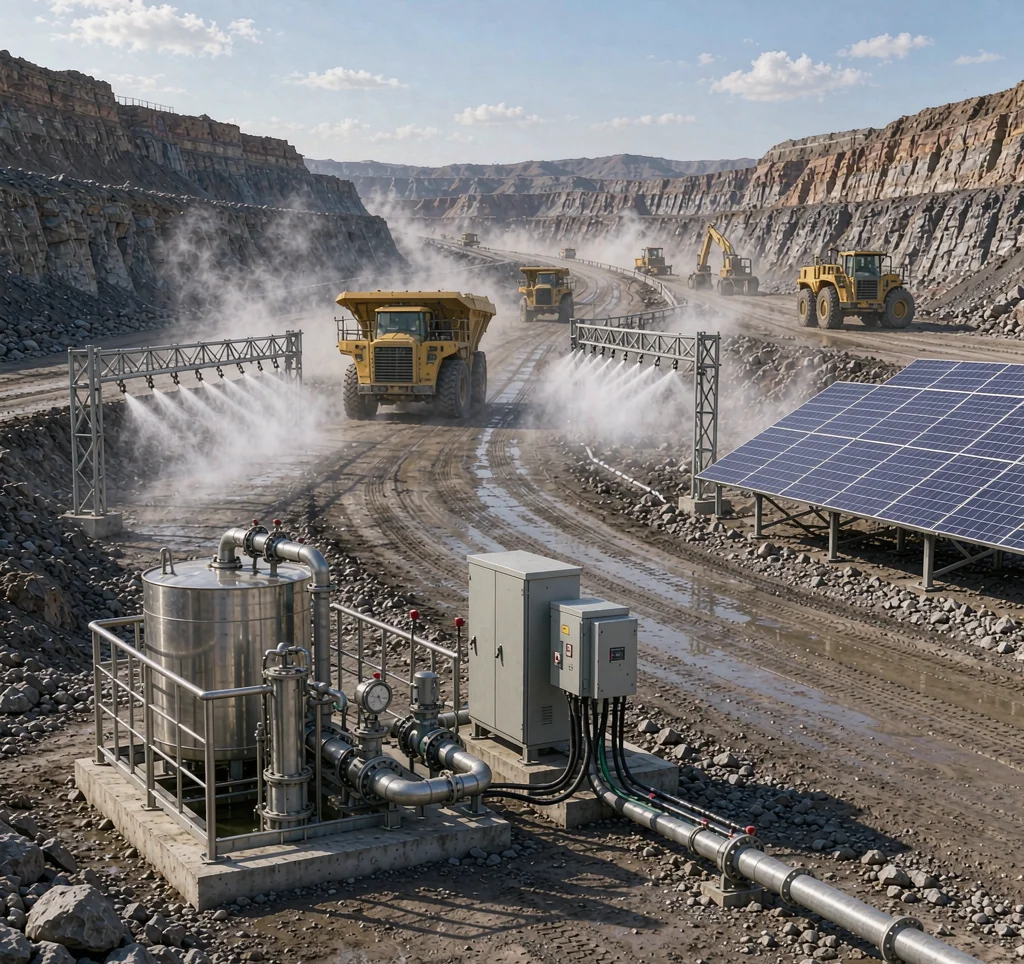
How Much Water Dust Suppression Needs
Dust suppression is a continuous, weather-driven load rather than a one-time fill. Demand scales with road length, traffic and dryness. Planning figures:
- Haul roads—frequent light misting along the running length, more during dry, windy periods.
- Crusher and transfer points—localized, higher-intensity spray at the dust source.
- Stockpiles—periodic wetting to keep fines from lifting.
- Season—dry-season demand can be several times the wet-season baseline.
Because the load is steady through the day, a solar pump sized to daytime demand with a buffer tank matches the duty well—the pump runs hardest exactly when dust is worst.
Pump and Pressure for Misting
Mist suppression needs pressure, not just volume. Fine droplets that actually capture dust require higher pressure than a garden hose.
| Method | Pressure | Pump Focus |
|---|---|---|
| Coarse spray (roads) | 2–4 bar | Moderate head, steady flow |
| Fine mist (piles, points) | 5–10 bar | Higher head, misting nozzles |
| High-pressure fog | 10–20 bar | Booster + robust seals |
For the abrasive, silt-laden water typical on site, choose wear-rated wetted parts; the selection logic mirrors our guide on solar pump selection for abrasive water.
Sourcing and Storing Site Water
Mines and quarries usually have water on site—settling ponds, process runoff, even pit dewatering—so the pump moves what is already there. Key design points:
- Draw from a settled pond, not raw slurry, to protect nozzles from clogging.
- Add a strainer sized to the misting nozzles; fine orifices block fast in silt.
- Buffer in a tank so misting continues through brief low-sun periods and at shift change.
- Recycle where possible—settled runoff returns to the pond, closing the loop.
KINBO packages include strainer and pressure options matched to site water quality, reducing unplanned nozzle cleaning.
Reliability for Continuous Duty
A dust system that fails mid-shift fails the environmental permit. Two tables cover the design priorities.
| Risk | Mitigation | Benefit |
|---|---|---|
| Nozzle clog | Strainer + settled source | Fewer stoppages |
| Cloudy-day shortfall | Buffer tank + PV margin | Continuous misting |
| Pump wear in silt | Wear-rated parts | Longer service interval |
Note: tie misting to a simple level or timer control so the system runs only when needed, conserving both water and solar energy.
Frequently Asked Questions
Can a solar pump run a high-pressure misting system?
Yes—size the pump and a booster to the misting pressure (often 5–10 bar) and buffer with a tank for steady output.
What water can I use on site?
Settled pond, process runoff or pit dewatering water all work if strained; avoid raw slurry that clogs fine nozzles.
Will it run through a cloudy day?
With a PV margin and buffer tank, yes for normal variation; for 24/7 duty add battery or grid backup for night shifts.
Is solar dust suppression cheaper than diesel?
Typically yes over the season—no fuel, low maintenance—and it removes diesel emissions from an already dusty site.
For B2B buyers specifying solar pumping for mine and quarry dust suppression, contact KINBO for competitive FOB pricing and continuous-duty system design.