Surface & Centrifugal Solar Pumps for Gold Mine Process Water in South Africa
Introduction
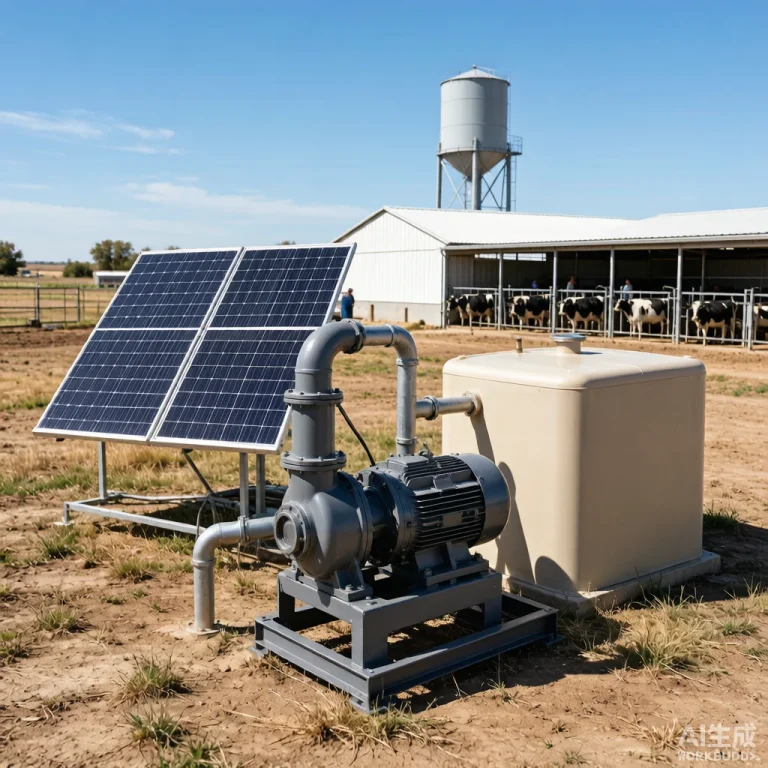
Process water—for washing, cyanidation, slurry transfer and dust control—is the largest continuous water draw at most gold plants. This article focuses on surface and centrifugal solar pumps for gold-mine process water, using South Africa’s large plants and treatment circuits as the worked example, written by the solar-pumping specialists at KINBO. Where the source is a river, dam or shallow sump and the lift is modest, a surface centrifugal unit on solar power is the lowest-cost, easiest-to-maintain option—and it scales from a single treatment line to a whole plant’s process loop.
Table of Contents
Process Water Demands at Gold Plants
- Washing & screening—continuous spray and wash water on the comminution circuit.
- Leach & CIP/CIL—slurry transfer between tanks and the recovery circuit.
- Dust control—spray on haul roads, crushers and stockpiles, especially in dry climates.
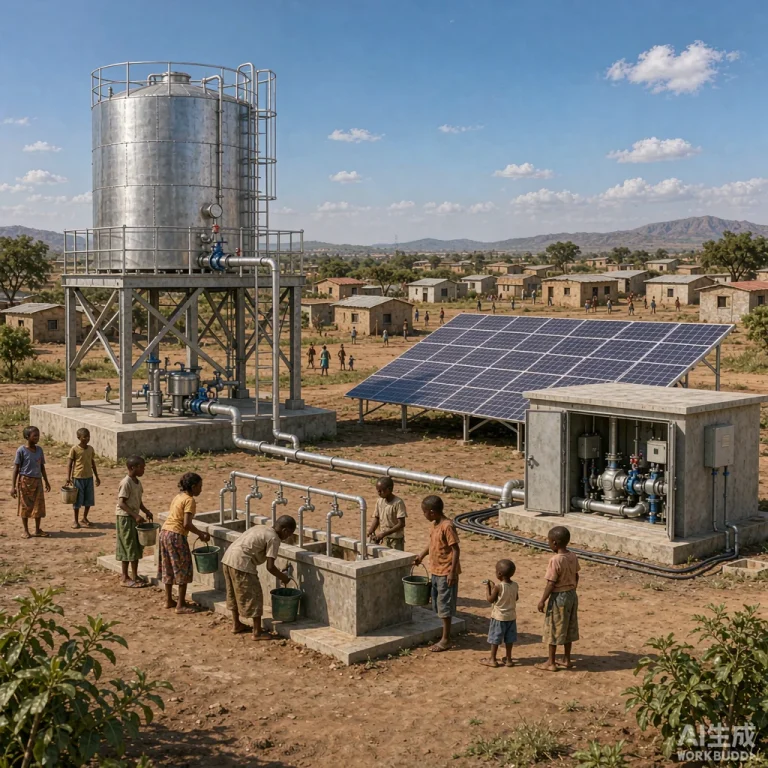
- Recycle loops—solar can drive recovery and re-use, cutting draw from scarce sources (see our community-water guide for the borehole side).
South African Duty Profile
South Africa’s gold sector—the Witwatersrand Basin plants and treatment facilities—runs large, steady process-water loads. Our process-water guide and dewatering guide frame these duties; where the source is a dam or return-water pond at low lift, surface centrifugal pumps are the natural fit. Given South Africa’s grid and load-shedding risk, a hybrid solar-grid system often carries the process loop.
Specifying a Surface Centrifugal Solar Pump
- Flow (m³/h)—total process demand across all streams at peak.
- Discharge head (m)—lift plus friction to the highest delivery point.
- Suction condition—surface pumps need flooded suction; size the inlet to avoid cavitation.
- Drive—AC centrifugal on a solar inverter, or DC with MPPT controller; our sizing methodology sets the array.
Centrifugal vs Submersible for Process Water
| Factor | Surface centrifugal (solar) | Submersible (solar) |
|---|---|---|
| Source type | Dam, pond, shallow sump | Borehole, deep pit |
| Maintenance | Easy, accessible | Pull required |
| Best lift | Under ~30 m | 20–200+ m |
| Capital | Lower | Higher |
For the economics, our solar-vs-diesel analysis shows surface solar process-water pumps at South African plants pay back in 1–3 years, faster where grid power is unreliable.
Frequently Asked Questions
Why use a surface pump for process water?
Process water usually comes from a dam or return pond at low lift—exactly where a surface centrifugal pump is cheapest and easiest to service.
Can a centrifugal pump run on solar only?
Yes—an AC unit on a solar inverter (or DC with MPPT) runs from PV; add a battery or grid tie for off-sunshine or continuous duty.
How do I avoid cavitation?
Keep the suction flooded, size the inlet line generously and avoid running the pump below its minimum flow; our sizing methodology covers this.
How do I start a project in South Africa?
Define each process stream’s flow, head and hours, then we size the array, pump and buffer—our sizing methodology applies directly.
Related Articles
- Solar Pump Selection for Gold Mine Process Water
- Hybrid Solar-Diesel Pump Systems for Gold Mines
- Solar vs Diesel Cost Analysis for Gold Mines
- Explore KINBO Solar Pump Products
Get a Surface Solar Process-Water Pump for Your Gold Plant
Tell KINBO your plant’s process streams—South African treatment circuit, West African CIP line, or community supply—and we will specify a surface centrifugal solar pump and array sized to your duty. Contact our team for a tailored quote.
Published by KINBO · September 29, 2026 · Category: Application Cases