
Solar Pumps for Fountain and Landscape Water Features: Off-Grid Decorative and Aeration Systems
Introduction
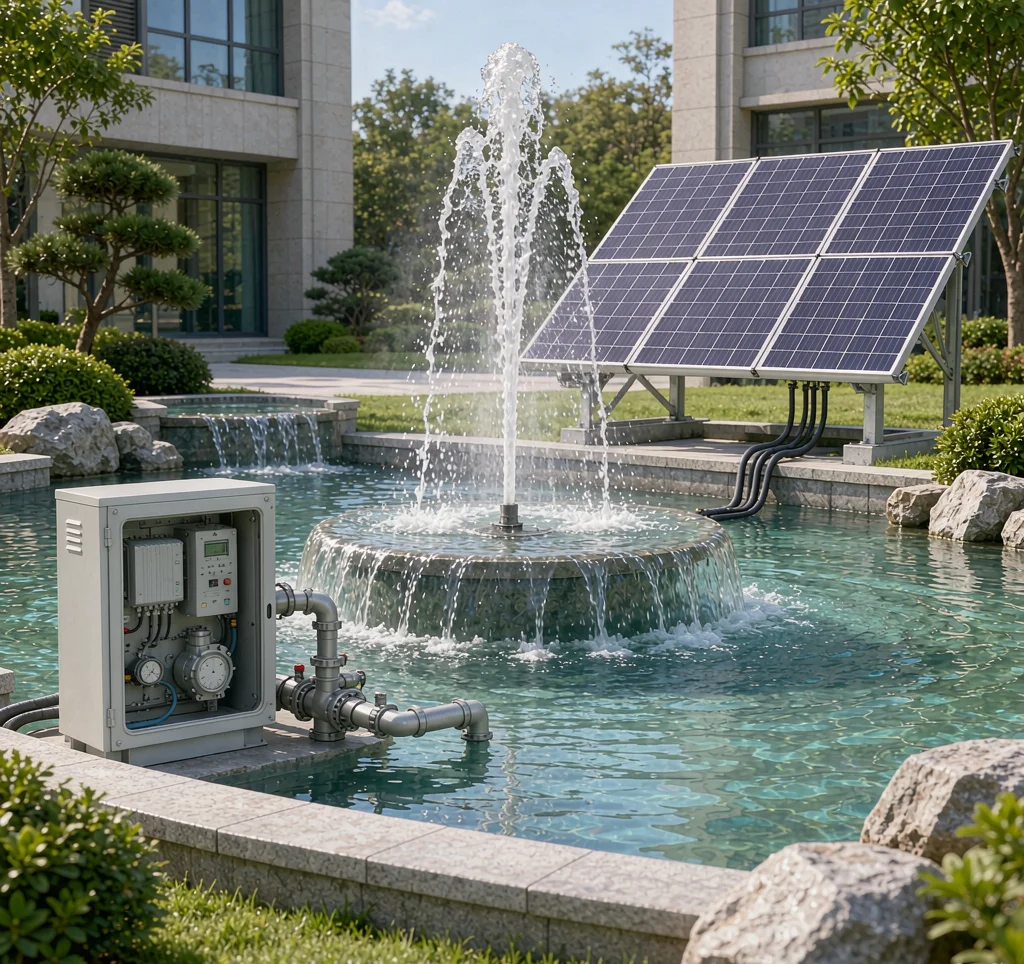
Fountains, reflecting pools and landscape water features are no longer the preserve of grid-powered estates. A solar water pump can circulate and lift water for decorative fountains, fish ponds, hotel courtyards and public parks with no trenching for power and no monthly electricity bill—ideal for remote sites, eco-resorts and off-grid gardens. The design goals differ from irrigation: here the priority is a reliable, clean circulation loop, a pleasing water effect, and low maintenance, not maximum flow to a field. This article covers how to specify a solar pump for fountains and landscape features, what flow and lift to plan for, and how to keep the system running through dull weather. Solar pumping suppliers such as KINBO build compact, weatherproof packages suited to ornamental and aeration duties where quiet, steady circulation matters more than raw volume.
Table of Contents
What the Feature Actually Needs
Start from the visual and biological duty, not from a pump catalogue. The table below turns common feature types into the flow and lift you should size for.
| Feature Type | Typical Flow | Lift to Consider | Notes |
|---|---|---|---|
| Small garden fountain (spout) | 300–800 L/h | 0.5–1.5 m to nozzle | Low power, single panel often enough |
| Tiered / cascade fountain | 800–2,000 L/h | 1.5–3 m per tier | Higher lift drives pump size up fast |
| Reflecting pool circulation | 500–1,500 L/h | <1 m (near-level) | Flow for clarity, not height |
| Koi / fish pond aeration | 1,000–3,000 L/h | 0.3–1 m to waterfall | Continuous duty, oxygen priority |
| Large public display | 3,000+ L/h | 3–6 m | Multi-panel array, often grid-hybrid |
Pump Type and Lift for Fountains
Most ornamental features use a submersible or inline centrifugal pump drawing from the feature’s own basin and returning through the nozzle or waterfall. Key points:
- Lift is the cost driver—every extra metre of nozzle height roughly multiplies the pump’s work; keep tiers low or accept a bigger array.
- Match flow to nozzle—nozzles are rated for a flow at a given height; under-feeding them gives a weak dribble, over-feeding wastes sun.
- Prefer a strainer—leaves and algae clog ornamental pumps quickly; a coarse intake screen is essential.
- Quiet operation—for courtyards and resorts, choose a pump with low acoustic signature; a soft-start VFD (see our VFD control guide) avoids the daily clunk of hard starts.
Battery, Storage and Overcast Days
A pure solar fountain stops at dusk and slows on cloudy days—fine for a daytime garden show, less fine for a fish pond that needs overnight oxygen. Options:
| Strategy | Best For | Trade-off |
|---|---|---|
| Daytime-only solar (no battery) | Decorative fountains, open 9–5 | Stops at night, cheapest |
| Battery buffer (few hours) | Evening displays, mild climates | Adds cost and maintenance |
| Grid or genset hybrid | Critical aeration, 24/7 duty | Not fully off-grid |
Aeration and Pond Health
For fish and koi ponds the pump’s real job is oxygen, not beauty. Continuous circulation through a waterfall or venturi mixes air into the water and prevents stagnation and algae blooms. Size for the pond volume, not the view: a common rule of thumb is turning the pond over at least once every one to two hours at peak. If the feature is purely ornamental, you can size down and accept a daytime-only cycle.
For larger water bodies needing reliable aeration, our aquaculture aeration guide covers higher-volume duties in more depth.
Frequently Asked Questions
Will the fountain run at night?
Only with a battery or hybrid connection. A direct solar fountain runs on sunlight and idles after dusk—usually acceptable for decorative features and even beneficial for ponds in cool nights.
How big a solar panel do I need for a garden fountain?
A small spout fountain (300–800 L/h at <1.5 m lift) often runs on a single 100–200 W panel. Tiered displays needing higher lift scale up quickly; size from the flow-and-lift table above.
Do I need a filter on the intake?
Yes. Ornamental pumps clog on leaves and string algae within days without a strainer. Use a coarse screen you can rinse, and place the pump away from plant inflow.
Can one pump serve both a fountain and a pond waterfall?
Often yes, if you size flow for the larger duty and split it with a simple manifold. Just remember the highest lift in the loop sets the pump requirement.
Related Articles
- Solar Pump Selection with VFD Control
- Solar Pumps for Aquaculture and Fish Farm Aeration
- Explore KINBO Solar Pump Products
Get a Solar Fountain or Aeration Package
Share your feature type, desired water height and pond volume with KINBO, and we will match a quiet, weatherproof solar pump package—daytime-only or battery-backed—for a clean, low-maintenance water feature. Contact our team for a tailored quote.
Published by KINBO · September 18, 2026 · Category: Application Cases