Solar Pump Selection for Low-Flow Micro-Dosing: Fertigation and Chemigation Sizing
Introduction
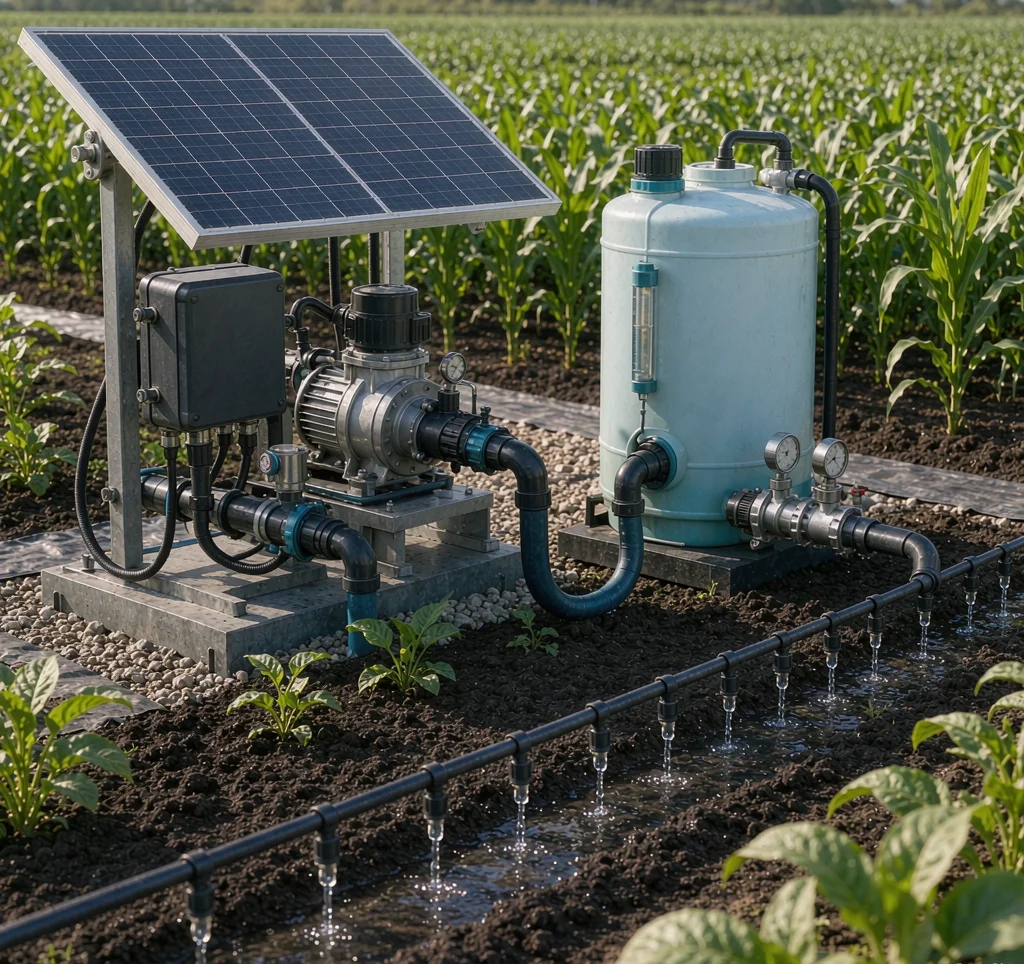
Micro-dosing—also called fertigation or chemigation when nutrients or chemicals are injected—is the precision end of irrigation. Instead of flooding a field, you deliver water plus dissolved fertiliser or crop-protection product in tiny, frequent, accurately metered doses straight to the root zone through drip lines. The pump’s job is not brute flow but a steady, very low flow that stays within a narrow band all day so the injection ratio holds constant. A solar pump is a natural fit: the sun that drives plant growth also drives the dosing, and a small, well-controlled unit matches the low demand perfectly. This guide covers how to size a solar pump for low-flow micro-dosing and fertigation duties. Solar pumping specialists such as KINBO supply low-flow packages with the stable output and injection compatibility that precise dosing demands.
Table of Contents
What Micro-Dosing Demands of a Pump
Unlike broad irrigation that tolerates swings in output, micro-dosing punishes inconsistency: if flow doubles for an hour, the dose doubles too, burning roots or wasting product. So the priorities invert from a typical pump spec:
- Stability over peak—the pump must hold a set low flow, not chase maximum.
- Clean water path—fertigator injectors and tiny emitters clog on grit; the pump and strainer must keep the line clean.
- Chemical compatibility—fertigation draws acidic or saline solutions back through the system; non-return valves and compatible materials matter.
- Low power draw—dosing runs for long hours at small volume, so efficiency beats raw capacity.
Flow and Pressure Ranges
Micro-dosing flows are small but the pressure must overcome drip-line friction and emitter ratings. Typical planning figures:
| System | Flow | Pressure | Use |
|---|---|---|---|
| Vegetable bed drip | 100–500 L/h | 1.0–1.5 bar | Market garden, nursery |
| Orchard micro-spray | 300–1,000 L/h | 1.5–2.0 bar | Tree crops, vineyard |
| Greenhouse dripper | 50–300 L/h | 1.0–1.5 bar | Controlled environment |
Because these flows are low, a small pump and a modest solar array are usually enough—but the pump must not over-pressure the drip line, so a pressure regulator or VFD trim is advisable (see our VFD control guide).
Sizing the Solar Pump
Selection follows the standard steps, tuned to low-flow discipline:
- Fix the dose flow—emitters × rated flow across the zone, at the zone’s operating pressure.
- Add mainline friction—long drip laterals add head; size pipe so pressure stays even at the last emitter.
- Choose a low-flow pump—a diaphragm or small centrifugal pump happy at 1–2 bar is ideal; oversizing invites over-pressure and wasted sun.
- Trim with a regulator or VFD—hold the setpoint instead of throttling wastefully; this also protects the injector.
- Size the array to the daily dose volume—low flow × hours of operation, with headroom so a cloudy day still completes the dose.
Injection and Water Chemistry
Micro-dosing usually means injection. Key safeguards:
| Risk | Control |
|---|---|
| Back-siphonage of chemical | Non-return valve + air gap at the injector |
| Clogged emitters | Screen filter on the pump suction and line flush |
| Corrosion from fertiliser | Compatible seals; rinse the line after each dose |
For the broader drip context, our drip irrigation system design guide covers layout and emitter spacing.
Frequently Asked Questions
Can a solar pump hold a steady enough flow for dosing?
Yes, if you regulate it. A direct solar pump tracks the sun, but with a pressure regulator or VFD holding the setpoint, the flow stays within the narrow band dosing needs through the working day.
Do I need a separate injector pump?
Often not. A venturi or proportional injector driven by the main pump’s pressure can draw fertiliser in without a second pump, keeping the system simple and solar-only.
Why not just over-size the pump and throttle it?
You can, but throttling wastes solar energy and still leaves you managing swings. A correctly sized low-flow pump with trim control is cheaper to run and more stable.
Is fertigation safe with a solar system?
Yes, with back-flow protection. A non-return valve and air gap stop fertiliser from being pulled back into the source or the pump when pressure drops.
Related Articles
- Solar Pump Selection with VFD Control
- Solar Drip Irrigation System Design
- Explore KINBO Solar Pump Products
Get a Low-Flow Micro-Dosing Solar Pump
Tell KINBO your zone flow, emitter pressure and whether you inject fertiliser or chemicals, and we will specify a low-flow solar pump with the right regulation, filtration and back-flow protection for stable, safe dosing. Contact our team for a tailored quote.
Published by KINBO · September 20, 2026 · Category: Pump Selection Guide