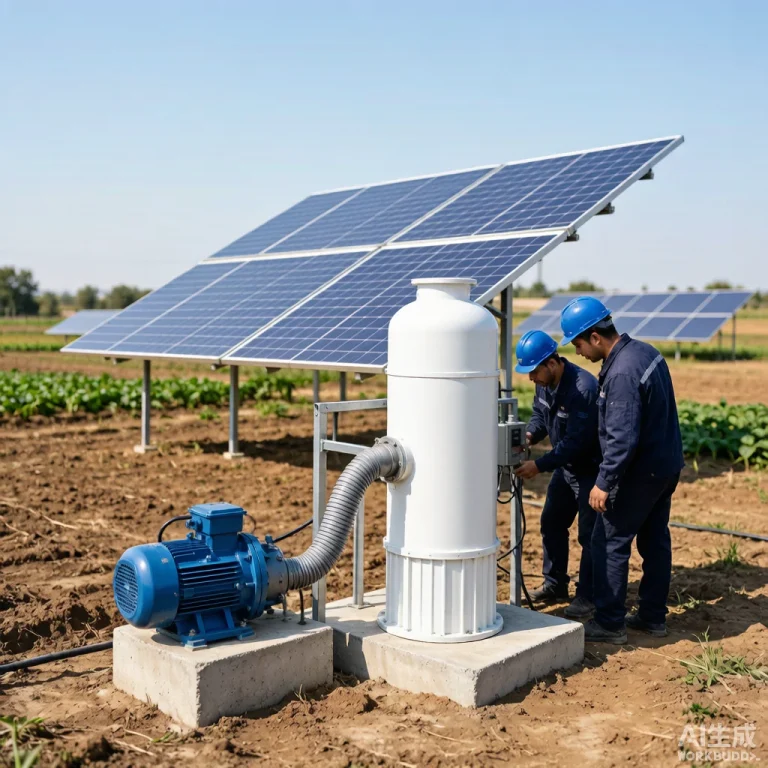
Solar Water Pumps for African Rice Cultivation: Irrigation Scheduling and Flooding Applications
Introduction
Rice is the staple that feeds much of Africa, yet paddies demand precise water control: a flooded nursery, a maintained canopy through tillering, a brief drain at flowering, then reflooding to fill grain. Doing this by hand or diesel is laborious and costly. Solar water pumps for African rice cultivation lift water from rivers, canals and shallow wells to schedule flooding automatically. KINBO pumps and controllers are built for the cyclic duty rice demands. This article reviews where solar pumping fits the paddy calendar and how to apply it.
Table of Contents
Paddy Water Needs Through the Season
A rice crop moves through clear water phases. The nursery stays flooded, the main field is saturated during tillering, drained around flowering to harden the stem, then reflooded to fill grain. Getting this wrong cuts yield more than any fertilizer choice.
Solar pumping suits the rhythm because the brightest pumping hours are also when evapotranspiration peaks, so the system refills exactly when the field loses most water. A look at the advantages of solar irrigation shows why solar beats diesel for this variable, daytime-weighted demand.
Irrigation and Flooding Applications
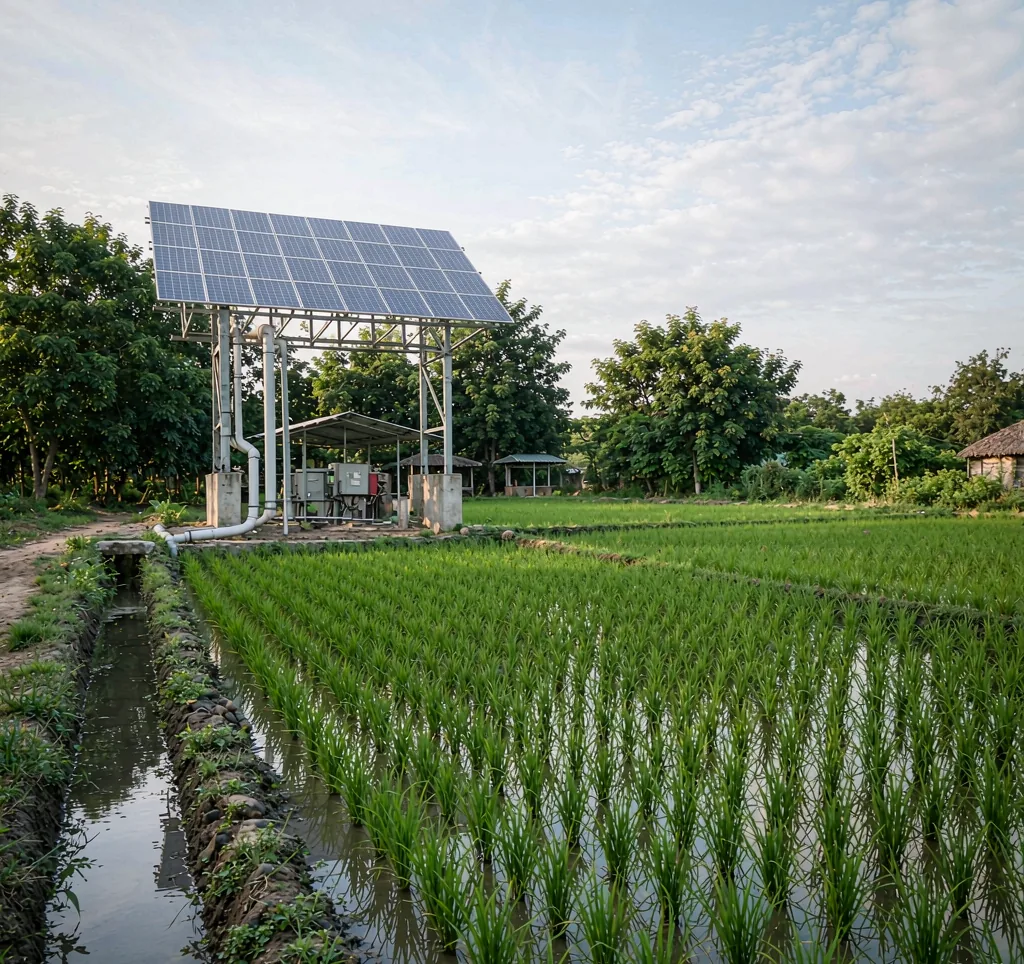
Most African rice is grown in lowland paddies fed from a river or canal. A solar surface pump lifts water through a field channel, while a submersible handles shallow wells. A small tank or weir stabilizes flow so the paddy fills evenly.
| Factor | Solar Paddy Pump | Diesel Paddy Pump |
|---|---|---|
| Fuel cost | Zero | High |
| Schedule control | Automatic | Manual |
| Emissions | None | CO2 and noise |
| Servicing | Low | Frequent |
Drainage and Water Control
Flooding is only half the story; the flowering drain matters just as much. Some farms use a second small solar pump to move water off low beds, while others rely on gravity outlets controlled by the same controller schedule.
KINBO systems can log the duty cycle so farmers repeat a proven flooding-and-drain timetable across seasons without re-learning it each year.
Sizing and System Configuration
Sizing starts from paddy area, flood depth, and how fast you must refill after a drain. Estimate daily litres, convert to peak flow and head, then size the PV array with margin for dust and cloud.
- Total paddy area and target flood depth.
- Refill time after each drain event.
- Peak flow and total dynamic head.
- Pump model matched to that curve.
- PV array 25-30%% above pump watts.
Economics and Yield Outcomes
Removing diesel protects thin margins on staple rice and frees the season from fuel price swings. The table sketches three African paddy scenarios.
| Scenario | Pump type | PV (kW) | Key benefit |
|---|---|---|---|
| Nursery 0.2 ha | Surface | 0.5 | Even flooding |
| Small paddy 2 ha | Surface + sub | 2 | Scheduled drain |
| Estate 10 ha | Multiple pumps | 8 | Yield stability |
Planning estimates; actual sizing depends on soil, climate and layout.
Beyond cost, steady water control lifts grain fill and reduces the blanking that hurts milled rice quality.
Frequently Asked Questions
Can solar pumps handle paddy flooding and drainage?
Yes. A surface pump lifts water from a river or canal to flood the paddy, and the same controller schedule can trigger a drain or a second pump to move water off at flowering.
How much solar capacity for a 2 ha rice paddy?
Around 2 kW of PV typically covers a 2 ha paddy with a surface plus submersible setup, enough for scheduled flooding and draining.
Do rice paddies need batteries for night control?
Usually not. The water control is daytime-weighted and a small tank or weir buffers flow, so direct solar plus storage covers the cycle without batteries.
Which KINBO pump suits a small rice nursery?
A small surface pump with a built-in controller is easiest for a nursery, while a submersible model is better when lifting from a shallow well.
For B2B buyers rice paddy solar pumping projects, contact KINBO for competitive FOB pricing and technical specifications.
Related Articles
- Solar Water Pumps for African Fruit Orchards and Commercial Crop Estates: Reliable Irrigation Supply
- Solar Water Pumps for African Aquaculture and Fish Farming
- Explore KINBO Solar Submersible Pumps