
Solar Water Pumps for African Poultry Farms: Reliable Drinking Water and Cooling System Applications
Introduction
Poultry farming is one of Africa’s fastest-growing protein sectors, yet birds need clean drinking water around the clock and cooling water during heat stress. Diesel and grid power failures can quickly threaten flocks, so solar water pumps for African poultry farms now back up drinking lines and evaporative cooling. KINBO compact pumps keep water moving with minimal upkeep. This article covers drinking and cooling uses, design, and lessons from farm deployments.
Table of Contents
Why Poultry Farms Need Reliable Water
Birds dehydrate faster than large livestock, and heat stress cuts weight gain and laying within hours. Water is therefore the single most time-critical input on a poultry farm, which makes backup supply essential.
Solar pumping gives a passive safeguard: even if the grid drops, the sun keeps drinkers and cooling pads supplied through the hottest part of the day.
Drinking Water and Cooling Uses
Two duties dominate. Nipple and bell drinkers need steady low-pressure supply, while evaporative cooling pads need a separate flow during heat waves. Both can share one solar source with zoning.
| Use | Solar Pump | Diesel Pump |
|---|---|---|
| Uptime | High | Fuel-limited |
| Running cost | Low | High |
| Noise near birds | Low | High |
System Design for Poultry Houses
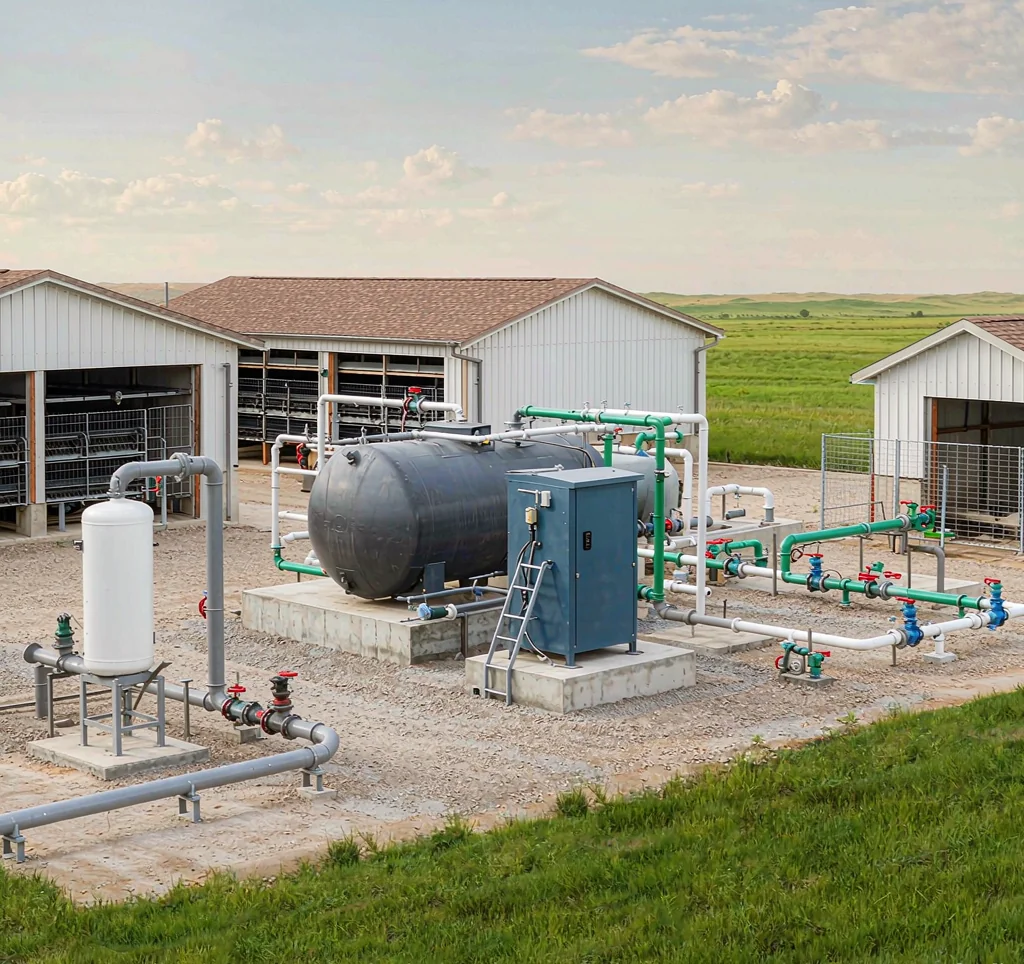
A compact surface pump draws from a tank or borehole into a header tank, then low-pressure lines feed drinkers while a separate branch serves cooling pads. Filtration keeps nipples from clogging.
- Source tank or borehole with float control.
- Surface pump with controller for steady pressure.
- Header tank buffering the day.
- Filtration before drinker lines.
Many farms anchor the layout on a proven livestock water solution adapted for birds.
Sizing and Water Quality
Estimate birds, drinker demand per bird, and cooling flow, then size the pump and array with margin. Water quality matters: filtration and periodic tank cleaning prevent disease spread through drinkers.
- Total birds and per-bird litres.
- Cooling flow for peak heat days.
- Total dynamic head.
- Pump and PV with margin.
- Filtration and cleaning plan.
Operation Lessons
Field deployments teach three things. Redundancy matters: a small backup pump prevents a total outage. Filtration must be maintained or nipples clog fast. And training one farm hand on panel cleaning and fault checks keeps flocks safe.
KINBO’s simple controller design supports this low-skill maintenance model well.
Frequently Asked Questions
How much water do chickens need per day?
Laying birds typically need about 0.2-0.4 litres per day each, rising in heat, plus additional flow for evaporative cooling pads.
Can solar pumps run poultry cooling systems?
Yes. A solar surface pump can feed both drinker lines and evaporative cooling pads, peaking with the midday heat that stresses flocks.
Which KINBO pump suits a small poultry house?
A compact surface pump with a built-in controller is usually ideal for a small house, drawing from a tank into low-pressure drinker lines.
Do poultry systems need battery backup?
Not always. The header tank buffers the day and solar peaks with heat, but batteries help if cooling must continue after sunset in hot regions.
For B2B buyers poultry farm water and cooling systems, contact KINBO for competitive FOB pricing and technical specifications.
Related Articles
- Solar Water Pumps for African Pastoralists
- Solar Water Supply Systems for Rural Villages in Africa
- Explore KINBO Solar Surface Pumps