Solar Water Pumps for African Pastoralists: Securing Livestock Water Through the Dry Season
Introduction
Across the Sahel and East Africa’s drylands, pastoralist families move with their herds along routes that have existed for generations. What has changed is the water: boreholes and permanent water points now anchor those routes, and keeping them supplied is a constant fight against diesel costs and breakdowns. Solar water pumps for African pastoralists turn that fight into a solved problem. KINBO builds the rugged submersible sets these remote watering points depend on.
Table of Contents
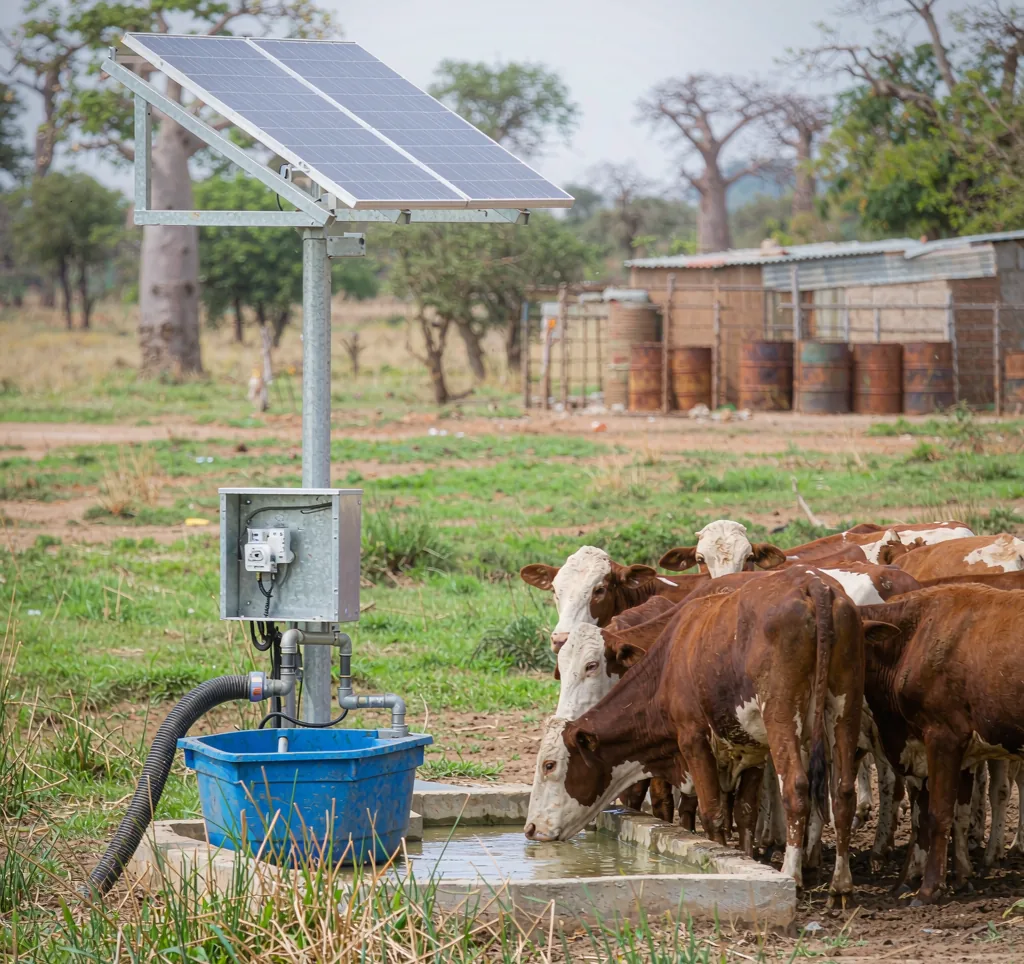
Pastoralism and Water Points
A pastoralist herd drinks daily, and in the dry season the distance to reliable water decides both herd health and grazing pressure. A working borehole with a dependable pump concentrates animals around a predictable point; a broken one sends herds walking further, losing condition and overgrazing the alternatives. Water reliability, not pasture, is often the binding constraint in the dry months.
Sizing a watering point correctly matters as much as the pump itself; our guide on sizing solar pumps for livestock watering covers the flow and trough math in detail.
Designing for Remote Watering
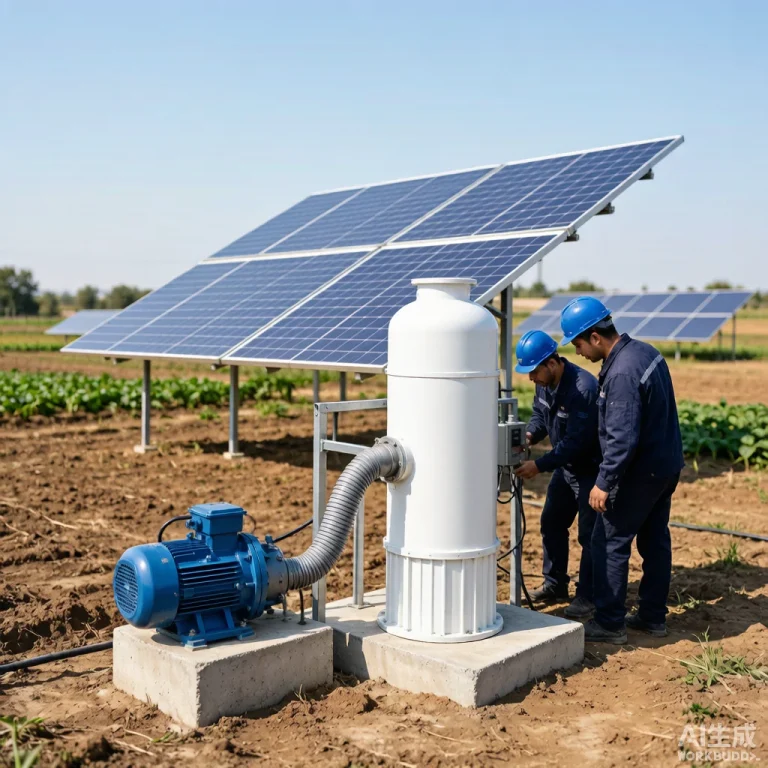
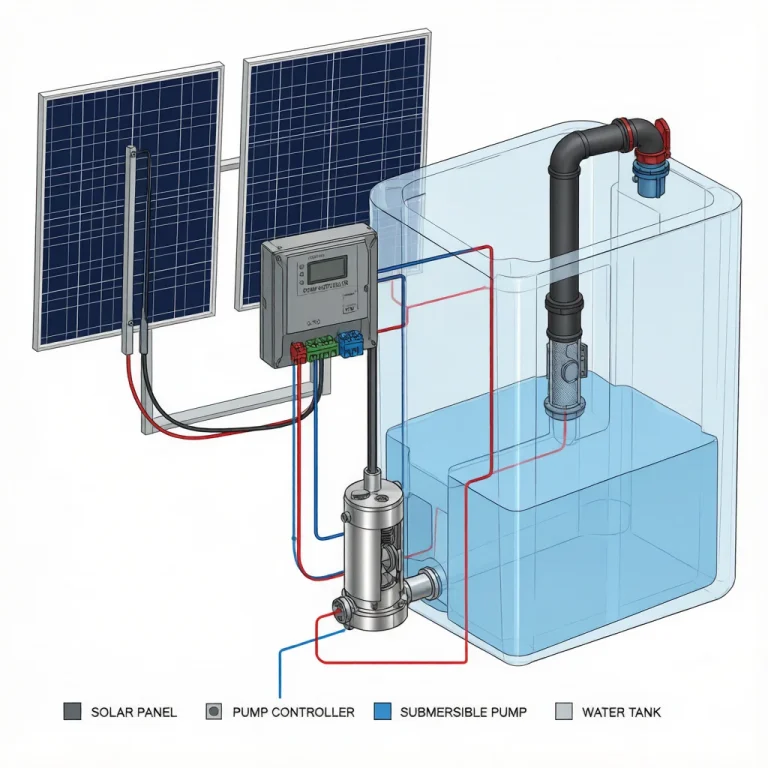
A typical watering point pairs a solar submersible in a borehole with an elevated tank or trough, sized so the herd can drink within a few hours of arrival. The array is sized for dry-season demand with margin, because the dry season is precisely when the pump must not fail. Float control keeps the trough full without attendance, and a robust enclosure protects the controller from dust, heat, and curious hands.
| Component | Design choice |
|---|---|
| Pump | Solar submersible, matched to borehole head |
| Storage | Elevated tank or trough with float |
| Array | Dry-season demand plus margin |
| Protection | Dry-run, sealed enclosure, sturdy mounts |
Operations and Maintenance
Remote sites live or die on simplicity. The best systems need only panel washing, occasional seal checks, and a named local person trained on resets. Keeping one spare controller module at the water point, or with a nearby committee, converts a week-long outage into an afternoon swap. Fuel-free operation is not just cheaper here; it removes the logistics that made diesel watering points unreliable in the first place.
Livestock and Community Impact
A dependable water point changes herd economics. Animals lose less weight walking, milk yields hold through the dry season, and mortality spikes stop. Around the water point, a small permanent community often grows: a kiosk, a garden watered by overflow, a school that can staff because families can stay. The pump is small, but the system it anchors is not.
For the wider market forces expanding these installations, see our 2026 Africa solar water pump market outlook.
Frequently Asked Questions
How much water does a herd need?
Plan on roughly 25-50 L per large animal per day in the dry season, plus margin for peak arrival days.
What if the borehole yield is low?
Size the pump to sustainable yield and use a larger tank to buffer demand across the day.
Who maintains a remote watering point?
A trained local operator with a spare controller on site; simplicity is the design goal.
Do pastoralists pay for the water?
Many schemes charge a small fee per head to fund maintenance, which keeps the system running.
For B2B buyers building solar watering points for pastoralist regions, contact KINBO for competitive FOB pricing and technical specifications.
Related Articles
- Solar-Powered Water Supply for African Schools Case Study
- Choosing Solar Water Pumps for African Conditions
- Explore KINBO Solar Submersible Pumps