Solar Water Pumps for Emergency Disaster Relief: Rapid, Fuel-Free Water in Crisis Response
Introduction
After a flood, quake or cyclone, clean water is the first life-saving need, yet fuel and power are exactly what disasters remove. A KINBO solar water pump deploys fast and runs without resupply, keeping relief water flowing. This article covers why solar aids response, rapid deployment, sizing under uncertainty, rugged operation and integration with treatment.
Table of Contents
Why Solar Aids Disaster Response
Relief sites often sit where roads are cut and fuel is scarce. Solar pumping needs only sun and a source, removing the logistics that delay diesel systems by days.
Water demand in camps and field hospitals is daytime-intensive, matching solar output. A tank bridges nights so care and hygiene continue without generators.
The drinking water solution mindset – pump plus treat – is the relief standard for good reason.
Rapid Deployment
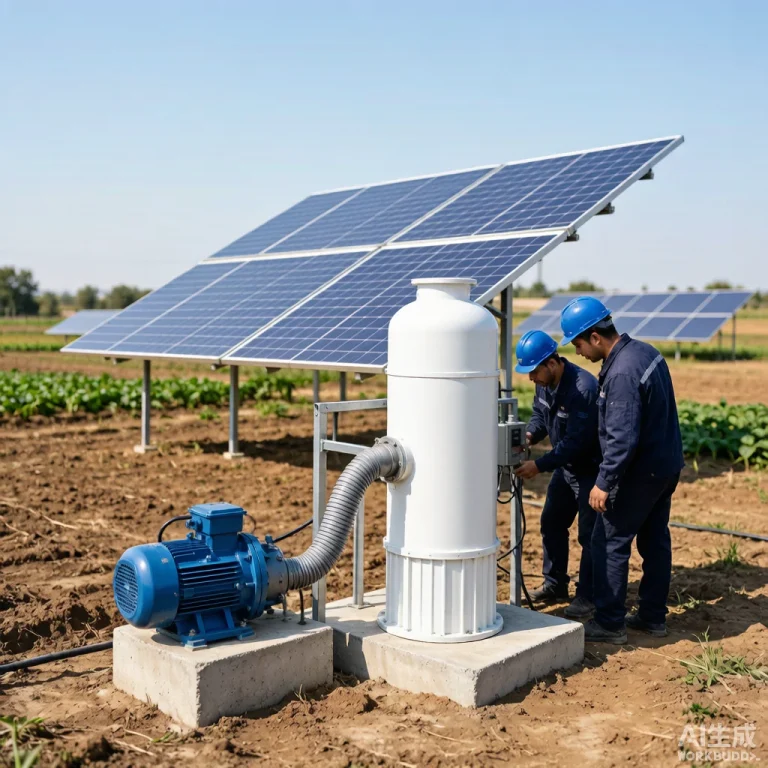
Pre-kitted, skid-mounted sets deploy in hours: panels, controller, pump and hose in one crate. Trained teams connect source to tank without civil works.
| Step | Time |
|---|---|
| Uncrate and place | Minutes |
| Connect source | Under 1 hour |
| Fill tank | Hours |
Standardized kits mean any team can deploy any unit, vital when responders rotate.
Sizing Under Uncertainty
Relief demand is unknown at first; size to a conservative per-person rate and plan to add parallel units as the population settles. A head calculation still fixes the pump duty from source to tank.
Modular arrays let you bolt on panels later without replacing the pump. Oversizing the controller slightly avoids rework when duty grows.
KINBO ships relief kits pre-sized to common camp scales for fastest response.
Rugged Field Operation
Equipment is dropped, rained on and worked hard. Sealed drives, enclosed controllers and reinforced frames survive where consumer gear fails.
Dry-run and surge protection prevent the damage that a falling borehole or a kicked cable would otherwise cause. A dewatering pump shares the same ruggedization lessons from harsh sites.
Plain-language fault codes let any technician diagnose without manuals on site.
Integration with Treatment
Pumping is half the job; the other half is safe water. Integrate filtration and disinfection inline so the tank delivers potable water, not just wet water.
Monitor chlorine or turbidity at the outlet and alert when treatment drifts. A kiosk model shows monitored treatment at community scale.
Document everything; in relief, the water safety record is as important as the water itself.
Frequently Asked Questions
Why solar for disaster relief water?
Relief sites lack fuel and power; solar needs only sun and a source, removing the logistics that delay diesel systems, and matches daytime camp and hospital demand.
How fast can a solar pump deploy?
Pre-kitted skid sets deploy in hours with no civil works: uncrate, connect the source, and fill the tank, using standardized kits any trained team can run.
How do you size relief pumping under uncertainty?
Size to a conservative per-person rate, plan parallel units as population settles, use modular arrays and slightly oversized controllers to avoid rework.
How is relief water kept safe?
Integrate inline filtration and disinfection so the tank delivers potable water, and monitor outlet quality, alerting when treatment drifts from standard.
For B2B buyers solar pumps for emergency relief, contact KINBO for competitive FOB pricing and technical specifications.
Related Articles
- Gold Mine Dewatering Pumps: Keeping Pits and Tunnels Dry for Safe, Continuous Operation
- Solar Pump Stations for District Applications: Designing Community Water Supply Systems at Scale
- Explore KINBO Solar Surface Pumps