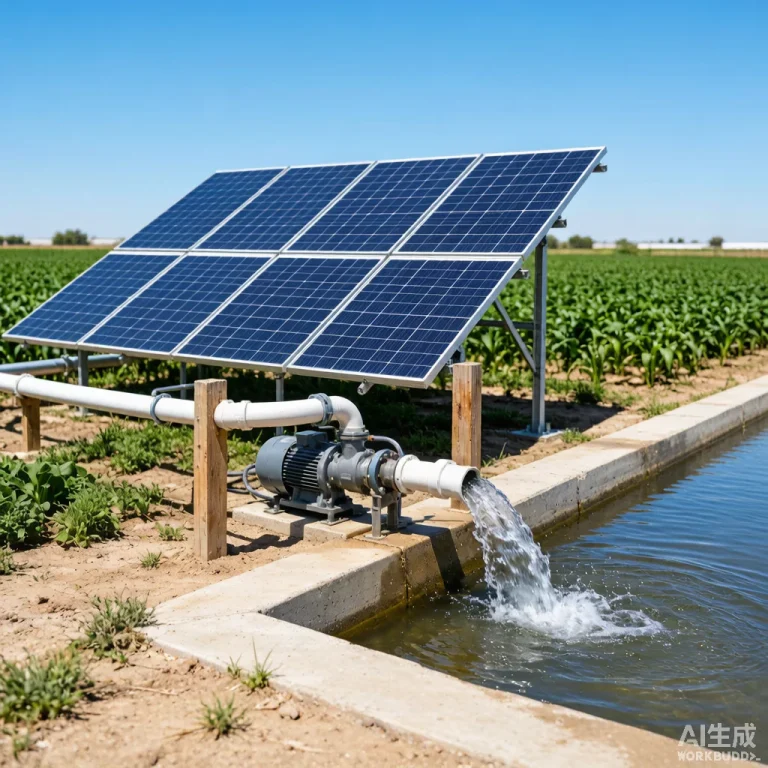
Solar Water Pumps for Off-Grid Family Homes: Reliable Domestic Water Supply Without Grid or Diesel
Introduction
For the millions living beyond the grid, every bucket of water is earned by effort or fuel. A KINBO solar water pump brings household water to the tap using only sunlight, ending the daily haul. This article covers why off-grid homes need solar pumping, system design, pressure for comfort, battery versus tank buffering and simple upkeep.
Table of Contents
Why Off-Grid Homes Need Solar Pumping
Carrying water consumes hours daily, especially for women and girls, and limits everything from hygiene to home gardens. Solar pumping returns that time and improves health at once.
Where the grid is absent or unreliable, diesel is noisy, costly and fuel-dependent. Solar aligns with daytime household use and a tank covers evenings and mornings.
A practical guide to choosing a solar water pump helps a family pick the right size the first time.
Household System Design
A typical home system lifts water from a well or spring to a roof tank, then gravity or a small pressure pump serves taps. Submersible suits deep wells; surface suits shallow sources.
| Source | Pump |
|---|---|
| Deep well | Submersible |
| Spring / shallow | Surface |
Size to household litres per day plus a garden or livestock top-up if planned.
Pressure for Daily Comfort
Gravity from a roof tank gives gentle pressure; a small booster delivers shower comfort. Avoid oversizing, which wastes energy and stresses fittings.
A pressure regulator protects pipes and keeps flow even as the tank level drops. For mixed grid-solar homes, an AC DC hybrid solar pump can blend sources seamlessly.
KINBO sizes booster and tank together so comfort does not cost reliability.
Battery vs Tank Buffering
Most homes avoid batteries entirely: a tank stores water, which is cheaper and longer-lived than storing electricity. Batteries enter only when water must flow at fixed off-sun times.
Tank buffering also rides through cloudy days with no electronic risk. A modest array sized for worst-case sun keeps the tank full enough to bridge gaps.
This simplicity is why solar home pumping outlasts generator setups by years.
Simple Upkeep
Home upkeep is minimal: keep the intake strainer clear, wipe panels a few times a year, and watch the tank level. A maintenance checklist keeps it effortless.
Teach every adult in the home the few steps, so a single person’s absence never stalls supply.
Replace only the strainer and occasional seal – the pump itself runs for years with care.
Frequently Asked Questions
Why solar pumping for off-grid homes?
It ends the daily water haul, improves hygiene and health, and avoids noisy costly diesel by using sunlight that aligns with daytime household demand.
How is a home system designed?
Lift water from well or spring to a roof tank; submersible for deep wells, surface for shallow sources, sized to household litres plus any garden top-up.
Do I need batteries for an off-grid home pump?
Usually no – a tank stores water cheaper and longer than batteries; batteries only enter when water must flow at fixed off-sun times.
What upkeep does a home pump need?
Keep the intake strainer clear, wipe panels a few times a year, watch the tank level, and follow a short maintenance checklist; the pump runs for years.
For B2B buyers solar pumps for off-grid homes, contact KINBO for competitive FOB pricing and technical specifications.
Related Articles
- AC DC Hybrid Solar Pump Systems: Combining Solar, Battery and Grid for Reliable Water Supply
- Difference Between DC and AC Solar Pumps: Which One Should You Choose for Your Water Project?
- Explore KINBO Solar Submersible Pumps