Solar Water Pumps for Livestock: Complete System Design Guide for Ranch Operations
Introduction
Livestock watering represents one of the most compelling use cases for solar water pumps—and one where the cost calculation is starkly simple. A cattle operation with 200 head requires 8,000-12,000 liters of water daily. Delivering that volume with a diesel pump costs $1,500-2,500 annually in fuel alone, while a properly sized solar pump system delivers the same water at near-zero operating cost after the initial investment. For ranch managers and agricultural cooperatives, the question is no longer whether solar pumping works for livestock, but how to design the system correctly from day one. Manufacturers such as KINBO offer solar pump solutions specifically configured for the high-reliability demands of remote livestock watering points.
Table of Contents
Calculating Livestock Water Demand
Daily water consumption varies significantly by species, climate, and production stage. The following table provides conservative design values—multiply by 1.3 for arid regions where daytime temperatures exceed 35°C.
| Livestock Type | Daily Water (L/head) | 200-Head Herd (L/day) |
|---|---|---|
| Beef Cattle (adult) | 45-55 | 9,000-11,000 |
| Dairy Cattle (lactating) | 80-120 | 16,000-24,000 |
| Sheep/Goats | 4-8 | 800-1,600 |
| Horses | 30-50 | 6,000-10,000 |
System Design for Remote Watering Points
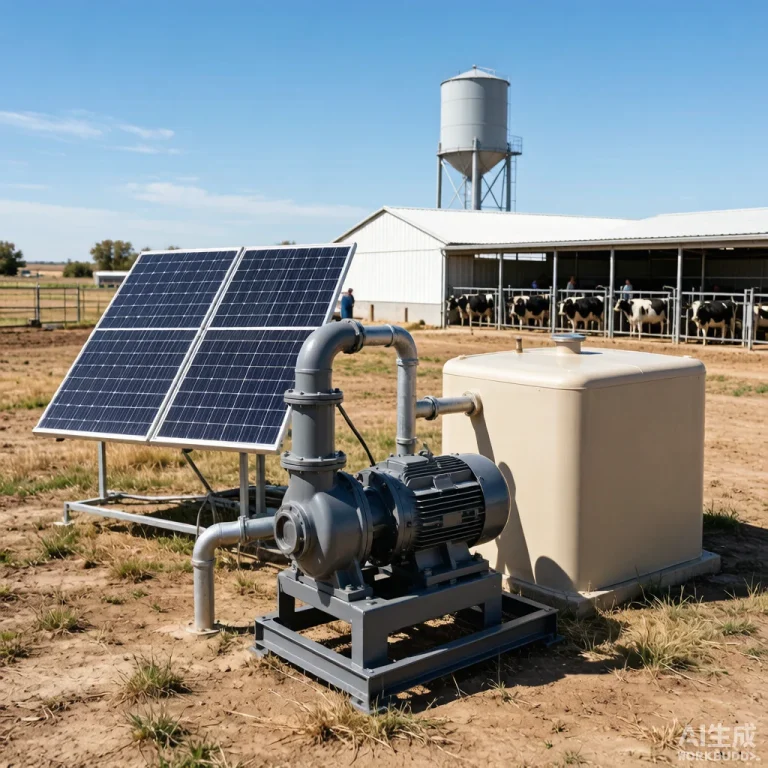
Remote livestock watering points present unique design challenges: they are often located kilometers from grid power, serviced by rough tracks, and must operate reliably for weeks between human visits. The design philosophy differs fundamentally from irrigation systems. Where an irrigation pump failure means lost yield, a livestock pump failure means dead animals—making reliability the overriding design criterion.
- Oversize the PV array by 30% — Unlike irrigation where you can accept reduced flow on cloudy days, livestock demand is non-negotiable. Extra panel capacity ensures the pump meets demand even during overcast periods.
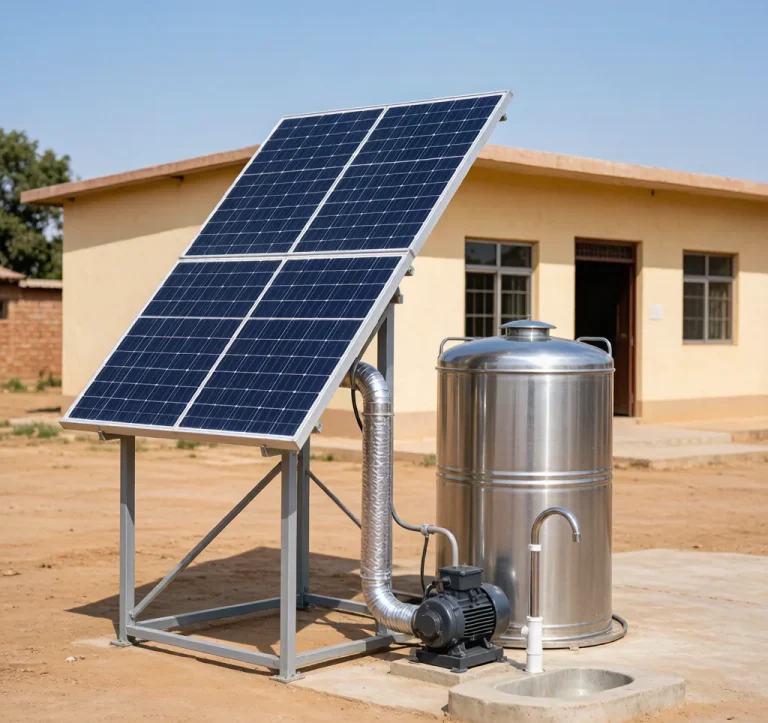
- Specify 3-day water storage — A storage tank holding 72 hours of consumption buffers against both pump downtime and unexpected herd size increases. For 200 cattle, this means a 27,000-33,000 liter tank.
- Include a backup power input — AC/DC hybrid pumps can connect to a portable generator for emergency watering during extended zero-sun periods or controller failure.
- Install remote monitoring — GSM-based tank level sensors and pump status monitors alert the ranch manager via SMS if water levels drop below threshold.
Water Storage and Distribution
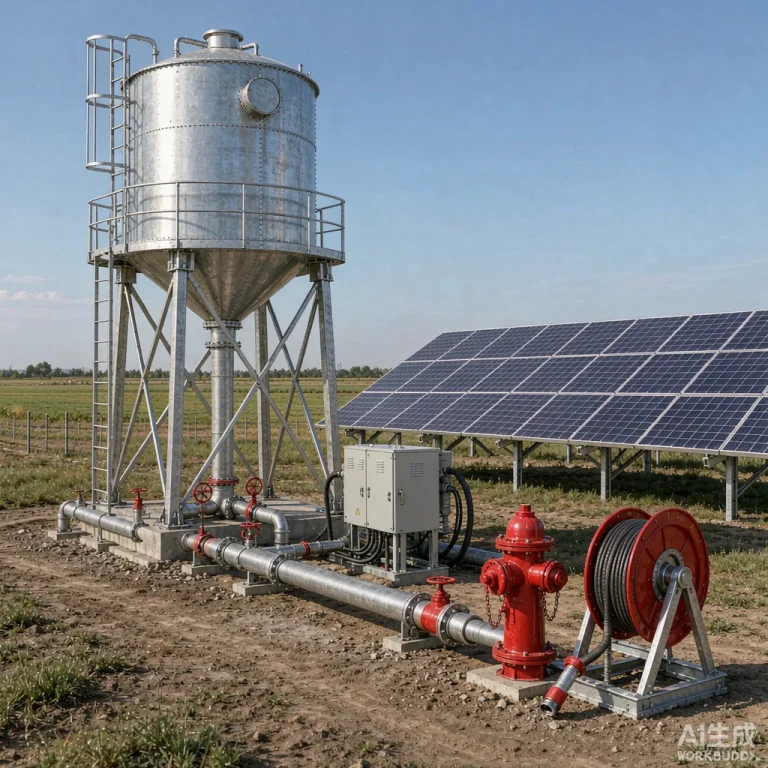
Gravity-fed distribution from elevated storage tanks eliminates the need for booster pumps and provides consistent pressure to multiple troughs. For flat terrain where elevation is unavailable, a small solar booster pump with pressure tank serves the distribution network. Trough design matters: larger troughs with float valves reduce peak demand on the pump by allowing animals to drink throughout the day rather than congregating at specific times. KINBO solar pump systems are routinely paired with 5,000-50,000 liter storage solutions in livestock applications across Australia, East Africa, and South America.
Cost Comparison: Solar vs Diesel for Livestock
| Cost Factor | 3 kW Solar Pump | 3 kW Diesel Pump |
|---|---|---|
| System Cost | $5,200 | $1,800 |
| Annual Fuel | $0 | $1,950 |
| Annual Maintenance | $80 | $520 |
| 5-Year TCO | $5,600 | $14,150 |
Note: Diesel transport costs to remote sites add $0.15-0.30/L in many regions, not included above.
For more on solar pump economics, see our solar pump ROI analysis.
Frequently Asked Questions
Q: What happens if the solar pump fails at a remote livestock site?
A: The 3-day water storage tank provides the critical buffer. Within 72 hours, the ranch manager can deploy a portable generator to the AC/DC hybrid pump’s backup input or arrange trucked water delivery. GSM monitoring alerts should trigger within 4-6 hours of pump failure, providing ample response time.
Q: Can one solar pump serve multiple watering points?
A: Yes, through a centralized pumping station that fills an elevated header tank, with gravity-fed distribution lines to individual troughs. This configuration is more cost-effective than installing separate pumps at each point, provided the elevation difference allows gravity flow.
Q: How do I protect the pump from livestock damage?
A: Install the solar array and pump controller inside a fenced enclosure at least 15 meters from the trough. Use HDPE pipe buried at 600mm depth for distribution lines. Troughs should have concrete aprons to prevent erosion and hoof damage around the watering area.
For B2B buyers planning livestock watering projects, contact KINBO for system sizing, remote monitoring solutions, and competitive FOB pricing on solar pump packages.
Related Articles
- KINBO Livestock Watering Solutions
- Solar Water Pump ROI Analysis
- Explore KINBO Solar Submersible Pumps