Civil Works and Site Mobilization for Gold-Mine Solar Pumps in Malawi
Introduction
Even the best pump fails if the pad cracks and the road washes out. This article covers civil works and site mobilization for gold-mine solar pumps, using Malawi’s Chimwadzulu and central-region gold as the worked example, written by the solar-pumping specialists at KINBO. Foundations, array pads, pump house and access are what let a solar system install cleanly and survive the rainy season; they are part of the solution, not an afterthought. This is the civils companion to our installation guide.
Table of Contents
Why Civil Works Matter
- Foundations protect output—a settling array racking throws off tilt and shading; a cracked pump base lets the unit vibrate and fail.
- Access keeps it running—the rainy season washes out tracks; a site you cannot reach cannot be serviced.
- Shelter extends life—our protection guide covers the enclosure; the pump house and cable trench are the civils that support it.
- Mobilization is the clock—a planned site slashes install days and the TCO of the build.
Malawi Site Conditions
Malawi’s gold—the Chimwadzulu range and central-region artisanal activity—operates through a pronounced rainy season with remote, often poor access. Our dewatering guide, protection guide and storage guide frame the duties; here the civils decide whether the system survives the wet months.
Civil Works, Step-by-Step
- Survey and setout—confirm sun path, shade, soil and the duty point from the sizing and a site visit.
- Build foundations—reinforced pads for array racking set to tilt and level; a stable pump base on compacted ground.
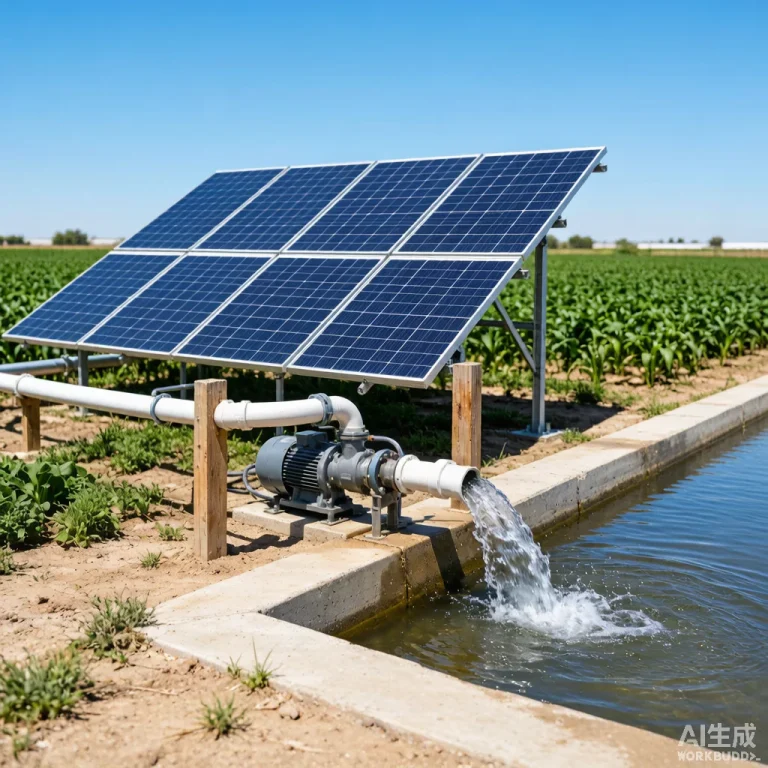
- Raise the array—mounting that stands the panels off the ground for airflow and to avoid wash and silt, per our protection guide.
- House the pump—a ventilated, secure pump house or shelter for the controller and wet-end.
- Open access—an all-weather track and a cable trench or raised run so the site is reachable and the line is protected.
- Commission on a ready site—our installation guide covers the final set, prime and flow test.
Good vs Poor Civils
| Aspect | Good civils | Poor civils |
|---|---|---|
| Foundations | Reinforced, level | Loose, settles |
| Access | All-weather | Washes out |
| Result | Survives season | Fails in rains |
For the equipment the civils support, our installation guide is the next step.
Frequently Asked Questions
Do I need concrete for a solar pump?
For permanent sites, yes—reinforced pads keep racking level and the pump stable; temporary skids can use compacted or screw foundations.
How do I keep the site reachable in the rains?
An all-weather access track and raised cable runs; we plan civils with the sizing so the wet season does not strand the pump.
Who does the civils?
Local contractors using our spec; we supply the setout and the equipment, and our installation guide covers the final commissioning.
How do I start a civil-ready solar pump project in Malawi?
Share your Chimwadzulu or central-region site’s access and soil, and we scope the pump plus the civils and access plan—our installation guide covers commissioning.
Related Articles
- Solar Pump Installation & Commissioning for Gold Mines
- Dust & Heat Protection for Gold-Mine Solar Pumps
- Total Cost of Ownership for Gold-Mine Solar Pumps
- Explore KINBO Solar Pump Products
Get a Civil-Ready Solar Pump System for Your Malawi Gold Mine
Tell KINBO your Chimwadzulu or central-region site’s access and soil, and we will scope a solar pump with the foundations, pump house and access plan to install cleanly and survive the rains. Contact our team for a tailored quote.
Published by KINBO · October 2, 2026 · Category: Application Cases