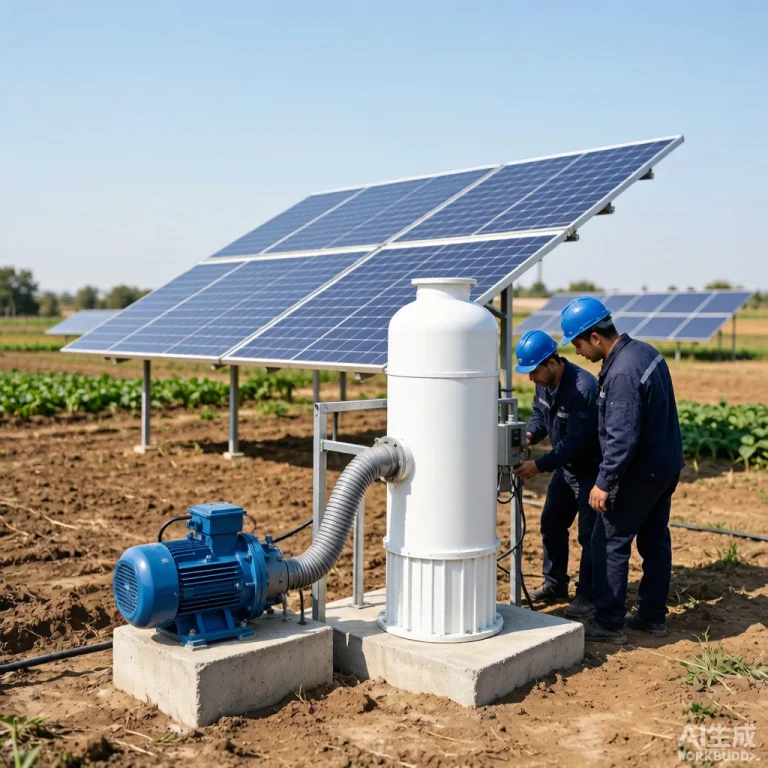
Solar Pump Pressure Boosting for Rural Water Distribution Networks: Design and Sizing
Introduction
Rural water systems rarely fail because the source runs dry; they fail because pressure drops before the water reaches the last house on the line. A solar pump can lift water from a well or river all day, but without a boosting stage the far end of a village network gets only a trickle. Solar pump pressure boosting closes that gap: a dedicated booster stage, fed by a buffer tank, lifts pressure across the distribution mains using the same off-grid energy. Done well, it turns a single solar source into a dependable village supply. Manufacturers such as KINBO design booster stages that run directly from the PV array or a small battery, so the pressure service survives even when the grid does not.
Table of Contents
Why Pressure Boosting Matters in Rural Networks
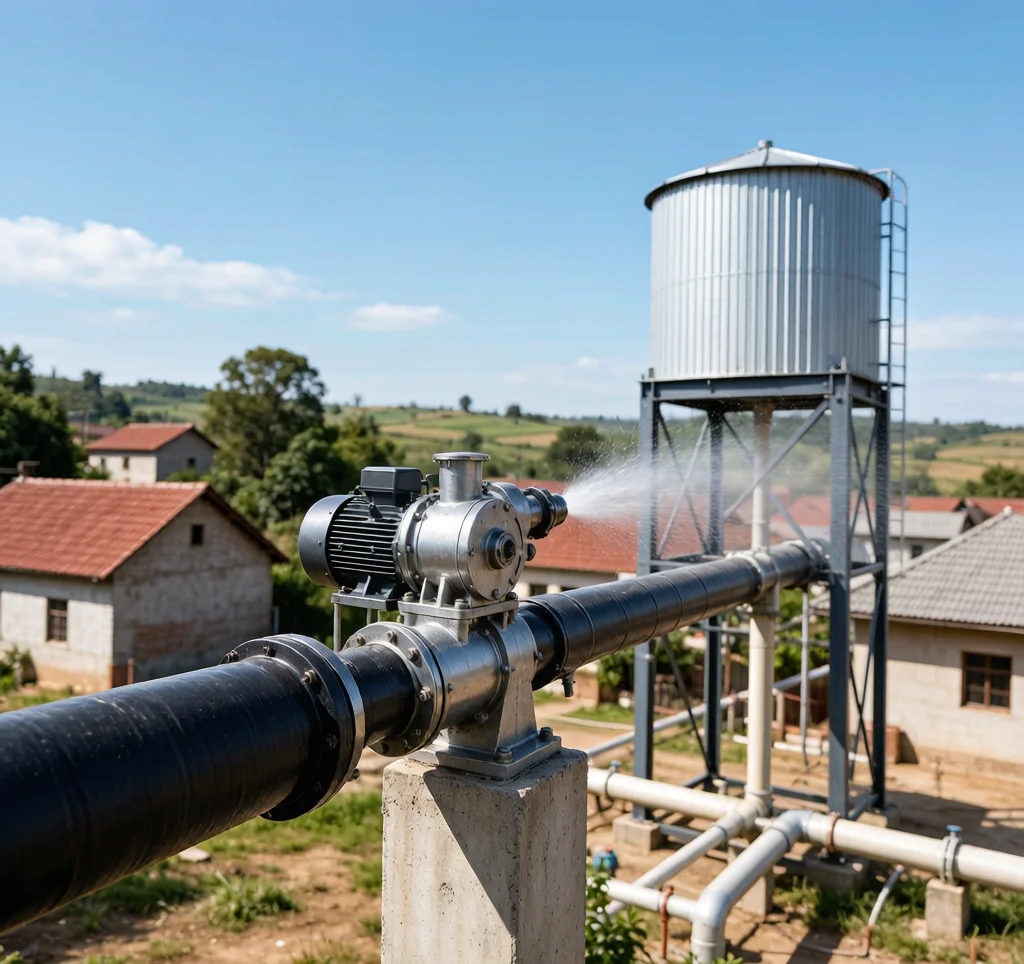
Gravity and friction are the two enemies of rural supply. Long mains, elevation changes and multiple tap points bleed pressure until distant users cannot fill a tank or run a tap. A booster pump placed after the buffer tank restores design pressure so every connection performs. Unlike a single large source pump, a booster lets the network be zoned: low zones run at lower pressure, high or distant zones get a targeted boost. That zoning cuts energy use and pipe cost compared with over-pressuring the whole system.
System Architecture: Source, Buffer and Booster
A pressure-boosted rural network is really three stages working together:
| Component | Role | Note |
|---|---|---|
| Source pump (PV-direct) | Lifts water to buffer tank | Sized to daily volume |
| Buffer / elevated tank | Decouples supply from demand | Also a gravity reserve |
| Booster pump | Restores mains pressure | Starts on pressure drop |
| Pressure transducer / switch | Controls booster cycling | Protects against dry run |
| Distribution mains | Delivers to households | Sized to peak flow |
Sizing the Booster: A Worked Example
Booster power follows from the pressure the far house needs and the flow it draws. A typical village calculation:
| Parameter | Value | Basis |
|---|---|---|
| Houses served | 60 | ~300 people |
| Peak demand | 1.2 m³/h | Morning + evening peaks |
| Required pressure | 2.5 bar at far house | Tap + header tank |
| Boost head | 28 m | Elevation + friction |
| Booster rating | 0.55 kW | Matched to peak |
Figures illustrate a typical 60-house village; actual values depend on topography, pipe diameter and local demand patterns.
Controls, Storage and Energy Balance
Balancing energy between the source pump and booster keeps the system efficient:
- Run the source pump through the sunniest hours to fill the tank, not to serve live demand.
- Let the booster draw from the tank so pressure is available day and night.
- Use a pressure transducer with hysteresis to avoid short-cycling the booster.
- Size the buffer tank to cover at least one peak demand period without solar.
- Tie both stages to one controller so the array is shared, not doubled.
Common Pitfalls and How to Avoid Them
The usual mistakes are predictable. Oversizing the booster wastes array capacity; undersizing it leaves the last houses dry. Long, narrow mains create friction losses that no pump can fix cheaply, so pipe diameter matters as much as pump power. Another frequent error is skipping the pressure switch, which lets the booster run dry and burn out. KINBO field teams typically start from our guide on how to calculate required head for a pump before specifying the booster, which avoids both over- and under-design. A dry-run sensor on the tank is a small addition that prevents the most expensive failure.
Frequently Asked Questions
Do I need a booster pump if I already have a source pump?
Often yes for villages; the source pump fills a tank, but a booster is needed to push water through long mains at usable pressure.
Can the booster run at night?
If it draws from a buffer tank charged during the day, yes; a small battery can also run it after sunset for timed supply.
How do I stop the booster from short-cycling?
A pressure transducer with a hysteresis band and an adequately sized buffer tank prevents rapid on-off cycling.
What pipe size should I use?
Larger diameters cut friction loss and let a smaller pump do the job; size mains to peak flow, not average, to hold pressure at the far end.
For B2B buyers designing pressure-boosted rural water networks, contact KINBO for competitive FOB pricing and technical specifications.