Solar Water Pumps for African Aquaculture and Fish Farming: Practical Application and Sizing Guide
Introduction
Across Africa, fish farming is emerging as a dependable source of protein and rural income, yet many ponds still depend on erratic grid power or costly diesel for water circulation and aeration. Solar water pumps for African aquaculture offer a clean, off-grid alternative that keeps oxygen levels stable and water moving through the day. Manufacturers such as KINBO supply DC submersible and surface pumps engineered for warm climates, simple solar arrays, and low maintenance. This guide explains where solar pumping fits in fish production, how a typical system is built, and how to size it for stable yields.
Table of Contents
Application Scenarios in African Fish Farming
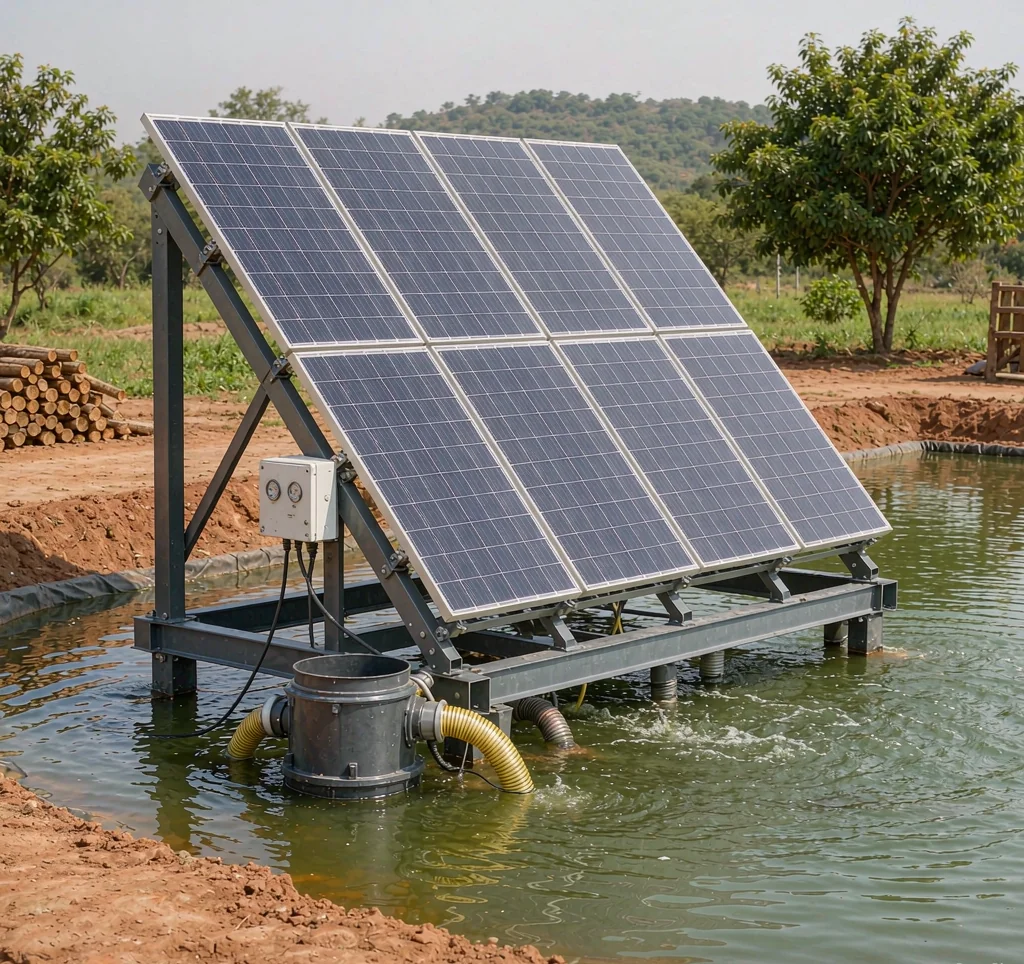
Smallholder and commercial fish farms from Nigeria to Kenya rely on continuous water movement to protect stock. In hatcheries and nursery ponds, gentle circulation prevents temperature stratification and distributes oxygen evenly. In grow-out ponds for tilapia and catfish, solar pumping supports aeration through air-lift or venturi systems and tops up evaporation losses.
For farms without a reliable grid, solar is compelling because a sized array runs the pump at midday when oxygen demand peaks, eliminating diesel fuel cost and downtime.
Designers can review our solar pump system design for irrigation as a starting point, since the hydraulic principles of moving and lifting water are closely related.
How a Solar Aquaculture Pumping System Works
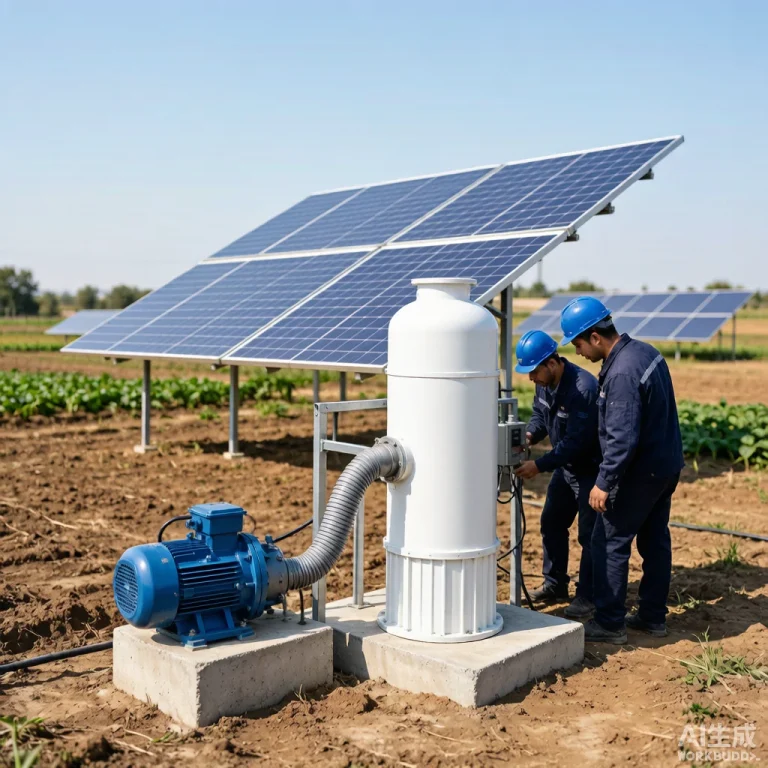
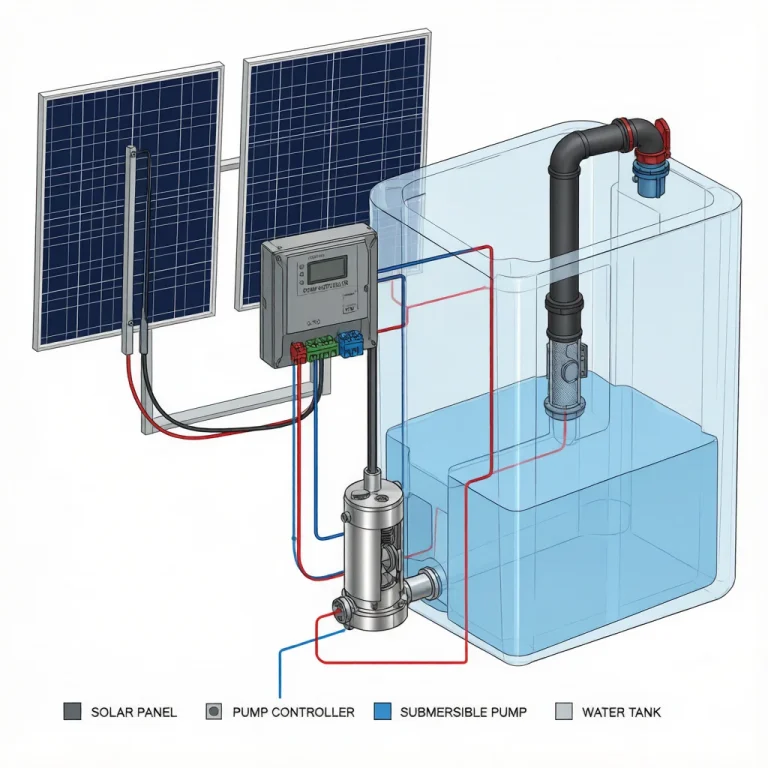
A typical setup begins with a photovoltaic array that converts sunlight into direct current. That current flows through a pump controller, usually an MPPT driver, which matches panel output to the motor for maximum efficiency. The controller then powers either a submersible pump drawing from a borehole or a surface pump moving water between ponds.
For aeration, the pump can drive an air-lift tube or venturi that injects bubbles, or simply circulate surface water to improve gas exchange. In warmer months, running the pump through the middle of the day directly aligns with peak biological oxygen demand.
| Factor | Solar DC Pump | Diesel Pump |
|---|---|---|
| Daily fuel cost | Zero | High and volatile |
| Maintenance | Low | Frequent servicing |
| Emissions | None | CO2 and noise |
| Grid dependency | None | None |
Key Components and Configuration Options
A complete solar aquaculture pumping kit contains a few well-understood parts:
- PV modules sized to the pump’s wattage and local irradiance.
- MPPT controller, or a built-in controller solar pump that integrates the driver for simpler wiring.
- Submersible pump for filling ponds from wells, or a surface pump for pond-to-pond circulation and aeration.
- Piping, float switches and check valves to automate cycling.
- Optional battery to extend aeration into evening peak-demand hours.
KINBO offers both separate-controller and integrated-controller designs so integrators can match complexity to the operator’s skill level.
Sizing and Selection Considerations
Sizing starts with the pond volume and desired turnover. A 500 m3 grow-out pond turned over once per day needs roughly 0.35 L/s average flow, but aeration duty may require higher instantaneous rates. Lift height, pipe friction and panel wattage then set the pump model.
- Estimate daily water volume to move or aerate.
- Define total dynamic head (lift plus friction).
- Match a pump curve to that head and flow.
- Size PV to cover peak wattage with a 20-30% margin.
- Decide battery backup for night aeration needs.
Operators new to the process should study how to choose a solar water pump before procurement.
Cost, Yield and Sustainability Outlook
Capital cost is front-loaded, but removed diesel and grid bills shorten payback significantly on continuously aerated ponds. The table below sketches three typical African fish-farm scenarios.
| Scenario | Pump type | PV (kW) | Typical benefit |
|---|---|---|---|
| Hatchery 50 m3 | Surface | 0.8 | Stable oxygen, higher survival |
| Grow-out 500 m3 | Submersible + air-lift | 2.5 | Lower feed-conversion ratio |
| Commercial RAS 2000 m3 | Multiple surface | 8 | Year-round intensive yield |
Figures are planning estimates; actual sizing depends on species, climate and pond design.
Beyond cost, solar pumping reduces diesel spill risk near water and supports climate-smart aquaculture certification that buyers increasingly request.
Frequently Asked Questions
Can solar pumps effectively aerate fish ponds?
Yes. A solar surface pump can drive air-lift tubes or venturi injectors during daylight, which is when oxygen demand is highest. Battery backup extends aeration into the evening if needed.
Do I need batteries for solar aquaculture pumping?
Not always. Flow and filling tasks run fine direct from the array. Aeration that must continue after sunset is the main reason to add a modest battery bank.
Which KINBO pump suits smallholder fish farmers?
A small surface pump with a built-in controller is usually easiest to install and maintain, while a submersible model is better when water is drawn from a well to fill ponds.
How many solar panels do I need for a 500 m3 pond?
A 500 m3 pond typically needs around 2.5 kW of PV for combined circulation and aeration, though the exact figure depends on desired turnover rate and local solar irradiance.
For B2B buyers solar-powered fish farm water and aeration systems, contact KINBO for competitive FOB pricing and technical specifications.
Related Articles
- Solar Water Pumps for African Smallholder Agriculture
- Choosing Solar Water Pumps for African Conditions
- Explore KINBO Solar Submersible Pumps